
Volume 14 Issue 1 *Corresponding author antonio.hoyuela@gmail.com Submitted 03 Nov 2025 Accepted 09 Feb 2026 Published 31 Mar 2026 Citation HOYUELA JAYO, J. A. Christ the Redeemer and Christ of the Otero, from symbols to palimpsests, from monuments to cultural landscapes. Coleção Estudos Cariocas, v. 14, n. 1, 2026.
DOI: 10.71256/19847203.14.1.172.2026 The article was originally submitted in PORTUGUESE. Translations into other languages were reviewed and validated by the authors and the editorial team. Nevertheless, for the most accurate representation of the subject matter, readers are encouraged to consult the article in its original language.


| Christ the Redeemer and Christ of the Otero, from symbols to palimpsests, from monuments to cultural landscapes Cristo Redentor e Cristo do Outeiro, de símbolos a palimpsestos, de monumentos a paisagens culturais Cristo Redentor y Cristo del Otero, de símbolos a palimpsestos, de monumentos a paisajes culturales José Antonio Hoyuela Jayo1 1ICOMOS Brasil, ORCID 0000-0002-9493-6453, e-mail: antonio.hoyuela@gmail.com
AbstractThis article proposes a comparative reading of Christ the Redeemer, in Rio de Janeiro, and Christ of Otero, in Palencia (Spain), as symbolic expressions of contemporary cultural landscapes. It examines how these monuments transcend the domain of religious worship to become landmarks of territorial, spiritual, and aesthetic identity, reinterpreted over time as palimpsests of the landscape. Grounded in the paradigms of UNESCO and IPHAN, the study articulates material, immaterial, and perceptual dimensions, highlighting processes of heritagization and syncretism in the configuration of these landscapes. The methodology combines historical, iconographic, and cartographic analysis with a phenomenological approach and a comparative interpretation across Ibero-American cultural contexts. Keywords: Rio de Janeiro landscapes; cultural landscape; palimpsest; Rio de Janeiro; Palencia; places of memory; UNESCO/IPHAN. ResumoEste artigo propõe uma leitura comparativa entre o Cristo Redentor, no Rio de Janeiro, e o Cristo do Outeiro, em Palência (Espanha), como expressões simbólicas de paisagens culturais contemporâneas. Analisa-se como esses monumentos ultrapassam o domínio do culto religioso para se constituírem como marcos de identidade territorial, espiritual e estética, reinterpretados ao longo do tempo como palimpsestos da paisagem. Fundamentado nos paradigmas da UNESCO e do IPHAN, o estudo articula dimensões materiais, imateriais e perceptivas, ressaltando os processos de patrimonialização e sincretismo na conformação dessas paisagens. A metodologia combina análise histórica, iconográfica e cartográfica, leitura fenomenológica e interpretação comparativa entre contextos culturais ibero-americanos. Palavras-chave: paisagens cariocas; paisagem cultural; palimpsesto; Rio de Janeiro; Palência; lugares da memória; UNESCO/IPHAN. ResumenEste artículo propone una lectura comparativa entre el Cristo Redentor, en Río de Janeiro, y el Cristo del Otero, en Palencia (España), como expresiones simbólicas de los paisajes culturales contemporáneos. Analiza cómo estos monumentos van más allá del dominio del culto religioso para constituir hitos de identidad territorial, espiritual y estética, reinterpretados a lo largo del tiempo como palimpsestos del paisaje. Basado en los paradigmas de la UNESCO y el IPHAN, el estudio articula dimensiones materiales, inmateriales y perceptivas, destacando los procesos de patrimonialización y sincretismo en la conformación de estos paisajes. La metodología combina el análisis histórico, iconográfico y cartográfico, la lectura fenomenológica y la interpretación comparativa entre contextos culturales iberoamericanos. Palabras clave: Paisajes del Río de Janeiro; paisaje cultural; palimpsesto; Río de Janeiro; Palencia; lugares de memoria; UNESCO/IPHAN. |
1 Introduction
The first name given by the Portuguese to Brazil after its discovery in 1500 was "Terra de Vera Cruz", in reference to the cross planted by Cabral, the "True Cross of Christ," which evolved into "Terra de Santa Cruz" (Land of the Holy Cross) when it was realized that it was not an island. This name was a prelude to the famous monument of Christ the Redeemer on Corcovado Mountain, one of the most recognized symbols of Brazil" (Raposo; Pinheiro, 2021).
Large religious monuments, when placed in visually prominent locations, transcend their devotional, religious, or spiritual dimension. They become instruments of symbolic and sensitive value, establishing themselves as places of memory, bearers of histories, symbolic narratives, and collective consciousness; they confer identity and come to characterize the place where they were erected.
Since antiquity, hills, mountains, and promontories have been occupied by constructions that evoked the link between heaven and earth, between the sacred and the human. Narratives involving religious, cultural, or political figures or events evolve, adapt, and are reinterpreted over time. Conflicts, doubts, and new identities emerge, but always reinforcing the symbolic value of the landscape.
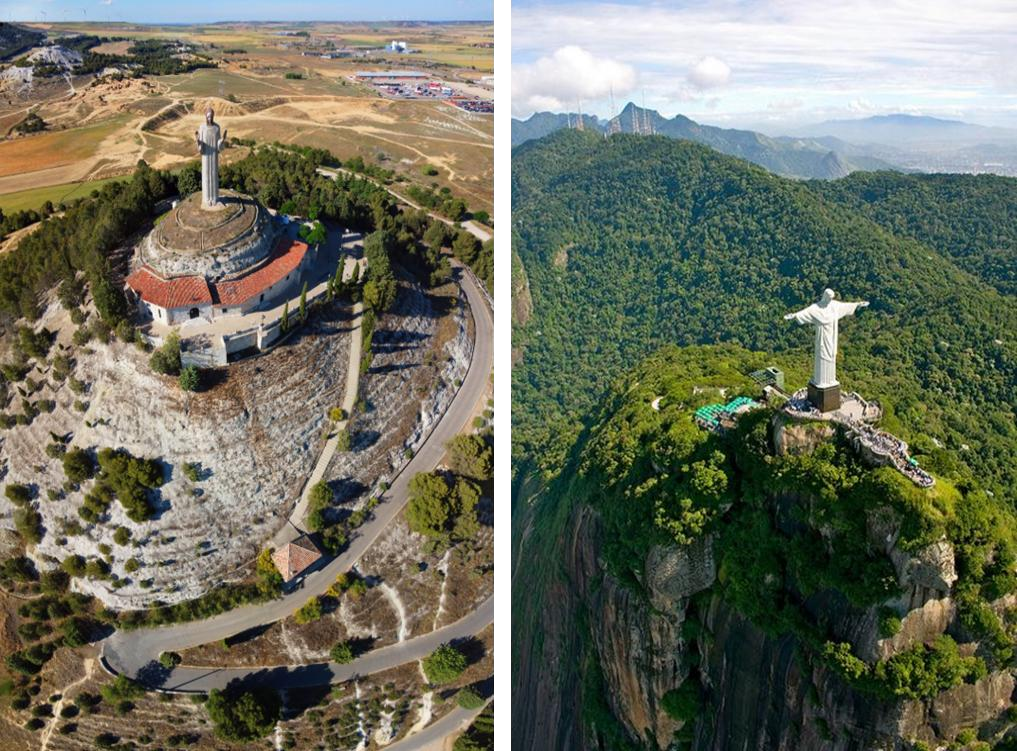
Figure 1: Cristo del Otero (Christ of the Knoll), on the isolated hill of the same name, located in the center of the plateau, in the city of Palencia, inaugurated in June 1931; and Christ the Redeemer, on Corcovado hill, within the Tijuca Forest, in Rio de Janeiro, inaugurated in October 1931.
Source: Photograph by kaboiano (Flickr)
In the 20th century, in the year 1931, Christ the Redeemer, on the summit of Corcovado Mountain in Rio de Janeiro, Brazil, and the ‘Cristo del Otero’ (Christ of the Knoll), on the central plateau of Douro, in Castile and León, in the city of Palencia, Spain, were presented to the world. Both encapsulate this Catholic tradition, today reinterpreted in distinct political, social, and technological contexts, not always peaceful, not always aligned with the original intentions of their construction.
Indeed, both were born from spiritual and religious impulses (Hoyuela Jayo, 2021a), but became icons of collective and civic identity, shaping new perceptions and narratives about the landscapes that host them, in addition to the role played by the monument itself.
In their origin, Christ the Redeemer, facing Guanabara Bay, expresses the faith and civilizing ideal of the young Brazilian republic; the second, sculpted by Victorio Macho, symbolizes the religiosity and Castilian sobriety on the eve of the Spanish Civil War. Today, each of them reveals how religious monumentality can also constitute a political, social, and cultural instrument, an aesthetic and artistic manifesto, an artifact of global impact, or a platform for disseminating heritage values, memory, and the identity of a site.
This article is based on the hypothesis that contemporary monuments can be understood as palimpsests of the landscape (Corboz, 1983). They transform into material and symbolic supports with multiple layers and diverse meanings. Thus, the two Christs – the Redeemer and the one of the Mound – are not merely devotional sculptures, but living cultural landscapes, being rewritten by processes of resignification and heritagization, influenced by their touristic, spiritual, economic, social, cultural interest, as well as by environmental mediation.
2 From monuments to palimpsests of cultural landscapes
The monumental landmarks of Christ the Redeemer and Christ of the Knoll have transformed over the years into true landscape palimpsests. Palimpsests are supports that hold overlapping layers of history, meanings, and interventions: when a new text or illustration is engraved over an older one, the previous layer can still be glimpsed in the remaining traces. Thus, a rich and complex dialectic is created between present and past, between the superficial and the deep. The new does not completely erase the old; rather, it integrates and transforms it, like the scraped and rewritten parchment that nevertheless preserves traces of earlier layers, such as the original one.
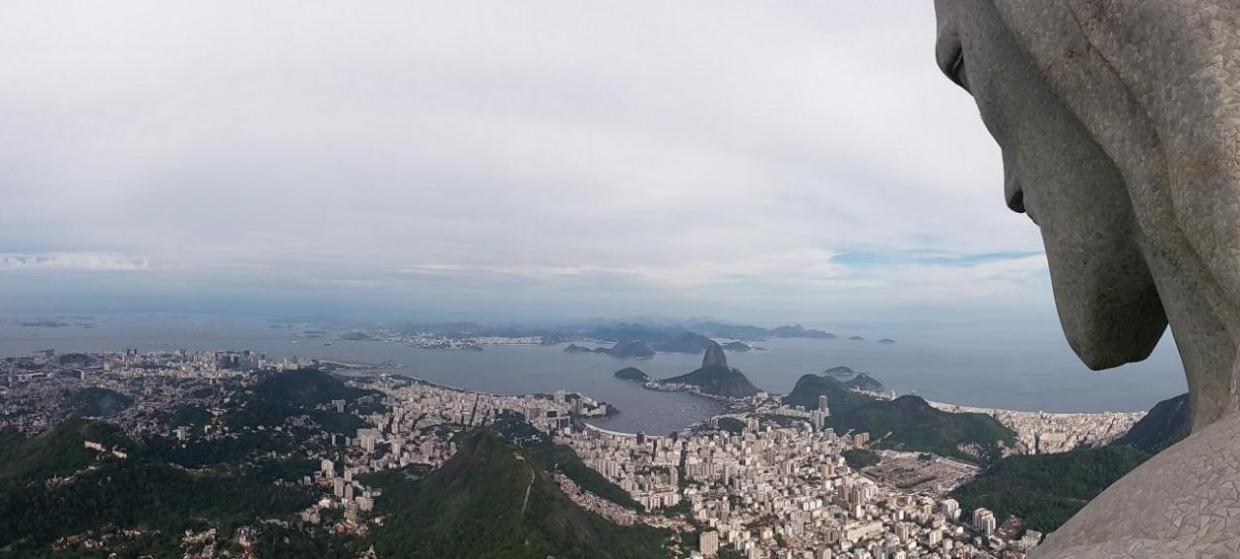
Figure 2: Christ the Redeemer opens his arms, keeping watch over the city of Rio de Janeiro and the entrance to Guanabara Bay. Protection of the area: Parque Nacional, 1961; Florestas de Proteção, 1967; Corcovado, 1973; APA de Santa Teresa, 1984; Reserva da Biosfera, 1991-2008; Cristo Redentor, 2001; and Paisagens Cariocas, UNESCO, 2012.
Source: Personal collection.
In landscapes, different relief forms originating from distinct eras coexist as records of past processes visible in the present, revealing the past within the contemporary, in the manner of an archaeology that excavates its different substrates. Both monuments highlight the relationships between material and immaterial values, cultural and environmental, symbolic and sensitive. These relationships are always dynamic, living, and perceptual, transforming and adapting to different historical contexts. These multiple readings generate new narratives through processes of resignification (Delphim, 2006), which open debates, oppositions, conflicts, tensions, and power disputes, as well as continuous processes of reappropriation and resignification.
Examining the historical and symbolic context of the implementation of both monuments, in Rio de Janeiro (Delphim, 2009a) or in Palencia, allows us to recover their connections with the respective natural and cultural landscapes. Recognizing the concept of the palimpsest enables us to understand them in their complexity, stratified into multiple narratives. The surrounding nature and the cultural, historical, symbolic, and artistic expressions within which they were produced are transformed or disappear, giving way to contemporary interpretations and current forms of appreciation.
Thus, it is necessary to reconsider both the material dimensions (form, topography, structure, materials, art, and technology) and the immaterial ones, related to memory, identity, myths, sensitive values, and spiritualities. It becomes fundamental to understand the processes that connect them, allowing the creation of new forms of resignification and appropriation of these assets and the landscapes associated with them. New components, values, and narratives are thereby added, enriching interpretations and processes of recognition, though not always peacefully.
Exploring, as a civilizing principle, the inter-religious and multicultural dialogue between Christianity, Judaism, Islam, Buddhism, rites of African-derived religions, and other ontologies, including those of indigenous peoples, would help us abstract these sensitive values from strictly religious ones. Some studies have advanced in this direction, such as Costa (2008) on the sacred forest of Tijuca, although there is still room for further depth. From this symbolic interpretation of the monuments and their landscapes, broader and enriched readings become possible, incorporating new components, attributes, values, and universal and exceptional narratives that enhance them.
3 Theoretical framework: territory, landscape, and time
By comparing the heritagization strategies and cultural management of these sites in light of UNESCO guidelines (UNESCO, 2025), the Spanish Ministry of Culture (Jefatura del Estado Español, 1985; Ministerio de Cultura y Deporte, MINC, 2021) and the Autonomous Community of Castile and León, as well as IPHAN (Hoyuela Jayo, 2019a), we will seek to define the implications of the concepts of cultural landscape and/or urban historic landscape as mechanisms for their reinterpretation or resignification.
The study is grounded in the cultural landscape paradigms defined by UNESCO (2019; 1992), ICOMOS (2013), and IPHAN (2019; 2018), which understand landscape as the result of the dynamic interaction between nature and culture and between the material and the immaterial. This approach is reinforced by the Florence Charter (ICOMOS, 1981), the European Landscape Convention (Council of Europe, 2000), the Landscape Charter of the Americas (IFLA Américas, 2020), the Latin American Landscape Initiative (Iniciativa Latino-americana da Paisagem LALI, 2012), and the Recommendation on the Historic Urban Landscape (UNESCO, 2011), which recognize the symbolic, ecological, and sensitive values of places and advocate for more integrated site management through a landscape vision, in which cultural heritage is understood as landscape (Hoyuela Jayo, 2022a).
The concept of the palimpsest, developed by André Corboz (1983), opens a new ontology for us, a "horizon of reference," a way of interpreting the complexity of the components and actors who manage these spaces, appropriate them, and create their own "cultural territories." Applied to the landscape, the concept of the palimpsest allows us to understand the multiple layers, geological, biological, pedological, hydrological, ecological, botanical, historical, sensitive, artistic, symbolic, social, religious, and spiritual, that accumulate and overlap in permanent dialogue, without completely erasing the previous ones, demanding a continuous process of heritage resignification.
This reading is here combined with the utopian vision and the allegory of heritage proposed by Choay (2001; 1992), together with a recognition of the role of memory and heritage as cultural constructions (Castriota, 2013), emphasizing the perceptual and participatory value in constructing the experience of place, while at the same time unifying the natural and cultural, material and immaterial values of the sites. In the Brazilian context, the notion of landscape as a living and participatory structure was developed by authors such as Carlos Fernando de Moura Delphim (Delphim, 2006; Delphim; Xavier, 1987; Delphim, 2009a), and Aziz Ab’Saber (2003), integrating natural and ecological dimensions as well as symbolic and heritage dimensions, through the broad historical narratives of all times (Ab'Sáber, 2007). From this perspective, the cultural landscape is not merely the setting for a monument, nor for a fixed moment in history, but rather the very setting for its multiple meanings. Monuments and their landscapes thus construct a territorial, heritage, and spiritual system in permanent resonance with the collective memory of diverse groups and their knowledge. They also become testimonies to the memory of the land, the environment, and the social, economic, and environmental ecosystems, configuring stratified and progressively more complex cultural landscapes.
3.1 The concept of palimpsest as a synthesis of the landscape
The notion of the palimpsest, originating from the field of philology, refers to manuscripts rewritten several times, in which traces of previous inscriptions can still be glimpsed beneath the new text. André Corboz (Corboz, 1983) was the first to transpose the concept to the territory, understanding it as a "parchment in permanent rewriting," in which each era imprints new marks without completely eliminating the past. Just as with ancient parchments, the territory and landscape configure themselves as surfaces, or spaces, where new readings are introduced and connections are created, transforming into a living, complex, and non-linear document.
In the field of landscape, the palimpsest becomes a conceptual tool capable of revealing the material, symbolic, and sensitive layers that compose a place and its history. Each intervention, whether urban, artistic, spiritual, or natural, leaves traces that coexist and interpenetrate. The relief, vegetation, buildings, and monuments form a dense territorial writing, in which memory, nature, and culture, as well as symbolisms and sensitivities, intertwine.
Applying this reading to religious monuments allows us to understand that they do not impose themselves upon the landscape, but emerge from its material and symbolic depths. They constitute deliberate forms of mediation between the visible and the invisible, between geological time and spiritual time. The landscape is, in this sense, an archive of the sacred, in which beliefs are spatialized and peoples construct their identity bonds, a place from which conflicts emerge and differences are projected.
This concept finds resonance in the writings of Carlos Fernando de Moura Delphim (2006; 2009b), for whom the cultural landscape is "a process and not an object." Hoyuela Jayo, on the construction of the capital of Minas Gerais, Belo Horizonte, describes the landscape as "the stage of life, repository of memory, and instrument of reconciliation between culture and nature" (2016; 2021a; 2024). From this matrix, Christ the Redeemer and Christ of the Knoll are understood as the result of the superimposition of geological, seasonal, and solar times (millions of years, months, or days); of spatial and territorial scales such as nation, region, city, or site; and of natural, urban, religious, and technological values, which provides the landscapes of Rio de Janeiro and Palencia with their universal and exceptional character.
3.2 Landscape and territory analysis, in time and space, as method
The methodology used combines a scientific and technological comparative analysis through the use of digital cartography, with a phenomenological, subjective, and sensitive reading. The historical and cartographic surveys of the two monuments and their surroundings, based on primary sources, are supported by original iconographic documentation, ranging from geological aspects to construction processes. The morphological and symbolic analysis of the works and the places they occupy is based on the study of the morphotypes of Guanabara Bay and the Castilian plateau, the so-called "cerros" or "sierras." In each case, the scale, spatial and temporal dimensions, the different materialities, natural morphotypes, orientations, adaptations to topography, as well as the urban fabric, are considered.
Therefore, the bibliographic review on cultural landscape integrates heritage, environment, and sacred art. It includes major theorists from both Iberian and Anglo-Saxon cultures, whose approaches dialogue with ecology and the superimposition of layers — so-called overlay mapping (McHarg, 2000; Odum; Odum, 2000) — which underpin the proposals of Sauer and his morphotypes (Sauer, 1998; Sauer, 2011). These references contribute to the mapping of the landscapes of Rio de Janeiro (Hoyuela Jayo, 2021b; Hoyuela Jayo; Luengo, 2026).
Italian authors, such as Francesco Bandarin, with his proposals for managing complex landscapes (Bandarin, 2011), and Saverio Muratori, in his studies on urban forms (Muratori, 1959; 1967), as well as the key concepts of urban morphology — building types, urban fabric, hierarchy of forms, and transformation processes — developed by Gianfranco Caniggia (1979), also dialogue with the reflections of Aldo Rossi in The Architecture of the City (Rossi, 1971), connecting the city to the landscape through the analysis of urban forms.
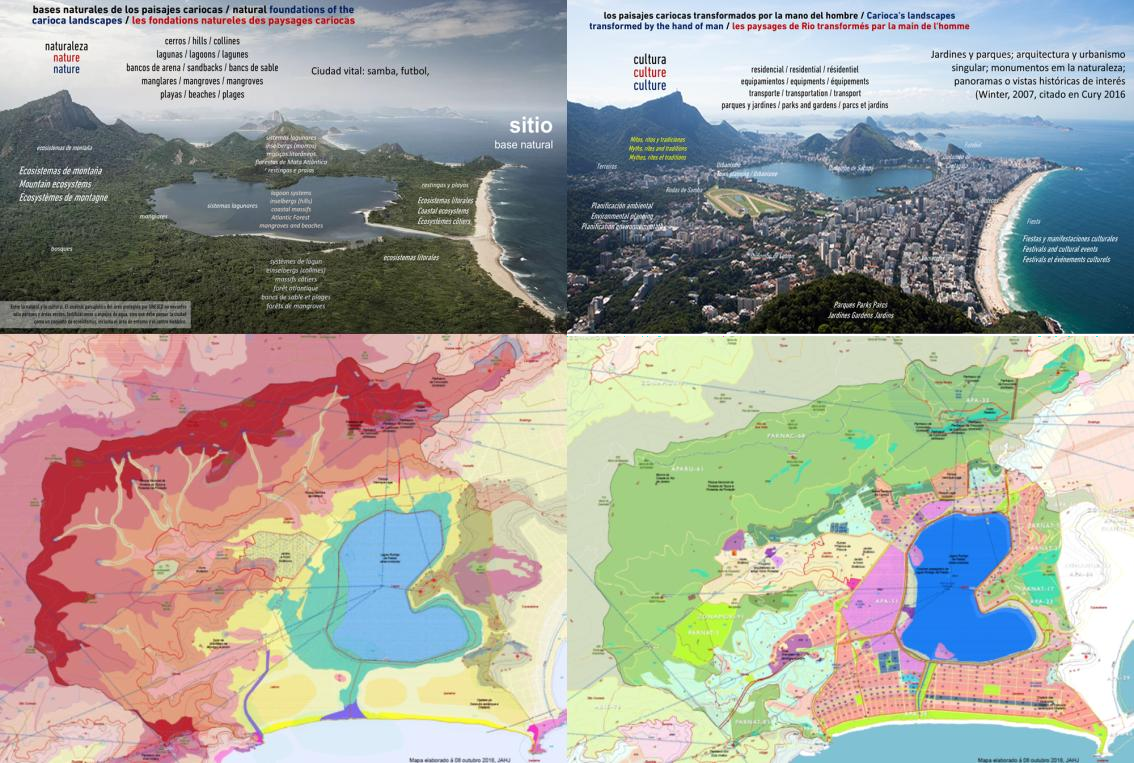
Figure 3: Cartography of the landscape of the Rio dos Macacos basin and Rodrigo de Freitas Lagoon, maps of natural morphotypes (left) and cultural morphotypes (right).
Source: Author's own during work as consultant for the Prodoc 4018 Project, UNESCO – Iphan (2017-2020)
Authors such as Alexander von Humboldt, with his morphotypological vision (Humboldt, 2019), and Otto Schlütter, with his concepts articulating the cultural and the natural (Schlütter, 1920; Schlütter, 1928) and his studies on the cultural construction of landscape, are also mobilized in this work. In the French context, the contemporary contributions of Alain Roger (Roger; Veuthey; Maderuelo, 2007), Augustin Berque, with his "gates of the landscape" (Berque, 1994), and Gilles Clément, with reflections on the "third landscape" (Clément, 2004) and on the role of the environment in the planet's future (Clément; Rahm, 2011), stand out.
With this background, the phenomenological interpretation of aesthetic and spiritual experience was carried out based on visual records and technical visits conducted between 2018 and 2024, both within the scope of work for UNESCO (Hoyuela Jayo, 2019b) and in Palencia, in the development of the Master Plan for the Cerros del Otero and San Juanillo, in collaboration with the local city council (Hoyuela Jayo, 2021a; 2022b).
The methodological approach is global, interdisciplinary, and transcultural, articulating architecture, art history, geography, and anthropology of landscape. The objective is to understand how the monumental images of the Christs or Sacred Hearts, when placed in locations of strong symbolic and environmental charge, transform into matrices for reading the territory and contemporary spirituality, becoming heritage landscape assets (Hoyuela Jayo, 2022a).
4 Sacred hearts and Christs on the sacred mountains of Corcovado and the Mound
We have already made an effort more than once... to encourage and better illuminate that exemplary form of devotion whose object is the veneration of the Sacred Heart of Jesus... Such an act of consecration gives States hope for better things. (León XIII, 1899)[1]
The encyclical ‘Annum Sacrum’ established, in 1899, a theology of devotion to the Sacred Heart. When applied to the analysis of monuments such as the "Christs," this idea allows us to understand the monument not merely as a sculpture, but as an act of consecration of space, a manifestation of the symbolic power of the monument, and a point of connection between the local and the universal, the earthly and the divine.
From this impetus, since the end of the 19th century, monuments and places of a Catholic, Jewish, Buddhist, and Muslim nature have been established in various cities and regions of the world. As icons charged with multiple readings, these constructions were erected with varied intentions and were financed with public funds, through fundraising processes.
Today, these sites are already consecrated as cultural landscapes that integrate new, rich, and varied dimensions, becoming true landscape palimpsests — surfaces that narrate the value of the place from geological times to the contemporary times of the sun and the clock (Delphim, 2009b). Mountains and hills, forests and fields, ports or cliffs, rocks or swamps, river or marine terraces, sacred or sensitive spaces, natural elements have transformed these constructions into landscapes or icons, into symbols that transmit values, stories and memories, sensations and perceptions. Thus, rich symbolisms, initially of a religious character, have consolidated, which today configure themselves as multicultural and polyvalent landscape palimpsests. Each meaning depends on the gaze of the visitor.
In a global review, we identified more than fifty representative monuments of these characteristics, distributed across more than thirty countries, in addition to another thirty monuments with similar attributes, albeit on a smaller scale, in Brazil.
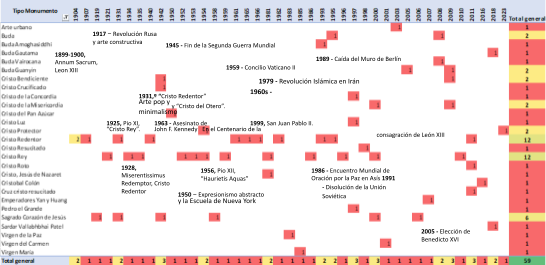
Figure 4: Most relevant sculptural monuments of the 20th and early 21st centuries, by type of figure represented and year of construction.
Source: Author’s own elaboration.
Some proposals preserve and disseminate the traces of the cultural and natural values of the sites in which they are inserted. Thus, the Colossus of Rhodes, a sculpture of Helios, Greek god of the sun, protected the entrance to the port of Alexandria and served as a lighthouse for navigators. The Vairocana Buddha of the Spring Temple, in the protected landscape of Fodushan, became a site of religious and spiritual pilgrimage and, at the same time, the tallest monument in the world. On the coast of Arecibo, in Puerto Rico, the monument dedicated to the "Birth of the World" rises 110 meters to the edge of the sea, like a lighthouse for seafarers. The sculptures of Presidents George Washington, Thomas Jefferson, Theodore Roosevelt, and Abraham Lincoln at Mount Rushmore represent the history of the United States, exalting relevant political figures and seeking a symbiosis between the landscape and the meanings conveyed by the monument.
The construction and subsequent inauguration of these great monuments coincided with the emergence of Christian and Buddhist devotions, as well as with political and historical celebrations that reinforce the identity of peoples. An example is the Russian Revolution of 1917, and the artistic expressions that derived from it throughout the 20th century. Religious, political, social, and cultural traditions, inherited from previous generations, contributed to the formation of the heritage narratives of these monuments, influencing the choice of places for their implantation, the figures represented, and the most representative symbols. Religion and spirituality constituted an important part of the identity of these places; however, such dimensions have been reinterpreted over time, generating new perspectives and forms of understanding. At the same time, the reading of the nature of the site, whether in the immediate surrounding area or in its integration into territorial networks, reinforces the idea of landscape and territory as instruments for interpreting and reconfiguring places.
5 The Catholic tradition of the Sacred Hearts, "Annum Sacrum"
His empire extends not only to Catholic nations [...], it also includes all those who are deprived of the Christian faith, so that the whole human race may be more truly under the power of Jesus Christ. (León XIII, 1899)
In May 1899, Pope Leo XIII promulgated the encyclical called "Annum Sacrum," Holy Year in Latin, announcing the consecration of the entire human race to the Sacred Heart of Jesus. The devotion then became a symbol of infinite charity and a first-class Catholic feast, in addition to having supported the celebration of the Holy Year Jubilee of 1900. The veneration of the Sacred Heart of Jesus and, by extension, of the figure of Christ ("the splendor of his glory and the figure of his substance," Hebrews 1:3), began to manifest itself as an urgency and priority for Christianity. The Pope intended to mobilize Catholicism and thus unite the Church and Civil Society and "tear down the walls" that were being built.
Since then, more than 50 monuments have been erected and blessed in more than 15 countries around the world. In a global review, we recognize more than 50 monuments, of which more than 23 are considered representative of these characteristics worldwide (distributed across more than 15 countries) and another 30 monuments with similar characteristics, albeit on a smaller scale, in Brazil.
The reason for urging Catholics is this key figure of the church, who announces the Kingdom of God and Salvation, Revelation and Reconciliation in the face of the mortal lie of sin that exists in the world, responding to Pilate, when he asks Him if He is truly the King of the Jews:
My Kingdom is not of this world. If my kingdom were of this world, my servants would have fought so that I would not be handed over to the Jews; but my kingdom is not from here (John 18:36).
According to this perspective, for Catholics, Jesus is not the king of a world marked by fear, lies, and sin, but the King of the Kingdom of God who guides and leads the faithful. In 1925, on the occasion of the institution of the Solemnity of Our Lord Jesus Christ, King of the Universe, Pope Pius XI established the feast of Christ the King as the central figure of the Church, the one who "announces the Kingdom of God and salvation, revelation and reconciliation in the face of the mortal lie of sin." In this context, these images come to represent more than a devotional figure: they configure themselves as an expression of paradise, utopia, or ideal, going beyond the simple iconography of the Sacred Heart.
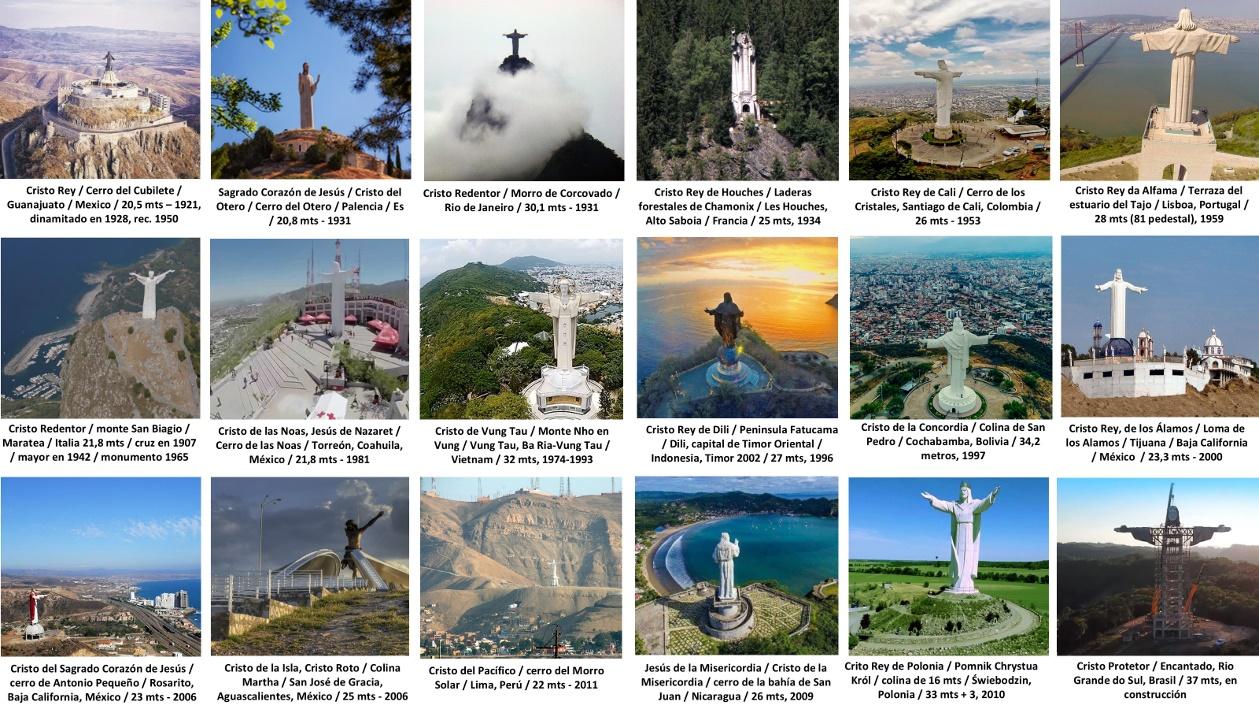
Figure 5: We identified more than 60 Christs of relevant importance worldwide, but there are hundreds of references and more than 30 in Brazil.
Source: Own production
Representations of Christ as King, Redeemer, or bearer of the Sacred Heart were conceived as forms of consolation for those facing personal, family, or social challenges and crises, such as those experienced in the 1930s, after the New York stock market crash. For many faithful, these devotions are associated with moral values and principles that promote love, compassion, justice, and redemption. In a world facing ethical and social challenges, such images can inspire more solidary and altruistic attitudes.
Christ the Redeemer stands out amidst the Tijuca Forest, Sugarloaf Mountain, and the inselberg alignments of the coastal plain, which develop between Praia Vermelha and the Dois Irmãos hills in Leblon, which include Urubu, Leme, Babilônia, São João, Cabritos, and Cantagalo (Delphim, 2009a). Christ of the Knoll rises on an isolated hill at the end of the northern ‘páramo’ of the Torozos Mountains, between the ‘Cerros del Otero’ and ‘San Juanillo’[2]vii, in the center of the Douro river basin, in the city of Palencia. The monuments of Christ the Redeemer and Christ of the Knoll are today considered landscapes of universal and exceptional value.
The management of both monuments began at the request of the archbishops, in the case of Rio de Janeiro, Sebastião Leme, and in Palencia, Agustín Parrado. They initially emerged with a clearly ecclesiastical and religious character, but evolved towards a more symbolic, iconic, and spiritual dimension, configuring themselves as heritage landscapes of a sensitive nature. This new perspective simultaneously confers authenticity and integrity to the landscapes and their monuments, recognizing their values through different declarations and recognition processes and incorporating new perspectives and meanings. However, the monument as a symbol and manifestation of identity, ideologies, or the spirit of peoples is not a modern invention. Catholic symbols such as statues of Christ or the Virgin have been placed in prominent points of cities since the Middle Ages. Since the end of the 19th century, Catholic monuments, as well as others, Jewish, Buddhist, and even Muslim, among others, of a religious or spiritual nature, were installed in various cities as icons charged with multiple readings.
5.1 Two mountains, one same gesture, "Quais Primas."
Christ possesses sovereignty over all creatures, not taken by force or taken from anyone, but by virtue of his own essence and nature. The more the sweet name of our Redeemer is pressed with unworthy silence [...], the louder it must be shouted and the more publicly the rights of his royal dignity and power must be asserted. (Pius XI, 1925, paragraphs 11 to 25).[3]
In the early 1920s, the world was still emerging from the consequences of the Spanish flu pandemic. In 1925, the institution of the Solemnity of Our Lord Jesus Christ, King of the Universe, marked the liturgical calendar and, on December 11, at the end of these celebrations, Pope Pius XI made the feast of Christ the King official. At the end of this same decade, the world was experiencing a great economic and social crisis that ended with the New York Stock Exchange crash in 1929. This collapse affected several countries and created a great social and cultural vacuum that needed to be filled, the so-called Great Depression, which would last until approximately 1954, with some intermittent outbreaks.
The construction of monuments dedicated to Christ the King can be understood, from a Christian perspective, as a material and symbolic manifestation of Christ's reign on earth. The elevated location, on mountains, hills, or urban viewpoints, expresses his spiritual and territorial sovereignty. The visibility of the monument in the urban skyline thus reinforces its iconographic and pedagogical power, transforming it into a symbolic infrastructure that would articulate memory, faith, and collective identity, dignity and power, values that will transform and expand over time.
In this perspective, the construction of a "Christ" constitutes not only an artistic or devotional act, but also an institutional, cultural, and social one. It involves planning, conservation, and community participation decisions. Integrated into the natural or urban landscape, the monument and its surroundings form a heritage unit that materializes the Kingdom of Christ in earthly public space, making visible its theological, cultural, and political dimension.
Christ the Redeemer and Christ of the Knoll constitute, in their respective continents, two spiritual landscapes. Both rise at dominant altitudes, open to the horizon; both become axes of urban and symbolic orientation. If Corcovado represents the fusion between tropical nature and cosmopolitan modernity, with open arms for migrants, the Otero translates the sobriety of the Castilian plateau and the introversion of inner faith, projecting blessings upon residents, visitors, and pilgrims. While in Rio de Janeiro the landscape is exuberant, fluid, and maritime, in Palencia it is arid, horizontal, and terrestrial, an opposition that nevertheless reveals a profound unity: the search for transcendence through form and territory. In both cases, Christ turns towards the world and blesses it through universal and welcoming gestures, making these monuments symbols of a reconciled humanity, charged with values and multiple readings.
5.2 From monument to cultural landscape
In the current context, these landmarks have lost part of their initial function, today diluted in deeper and more spiritual readings, not exclusively religious, but rather symbolic, political, natural, environmental, ecological, and even archaeological and paleontological (Hernández-Pacheco; Dantín Cereceda, 1915).
The more contemporary approach begins to incorporate a landscape perspective, integrating the dimensions of the material and the immaterial, the natural and the cultural, as well as the symbolic values associated with the memory and identity of the place, which accumulate and express multiple narratives, stories, myths, and traditions. These readings make the monuments increasingly integrated into their environment and into a society in permanent transformation (Ministério de Cultura y Deporte, 2023). Instead of isolated elements, they stand out as territorial and landscape landmarks, transnational symbols that reaffirm and multiply their foundational values (Hoyuela Jayo, 2022a).
In secular territories or in contexts where multiple religions coexist, these landmarks can also exalt national symbols, such as flags, anthems, coats of arms, identity references, or expressions of national art. Often, these icons are built with the contribution of earthly riches, in the quest to resolve spiritual poverty, through a call to divine intervention. As the proposed iconography develops, it consolidates new symbols and references for the groups that promote and build them. Sometimes, as in the caves of Ellora, three different religions coexist, such as Hinduism, Buddhism, and Jainism[4], or Islam, or in Jerusalem, Catholicism and Judaism. In the landscapes of Rio de Janeiro, the representation of Christ the Redeemer on Corcovado hill coexists with the Jewish representation, the Holocaust Memorial, on Pasmado hill.
In both Brazil and Spain, these landmarks have ceased to be isolated objects and have become recognized cultural landscapes. In Rio, the inscription on the UNESCO List in 2012 consolidated Christ as the apex of the Carioca Cultural Landscape; in Palencia, Christ of the Knoll is part of the European movement for the protection of symbolic landscapes, aligned with the guidelines of the Council of Europe (European Landscape Convention, 2000).
The joint reading of the two cases reinforces the idea that religious monumentality can be interpreted as an instrument of education, tourism, and sustainability, integrating spiritual and ecological values (Hoyuela Jayo, 2022a). Both sites are examples of interactive landscapes, in which art, nature, and community produce and share meanings.
In recent years, the two monuments have come to be recognized as heritage of excellence in the cultural landscape category. Their history, their status as works of art, the surrounding nature, the associated cultural manifestations and expressions, as well as their role as icons and symbols of their respective cities, make them true cultural landscapes and of the entire territorial system on a global scale. However, the process of recognizing these values did not occur simply.
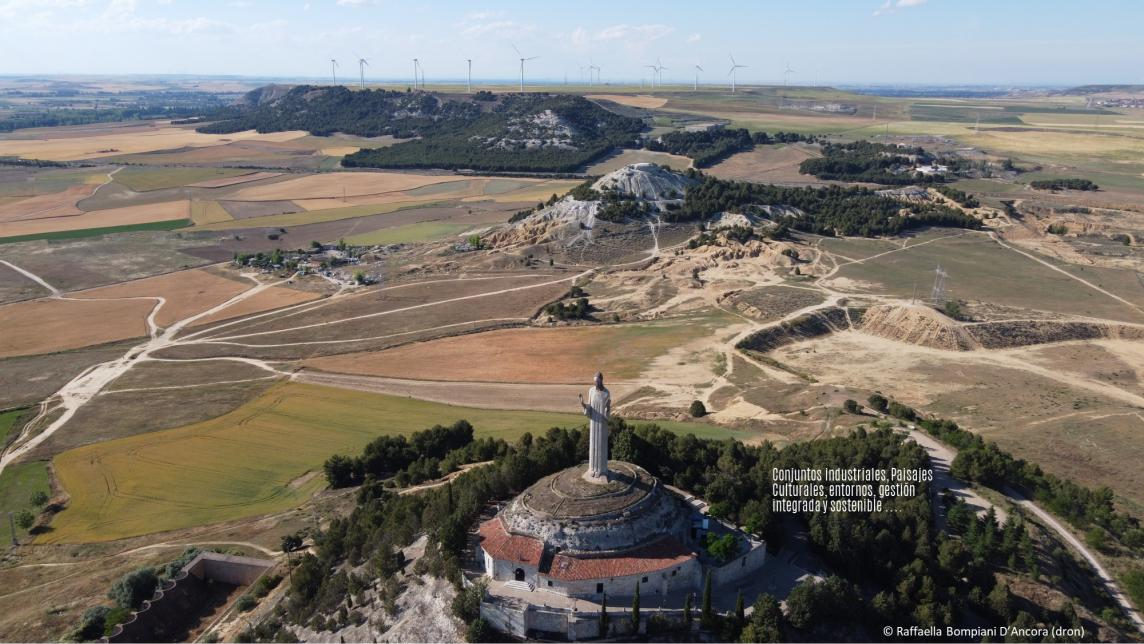
Figure 6: All Cultural Heritage must be understood within the landscape and not only within the limits of the built environment.
Source: Drone photograph by Raffaella Bompiani D’Ancora (2022)
6 Corcovado (Rio de Janeiro) and Otero (Palencia)
The germination of the cities of Rio de Janeiro and Palencia and of Christ the Redeemer and Christ of the Knoll consists of a partnership aimed at promoting human contact and cultural links between monuments, cities, and countries. (Hoyuela Jayo, 2022b)
A comparative reading of the two great monumental landmarks of the 20th century, Christ the Redeemer, on Corcovado (Rio de Janeiro) and Christ of the Knoll, on Cerro del Otero (Palencia), as paradigmatic expressions of the relationship between art, culture, spirit, and territory. Both condense, in distinct geographical and cultural contexts, the inscription of the sacred into the landscape, transforming natural hills into symbolic supports of spirituality, identity, and modernity.
Our analysis is structured from a morphogenic and heritage approach, which considers the selection of elevated sites (cliffs or cerros) as a foundational gesture of space consecration. The genesis and symbolic construction of the monuments are articulated around universal values recognized by UNESCO, IPHAN, and, in the Spanish case, by the Ministry of Culture.
The landscape, spiritual, and political dimensions emerge from their monumental materiality and their visibility within the territory. These works can be understood as heritage palimpsests, in which the visible and the invisible, the material and the spiritual overlap in multiple layers of time, memory, and meaning, configuring authentic landscapes of the spirit, transcendent, sensitive, and continuously rewritten by human experience.
6.1 Site selection, from the Corcovado cliff to Cerro del Otero
It is within this global context, of crisis and the search for symbols and icons of hope, that Christ of the Knoll and Christ the Redeemer emerged, on June 12 and October 12, 1931, on the Otero and Corcovado hills, respectively. In 2021, the 90th anniversary of both was celebrated. The construction of these great sculptures would take place in relevant locations, cliffs, hills, bays, whether on the edge of parks or facing cities that they somehow identify, dominate, and with which they ultimately dialogue, transforming the Historic Complex of Palencia, or the landscapes of Rio de Janeiro, through the Tijuca Forests National Park, into a world reference for cultural and landscape heritage.
As with all the monuments analyzed, site selection is based on the territorial, geographic, and landscape value of the location and its historical, iconic, and symbolic value for indigenous peoples. In this way, they accumulate attributes that derive from the narratives and processes that explain and shape them.
Since remote times, indigenous peoples who inhabited the territory of present-day Rio de Janeiro already climbed and consecrated Corcovado hill, understood as the guardian of a sacred territory. The Tijuca Forest constitutes an orographic complex whose silhouette was associated with a sleeping giant, formed by rocks hundreds of millions of years old. In the 16th century, the first Portuguese began to call the mountain, approximately 710 meters high, "Pináculo da Tentação" (Pinnacle of Temptation), in reference to the biblical episode in which Jesus Christ is tempted atop a mountain (Gospel of Matthew, 4:8).
In the 18th century, the hill came to be called "Corcovado" (Hunchback), either due to its resemblance to a hump, like that of a hunchback or a camel, or due to a possible adaptation of the Latin phrase "Cor quo vadis," meaning "Heart, where are you going?". The first official expedition to the mountain, led by Emperor Dom Pedro I in 1824, with the objective of installing a telegraph station, was recorded in a painting by the French artist Jean-Baptiste Debret. From the slopes of Corcovado, on the eastern edge of the Tijuca Massif, one can see Rodrigo de Freitas Lagoon and the entrance to Guanabara Bay, with the landscape extending to the Baixada Fluminense and the Serra do Mar mountain range.
Currently, the National Park and the Christ the Redeemer Monument are protected within a broad area listed by IPHAN, covering more than 9,000 hectares. This ensemble includes, among other assets, the Tijuca National Park (above the 80–100 m altimetric levels), the Botanical Garden, Pedra da Gávea and its surroundings (Joá and Joatinga), the Mãe d’Água reservoir, the Dam Museum, the second residence of Raymundo de Castro Maya, the Palace of the Count of Itamaraty, the Casa das Canoas by Oscar Niemeyer, and Dois Irmãos Hill. Both Christ the Redeemer and the Sacred Heart of Outeiro in Palencia share these origins and these rich meanings.
The Corcovado cliff was considered by the original inhabitants a sacred mountain for the Tupinambá Indians, as well as for the Tamoios and Temiminós, indigenous tribes of Guanabara Bay. The Otero and San Juanillo hills, in turn, are known as a sacred and mythical place in the city of Palencia, from the petrified footprints of the Miocene to the construction of the Sacred Heart.
The northern region of Palencia, between the Outeiro and San Juanillo hills, has a relevant history spanning over 15 billion years. In this location, paleontological and archaeological traces coexist with expressions of Renaissance and contemporary ‘Palentine’ art.
Notable are the work of Victorio Macho and its permanent references to the sculpture of the Berruguete family and, therefore, to the realist school of Palencia.
The remains of the Hermitage of Santo Toribio, Santa Maria, and San Juan date from the 6th, 13th, and 16th centuries. They were built in successive phases and are classified as palimpsests, with overlapping layers that are difficult to date or recognize, contributing to the enrichment of the historical and cultural values of the area.
Cerro del Otero constitutes one of the most important paleontological sites in the Iberian Peninsula (Hernández-Pacheco, 1921), where Vaccean and Roman archaeological traces have also been found.
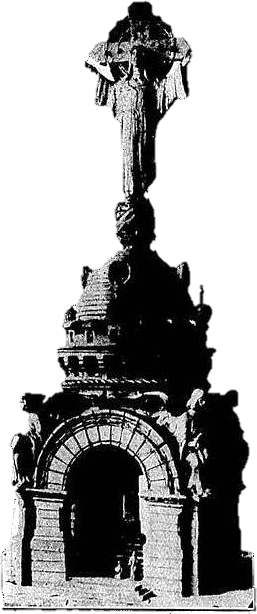
Figure 7: Proposal for the ‘Christo Redemptor’ monument by Adolfo Morales de los Ríos, from 1921
Source: Revista da Semana, number 00026, Rio de Janeiro.
Two water reservoirs located at the foot of Christ narrate the history of the arrival of industry and sanitary policies in the city of Palencia, evoke the myth of Priscillianism, and recall the Holy Week procession linked to the ‘Palentines’ who participated in the so-called ‘Invincible Armada’ against England in 1588.
7 The context of cultural protection
With the recognition of the Carioca Cultural Landscape as a UNESCO World Heritage Site (2012), Christ the Redeemer came to be interpreted as the symbolic apex of a system of universal, artistic, natural, spiritual, and civic values that define the “extraordinary setting of interaction between nature and culture” (UNESCO, 2012). The various interpretations and forms of appropriation expanded in parallel with the increase in the number of visitors, partially diluting the religious dimension and fostering new cultural, social, and economic readings, consolidating the place as a tourist resource of excellence.
This layer of contemporary values stems from the processes of heritagization and digitalization of the landscape in a context of globalization, positioning Christ as a media and advertising icon, a tourist destination, and a global symbol of sustainability and inter-religious dialogue. These layers coexist, dialogue with one another, and continuously reconfigure the reading of the place. Thus, Christ the Redeemer is more than an isolated monument: it is a landscape and sensitive system, where the sculptural gesture and nature constitute a single cultural organism.
From 2012 onwards, IPHAN began to adopt the concept of “cultural landscape” as an instrument for integrated management between nature and culture (IPHAN, 2009; Delphim, 2006). In the case of Rio de Janeiro, the inscription of the Carioca Cultural Landscape on the World Heritage List was based on the exceptional dialogue between sea, mountain, forest, and city, with Christ as the culminating point. The monument, therefore, is not self-sufficient: it synthesizes a symbolic territory that includes the Tijuca National Park, the Botanical Garden, the Flamengo Landfill, and the beaches of the South Zone. Each element reinforces the reading of this natural and cultural palimpsest, where faith, art, and science interpenetrate.
According to the UNESCO Nomination Dossier (2012), “Christ the Redeemer is not merely an image, but a collective gaze upon the landscape of Rio de Janeiro, an expression of a tropical and spiritual aesthetic that unifies nature and city.” This definition synthesizes the very essence of the concept of the landscape palimpsest: a space in constant rewriting, where the marks of the past remain alive and dialogue with the transformations of the present.
7.1 Christ the Redeemer and the Carioca cultural landscape
In its genesis, the construction of these symbols of Christendom was conceived from a landscape and spiritual perspective simultaneously, integrating values within these cultural palimpsests, as sets of manifestations and forms.
Christ the Redeemer, inaugurated in 1931, rises from 710 meters of altitude, on an 8-meter pedestal (platform height) on Corcovado Hill. It is visually and environmentally integrated into the Tijuca Forest and visually connects with Sugarloaf Mountain, Pedra da Gávea, Tijuca Peak, and Guanabara Bay.
More than a religious icon, the monument is an expression of the synthesis between art, engineering, and spirituality, born from the republican ideal of moral and civic regeneration. Initially conceived by Heitor da Silva Costa and modeled by Paul Landowski, Christ has monumental proportions (31 meters in height and 28 meters in arm span) and a scale that dialogues with the metropolitan territory.
The choice of Corcovado was not random. Since the 19th century, the place was visited by naturalists, painters, and travelers, such as Charles Darwin and Jean-Baptiste Debret, attracted by the panoramic view of the city and the integration between mountain and sea. Implanted upon this natural viewpoint, the monument becomes a symbol of reconciliation between man and nature, between the modern city and the spiritual heritage of its geography.
Christ the Redeemer is simultaneously sculpture, viewpoint, and altar. Its base, facing east, was designed to welcome the visitor on an ascensional path that culminates in the panoramic view of the city. The verticality of the mountain and the horizontality of the open arms structure a composition that evokes the gesture of universal blessing, at once protective and integrative.
From a landscape perspective, the monument constitutes a topographic and visual node within the city's green system. The Tijuca Reforestation Plan (1861), the opening of the Corcovado Railway (1884), and the urban development of Cosme Velho and Laranjeiras configure earlier layers that prepared the insertion of Christ. Each of these represents a “writing” upon the mountain, revealing the palimpsestic process that culminates in the current landscape.
From a spiritual point of view, Christ opens towards the Atlantic as a liminal figure between the local and the universal, the sacred and the everyday. For the people of Rio, it constitutes a symbol of faith, identity, and belonging; for visitors, an icon of welcome, hospitality, and peace. The natural landscape, shaped by hills, forests, and sea, becomes an ecological cathedral, in which spirituality intertwines with the aesthetic experience of the place and the symbolic values of indigenous peoples, colonizers, and Afro-descendant communities.
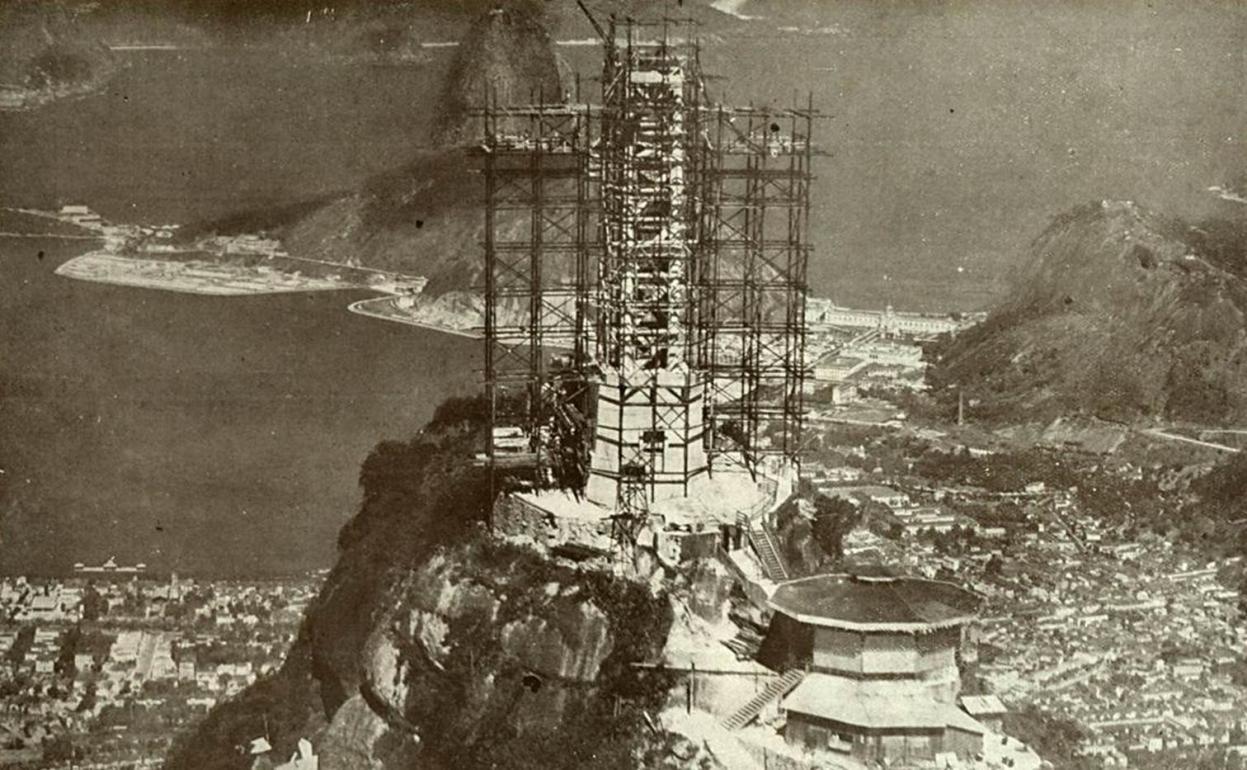
Figure 8: Corcovado during the construction works of Christ the Redeemer, in Rio de Janeiro.
Source: Revista da Semana, year 1931, issue number 0042.
The palimpsestic reading of Christ the Redeemer allows the identification of four complementary layers. The first, the natural layer, comprises the geology of the Tijuca Massif, its slopes and forests, as well as the rocky coastlines that constitute the ecological basis of the panorama surrounding it. The second, the historical layer, brings together successive projects and cultural, artistic, urbanistic, and tourist interventions since the 19th century, which transformed the forest into a structuring environment for the monument and consolidated Christ simultaneously as a viewpoint and sanctuary.
In the symbolic dimension, the construction of the image of Christ as a representation of national faith and the idea of modernity represents the spiritual values of republican Brazil. More recently, it has also been appropriated as a sanctuary, a marketing platform, a sacred mountain, a viewpoint, a commercial area, or the setting for the most diverse cultural, social, spiritual, or even religious manifestations.
7.2 Christ of the Knoll and the landscape of the Castilian ‘meseta’.
Finally, I positioned my arms to give eloquence to the figure and then I encountered something beautiful, for I found the moving expression that precedes the blessing. (Victorio Macho, 1931)
The ‘Cerro del Otero’, the hill that welcomes the Sacred Heart of Jesus, today Christ of the Knoll, rises about 75 meters above the surrounding plain. The sculpture rests on the marl summit formed by expansive clays characteristic of the region, situated approximately 741 meters above mean sea level. At 21 meters in height, the monument reaches a total altitude of about 762 meters. The chronological coincidence between the conception of the Christ of Palencia and that of Christ the Redeemer is not coincidental: both emerged in a period of profound social transformations and the redefinition of spiritual values in the face of modernity.
As in Brazil, early 20th-century Spain was experiencing a context of political instability and institutional distrust. The sculpture by Victorio Macho, molded in reinforced concrete and about 21 meters tall, presents a hieratic expression and Orientalizing features, translating the yearning for a new spiritual humanism. Erected upon a crypt and a cave hermitage dedicated to Santa Maria, the work, facing east, visually dominates the Carrión river valley, becoming a symbol of protection and reconciliation.
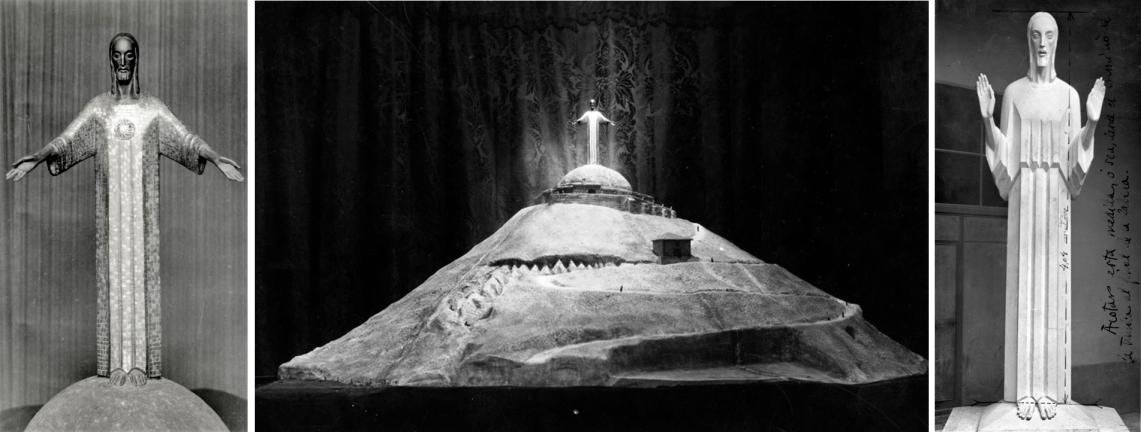
Figure 9: The first sketch of Christ depicted the arms pointing downwards, at a 45° angle, and was to be cast in bronze. In the final proposal, the sculptor chose to represent the instant before the blessing, with arms and hands raised, which gave the figure new perspective, serenity, and eloquence (Luis Alonso, sculptor and friend of Victorio Macho, Palencia).
Source: Images from the collection of Luis Alonso, collaborator of Victorio Macho, and from the Victorio Macho Foundation (Toledo).
In its restrained and austere gesture, Christ of the Knoll expresses the mystical spirituality of Castile, marked by a religiosity of silence, earth, stone, and light. As Macho himself stated, “my Christ is not a distant God; he is the man who looks with compassion upon the suffering of the earth that sustains him.” This statement synthesizes the existential dimension of the work, which became a symbol of fraternity and compassion, sculpted in the heart of the Iberian plain.
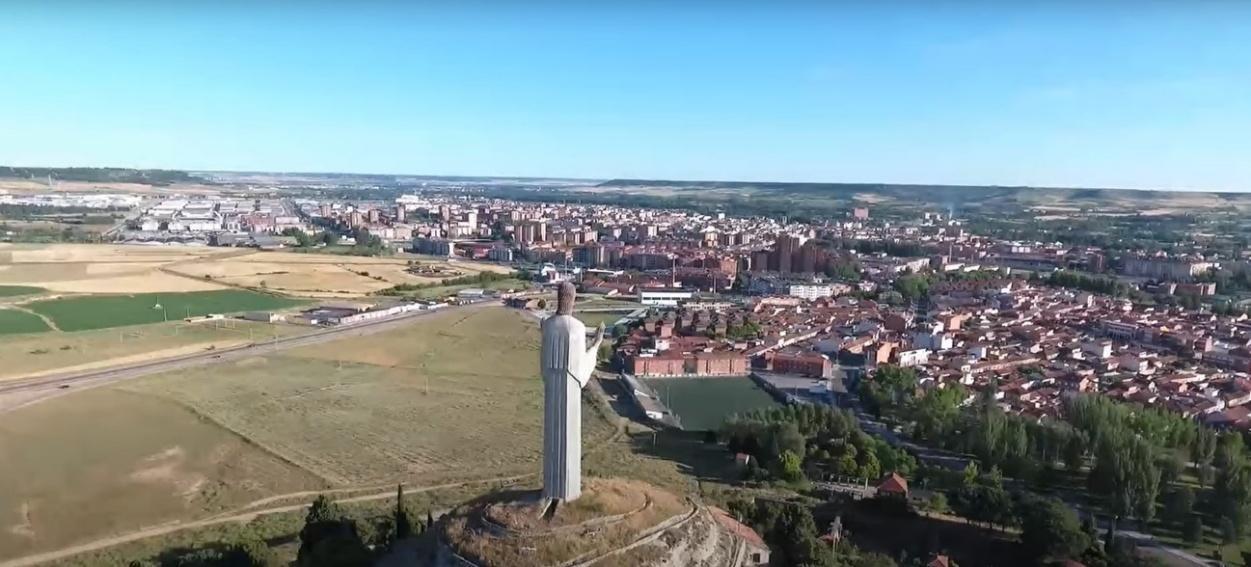
Figure 10: Cerro del Otero[5]
Source: Drone photograph by Raffaella Bompiani D’Ancora.
The city of Palencia developed as a natural amphitheater facing the valley, delimited by clay and limestone hills, the Cerrato, to the east, and the Torozos Mountains, to the southwest, remnants of the ancient Castilian inland sea. The culminating point of this topography, the Outeiro, has been, since the Middle Ages, a site of hermitages and cave temples. By choosing this site, Victorio Macho reactivated an ancestral tradition of dedicating the sacred to the highest points, a practice that dates back to medieval sacromontes and Iberian sanctuaries dedicated to the Virgin or Christ the King.
From a visual standpoint, Christ of the Knoll functions as a landmark of orientation and belonging. It can be seen from various points in the city, and its constant presence on the horizon is inscribed in the collective memory of the inhabitants. The play of light and shadow throughout the day reinforces the symbolic character of the work: at dawn, Christ's face illuminates; at dusk, the monument merges with the hill that hosts it, dissolving and reintegrating into the landscape.
This integration reveals the depth of the landscape reading undertaken by Victorio Macho, for whom the sculpture should “be part of the air and the earth, like the olive trees and the winds of Castile.” The work therefore transcends the sculptural domain and transmutes into cultural landscape, reverberating the relationship between nature, art, and spirituality that characterizes the great Iberian palimpsests.
Recognized in 2018 as an Asset of Cultural Interest by the Junta de Castilla y León (Junta de Castilla y León, 2018), Christ of the Knoll is now part of the Spanish modern sacred art itinerary. Its recent restoration, conducted by the Victorio Macho Foundation and by his student, the sculptor Luis Alonso, with execution by the company Valuarte, sought to preserve the original texture of the concrete and the natural environment, introducing environmental monitoring systems and low-impact nighttime lighting (Valuarte Conservación del Patrimonio, 2017).
In addition to the monument, the ensemble includes the Victorio Macho Museum, with a collection of sculptures and drawings by the sculptor, and the Outeiro Park Garden, an educational and contemplative space that reinforces the landscape and spiritual dimension of the site. This requalification inserts it into a contemporary circuit of heritage landscapes comparable to that of Christ the Redeemer, expanding the transatlantic dialogue between Brazil and Spain under the UNESCO/IPHAN paradigm.
8 Management of cultural landscapes as heritage palimpsests
Understanding landscapes requires perceiving the natural and cultural bases of the societies that inhabit them, incorporating a perceptive, aesthetic, and artistic reading through the definition of cultural and natural morphotypes, territorial systems, landscape units, and subunits. (Hoyuela Jayo, 2019b)
Throughout their existence, Christ the Redeemer, on Corcovado in Rio de Janeiro, and Cristo del Otero, in Palencia, have become emblematic manifestations of the sacralization of territory and the symbolic construction of modern cultural landscapes. The choice of these two elevated sites, the Rio cliff and the Castilian cerro, is understood as foundational landmarks of spatial consecration, capable of explaining the genesis, materiality, and spiritual meaning of each monument.
Both assets integrate landscape, heritage, and theological dimensions, supported by the definitions of UNESCO and IPHAN regarding cultural landscape, and use the concept of the palimpsest to interpret the superimposition of times, memories, and values in territorial configuration. Thus, Corcovado and Otero configure themselves as heritage landscapes of the spirit, in which the visible and the invisible, the natural and the symbolic, are articulated in a continuous process of mediation between faith, art, and politics. New landscapes, such as Pasmado Hill in Rio de Janeiro, have been used as platforms for transmitting universal values, such as human rights, through religious references like the tablets of the law of Moses, though not always successfully. The Holocaust Memorial on Pasmado Hill, inaugurated in 2019, sparked broad public debate. It intended to go beyond the memorial function — joining the various existing memorials worldwide — by emphasizing, as its symbolic axis, the commandment “thou shalt not kill.”
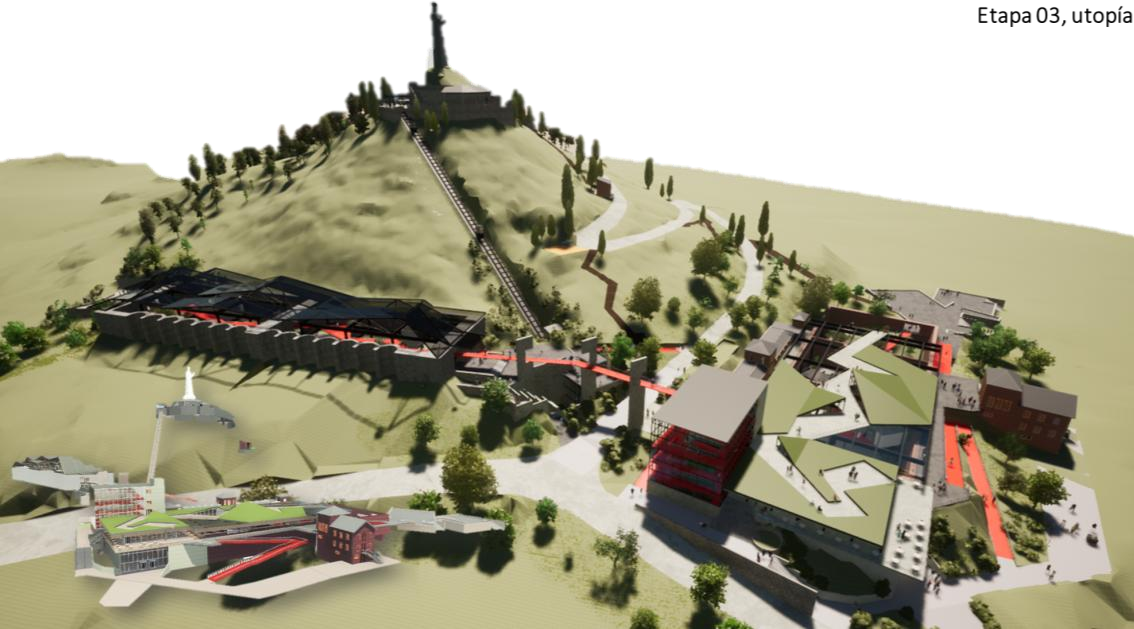
Figure 11: The intervention project should be guided by a master plan of a landscape character, integrated and sustainable.
Source: Image from the Master Plan of the “Cerros del Otero y San Juanillo,” Ecolinno LAB.
Built on the eve of one of the most bloody and complex conflicts of this century, the war between Palestine and Israel, which has already left thousands dead, the moment now invites new critical interpretations. A few years on, questions arise not only about its symbolic relevance but also about the possible resignification of its original meanings. In this context, it might have been more opportune and prudent to conceive a commemorative monument dedicated to the relevant, rich, and transcendental role of the Jewish people in the construction of Brazil, a proposal advocated by some members of ICOMOS Brazil and landscape architects linked to CCBr ISCCL-IFLA (Hoyuela Jayo; Delphim; Tabacow, 2019).
9 The multiple layers between the visible and the invisible
The study of the two Christs, the Redeemer and the one of Otero, allowed us to recognize that when religious monumentality integrates with the landscape, it transcends the strict domain of worship and begins to assume the landscape as a mediator between territory and spirit, between the material and the transcendent, the immaterial.
Both monuments derive from the human desire to fix the sacred to the earth, as well as from the political and aesthetic need to order space from an axial, visible, and common point, like the Golden Calf of the Nuremberg chronicles.
More than expressions of strictly Catholic values, today they symbolize universal meanings, of a more spiritual than religious character, such as coexistence, welcome, cultural identity, belonging, solidarity, peace, protection, serenity, hope, and faith. Both monuments have become identity icons. Christ the Redeemer is recognized worldwide as one of the main symbols of Brazil and the city of Rio de Janeiro.
On the other hand, Christ of the Knoll constitutes one of the great symbols of Palencia, visible for kilometers and associated with local pride. Both represent the human need to create landmarks capable of representing who we are and what we value, thus transcending the religious dimension.
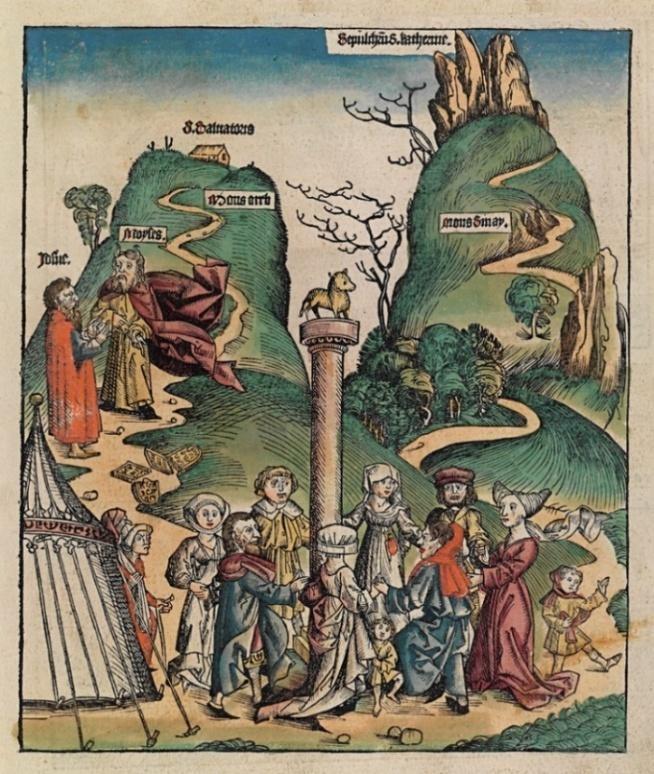
Figure 12. The Golden Calf.
Source: Schedelsche Weltchronik or Nuremberg Chronicle.
The concept of the landscape palimpsest proved particularly fruitful for understanding these superimpositions of times, values, and forms, by more recently incorporating the natural dimension. On the summit of Corcovado, one reads the natural layers of the Serra da Carioca, the reforestation of the 19th century, the modernism of 1931, and contemporary heritagization, which integrates ecological and digital dimensions into the landscape. In Outeiro, the dialogue is evident between the Castilian geological substrate, which houses one of the most important paleontological areas in the Iberian Peninsula, now recognized as geological heritage and a European geosite, the medieval eremitic traditions, modern processions, the expressionist sculpture by Victorio Macho, and current practices of preservation and cultural tourism.
In both cases, the landscape presents itself as a living text, written by multiple hands and rewritten by each generation across different temporalities. Faith, art, nature, history, paleontology, archaeology, media dimension, and science become chapters of a single narrative, the landscape narrative, now visible in stones and mountains, now invisible, dispersed in emotions, in processes of resignification, and in the documents, accounts, and memories that contemplate it.
9.1 Landscape as spiritual and political mediation
The dialogue between Christ the Redeemer and Christ of the Knoll is, above all, a dialogue of landscapes. The first, immersed in the tropical exuberance of Rio de Janeiro, expresses the openness and universality of Luso-Brazilian culture; the second, seated on the austerity of the Castilian plain, reveals the introspection and silence characteristic of Iberian spirituality.
These differences, however, converge in the same message: that sacred space is, ultimately, a space of encounter. In Brazil, Christ the Redeemer has become a symbol of hospitality and diversity; in Spain, Christ of the Mound revives and recalls values of reconciliation and forgiveness. Both share the symbolic function of humanizing the world, restoring communion between human beings and nature in times of environmental, ethical, and moral crisis.
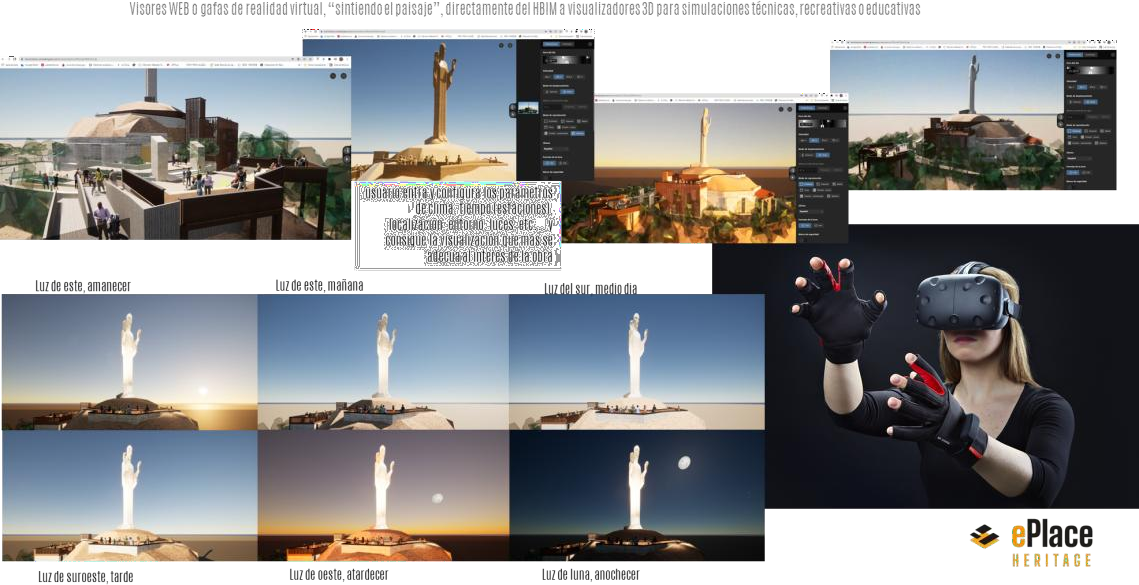
Figure 13: Virtual reality, with VRML headsets, along with WEB viewers or virtual reality glasses, "feeling the landscape," directly from HBIM to 3D viewers, allows for technical, recreational, or educational simulations.
Source: Ecolinno lab and ePlace Heritage.
The comparative reading shows that the monument, far from being a static object, functions as a tool for social and ecological mediation. It guides gazes, regulates flows, defines identities, and awakens collective senses of belonging. In light of UNESCO and IPHAN guidelines, it is understood that such landscapes should not be protected only as works of art, but as living systems of cultural and natural values.
9.2 The palimpsest as a method of reading and management
Interpreting the territory as a palimpsest is not merely a theoretical exercise, but requires a methodological proposal in the pursuit of contemporary and integrated heritage management. It means recognizing that each landscape contains multiple layers of meaning, be they ecological, economic, environmental, social, symbolic, or sensory (among others), which need to be read in a transversal manner.
In the case of Rio de Janeiro, Christ the Redeemer and the Holocaust Memorial demonstrate the possibility of coexistence between different religious traditions and collective memories, materializing the syncretism recognized by UNESCO (2017). In Palencia, Christ of the Knoll integrates the system of heritage landscapes of Castile, associating spirituality with territorial sustainability.
The palimpsestic reading, therefore, broadens the scope of heritage conservation. Instead of freezing the form or foundational narratives, it seeks to understand the process in its continuous dynamic. In this perspective, landscape management becomes an instrument of citizenship and of aesthetic, ethical, and environmental education, a symbol of identity and recognition, but also a monument to the diversity and complexity of contemporary society and its landscapes.
10 Landscapes of the spirit, transcendent and sensitive
Christ the Redeemer and Christ of the Knoll, erected in different hemispheres, share the same symbolic vocation, which consists of converting the mountain into a symbol and horizon of diversity and plurality through a universal language and its landscape resignification. Both are images of the human turned towards the infinite. They are not merely religious symbols and, as such, testimonies that the landscape is, at the same time, matter and metaphor, space and transcendence.
By understanding these works as landscape palimpsests, the urgency of cultural policies that treat heritage as a field of dialogue between past and future, between science and spirit, between the local and the global, always in a transdisciplinary manner, is reaffirmed (Nicolescu; Morin; Freitas, 1994). The gesture of Christ, with arms open over the world, over Rio and Palencia, blessing them, reminds us that landscape, under a spiritual dimension, can also be an expression of fraternity.
Digital technologies have become instruments for heritage dissemination, amplifying the effect of the circulation of symbols and images endowed with multiple meanings. They affect the sensitive experience of visitors and observers, by enabling the creation, resignification, and reconfiguration of these images and symbols, expanding their readings and interpretations.
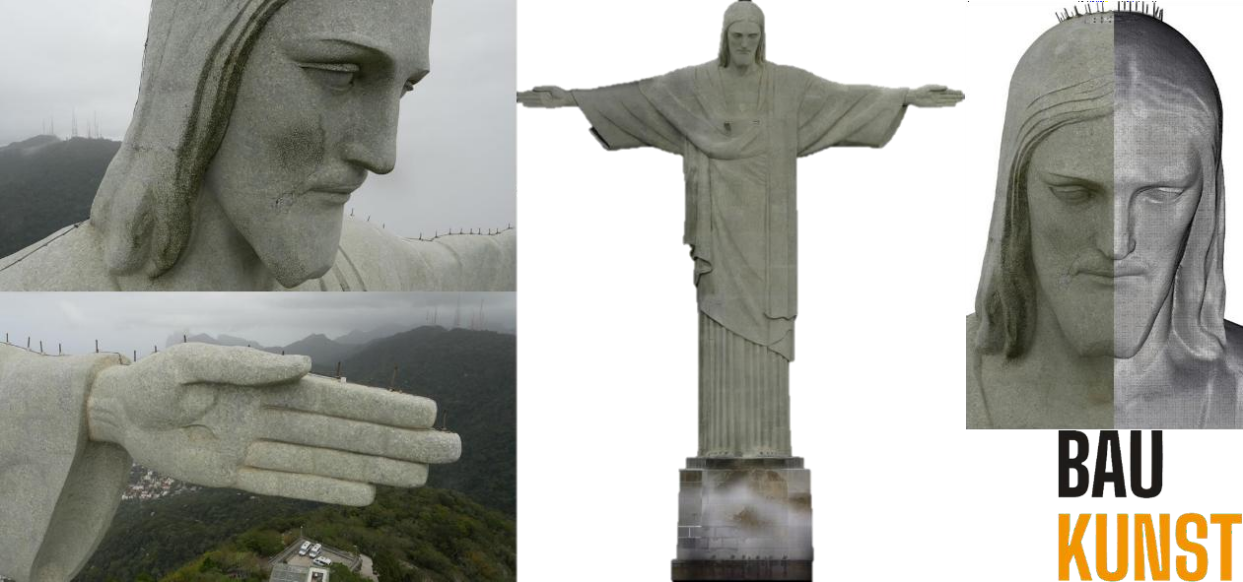
Figure 14. Photogrammetric survey of Christ the Redeemer on Corcovado Mountain, in Rio de Janeiro.
Source: Digitization work with aerial and terrestrial 3D digital photogrammetry by Adolfo Ibañez, responsible for executing the work for the engineering company CONESUL
UNESCO, IPHAN (IPHAN, Instituto de Patrimônio Histórico e Artístico Nacional, 2019), the Spanish Ministry of Culture (Ministério de Cultura y Deporte, 2021), and the regional government of Castile and León (Junta de Castilla y León, 2024) have been acting in the recognition of world and national heritage from this landscape perspective, consolidating the notion of cultural landscapes (UNESCO, [s.d.]) and, for their management, the concept of the Historic Urban Landscape (UNESCO, 2011).
These cultural landscapes have thus shifted from symbols to true palimpsests, in which cultural, social, symbolic, and sensitive value has been enriched by the natural and visual values of the sites in which they are inserted. 3D modeling and the creation of a digital twin will allow for the preservation of these values and the incorporation of multiple components into the digital representation of the ensemble.
We conclude with the aspiration that the landscape is always understood as a palimpsest — a holistic structure, open to multiple readings and interpretations, capable of integrating historical, social, ecological, environmental, economic, cultural, artistic, and perceptive dimensions and values, associated with a community, an object, a set, or a place.
The landscape, in describing and justifying the processes and dynamics that transform it, is born from a perception, a feeling, and an experience, individual or collective, produced by delight, recognition, or observation. The cultural landscape, therefore, allows for a characterization of heritage assets that integrates the various values and components that define it, leading to a holistic and integrated understanding.
References
AB'SÁBER, Aziz Nacib. Os domínios de natureza no Brasil: potencialidades paisagísticas. São Paulo: Ateliê Editorial, 2003.
AB'SÁBER, Aziz Nacib. A baía de Guanabara através dos tempos. Scientific American Brasil, São Paulo, p. 88–90, 2007.
BANDARIN, Francesco; AA.VV. A new international instrument: the proposed UNESCO recommendation for the conservation of historic urban landscapes. Informationen zur Raumentwicklung, n. 3–4, p. 179–182, 2011.
BERQUE, Augustin. Cinq propositions pour une théorie du paysage. Seyssel: Champ Vallon, 1994.
CANIGGIA, Gianfranco. Strutture dello spazio antropico. Firenze: Alinea, 1979.
CASTRIOTA, Leonardo Barci. Paisagem cultural: novas perspectivas para o patrimônio. Arquitextos, São Paulo, ano 14, n. 162, 2013.
CHOAY, Françoise. O urbanismo: utopias e realidades. São Paulo: Perspectiva, 1992.
CHOAY, Françoise. A alegoria do patrimônio. São Paulo: UNESP, 2001.
CLÉMENT, Gilles. Manifeste du Tiers paysage. Paris: Sujet/Objet, 2004.
CLÉMENT, Gilles; RAHM, Philippe. Medio ambiente: enfoques para el mañana. Paris: Skira, 2011.
CONSEJO DE EUROPA. Convenio Europeo del Paisaje. Estrasburgo: Consejo de Europa, 2000. Disponível em: http://www.mecd.gob.es/cultura-mecd/dms/mecd/cultura-mecd/areas-cultura/patrimonio/Convenio_europeo_paisaje.pdf. Acesso em: 23 fev. 2009.
CORBOZ, André. El territorio como palimpsesto. Diógenes, [s.n.], p. 124–146, 1983.
COSTA, Lara Moutinho da. A floresta sagrada da Tijuca. Rio de Janeiro: UFRJ, 2008.
DELPHIM, Carlos Fernando de Moura; XAVIER, Carlos Alberto Ribeiro. Diretrizes para a análise e a classificação do patrimônio natural. Rio de Janeiro: IPHAN; Fundação Pró-Memória, 1987.
DELPHIM, Carlos Fernando de Moura. Estudo sobre a paisagem cultural brasileira. Rio de Janeiro: IPHAN, 2006.
DELPHIM, Carlos Fernando de Moura. Considerações sobre a paisagem cultural do Rio de Janeiro. Rio de Janeiro: IPHAN, 2009a.
DELPHIM, Carlos Fernando de Moura. Paisagem cultural e patrimônio natural: conceito e aplicabilidade. In: SUTTI, W. (cord.). Anais do I Fórum Nacional do Patrimônio Cultural: Sistema Nacional do Patrimônio Cultural: desafios, estratégias e experiências para uma nova gestão, Ouro Preto/MG. v. 2, Brasília, DF: IPHAN, 2009b. p. 191–202.
HERNÁNDEZ-PACHECO, Eduardo; DANTÍN CERECEDA, Juan. Geología y paleontología del mioceno de Palencia. Madrid: Junta para Ampliación de Estudios e Investigaciones Científicas, 1915.
HERNÁNDEZ-PACHECO, Eduardo. Descubrimientos paleontológicos en Palencia: las tortugas fósiles gigantescas. Ibérica, p. 328–330, 1921.
HOYUELA JAYO, José Antonio. Lugares da realidade e da utopia na cidade de Belo Horizonte. In: ARAÚJO, Guilherme Maciel; CARVALHO, Tiago Domingues (org.). A casa em debate: caderno de textos 2016. Belo Horizonte: Fundação Municipal de Cultura, 2016.
HOYUELA JAYO, José Antonio. Produto 02-2019. Caderno 01. Estratégia. Projeto PRODOC – Gestão compartilhada do Patrimônio Cultural Brasileiro (914BRZ4018). Brasília; Rio de Janeiro: IPHAN; UNESCO, 2019a.
HOYUELA JAYO, José Antonio. Produto 02-2019. Caderno 04. Normativa, tombamentos, portarias e planos de ação. Projeto PRODOC – Gestão compartilhada do Patrimônio Cultural Brasileiro (914BRZ4018). Rio de Janeiro: IPHAN; UNESCO, 2019b.
HOYUELA JAYO, José Antonio; DELPHIM, Carlos Fernando Moura; TABACOW, José. Ditamen paisagístico sobre o projeto do memorial às vítimas do Holocausto no Morro do Pasmado. In: WINTER, Rafael (ed.). Relatório do Comité Científico Brasileiro de Paisagens Culturais. Rio de Janeiro: ICOMOS Brasil, 2019
HOYUELA JAYO, José Antonio. Cristo Redentor e Cristo do Outeiro: o patrimônio cultural desde a perspectiva da paisagem. In: BRAGA, Flavia; ANDRADE, Rubens (org.). Lote e quadra, cidade e território: Espaços livres, redes ecológicas e direito à paisagem. Rio de Janeiro: Paisagens Híbridas, 2021a. p. 216–228.
HOYUELA JAYO, José Antonio. Planning and management of complex landscapes: the case of Rio de Janeiro, Carioca Landscapes. In: BRABEC, Elyzabeth; ADAMS, Betina; LALEH, Haeedeh (eds.). Looking back, looking forward: ISCCL 50th Anniversary Symposium. Amherst: University of Massachusetts, 2021b.
HOYUELA JAYO, José Antonio. Patrimônio cultural é, ou não é, paisagem?. Revista Óculo, n. 5, p. 40–57, 2022.
HOYUELA JAYO, José Antonio. Proyecto de restauración del conjunto paisajístico del Cerro del Otero y creación de un mirador y centro de interpretación a los pies del Cristo. Palencia: Ayuntamiento de Palencia, 2022.
HOYUELA JAYO, José Antonio. Um parque para a primeira capital republicana do Brasil. Rio de Janeiro: Paisagens Híbridas, 2024.
HOYUELA JAYO, José Antonio; LUENGO, Mónica (coord.). Paisajes cariocas entre la montaña y el mar. Madrid: Ayuntamiento de Madrid, 2026, no prelo.
HUMBOLDT, Alexander von. Cosmos: ensayo de una descripción física del mundo. Madrid: Maxtor, 2019. ISBN: 8490016208.
ICOMOS. Cultural landscapes: management and conservation. Paris: ICOMOS; World Heritage Centre, 2013.
IFLA AMERICAS. Carta del paisaje de las Américas. México: IFLA, 2020.
INICIATIVA LATINOAMERICANA DEL PAISAJE (LALI). La iniciativa latinoamericana del paisaje. Bogotá: GVL Arquitectos Paisajistas, 2012.
IPHAN. Portaria nº 375, de 19 de setembro de 2018. Brasília: Diário Oficial da União, 2018.
IPHAN. Proposta de revisão da chancela da paisagem cultural brasileira. Brasília: IPHAN, 2019.
JEFATURA DEL ESTADO ESPAÑOL. Ley 16/1985, de 25 de junio, del Patrimonio Histórico Español. Madrid: BOE, 1985.
JUNTA DE CASTILLA Y LEÓN. Acuerdo 18/2018, de 22 de marzo. Valladolid: Junta de Castilla y León, 2018.
JUNTA DE CASTILLA Y LEÓN. Ley 7/2024, de 20 de junio, de Patrimonio Cultural de Castilla y León. Valladolid, 2024.
LEÓN XIII, Papa. Annum Sacrum. Vaticano: Santa Sé, 1899.
MCHARG, Ian. Proyectar con la naturaleza. Madrid: Gustavo Gili, 2000. (1ª ed. 1969).
MINISTERIO DE CULTURA Y DEPORTE. Libro verde para la gestión sostenible del patrimonio cultural. Madrid: Ministerio de Cultura y Deporte, 2023.
MURATORI, Saverio. Civiltà e territorio. Roma: Centro Studi di Storia Urbanistica, 1967.
NICOLESCU, Basarab; MORIN, Edgar; FREITAS, Lima. Carta da transdisciplinariedade. Paris: UNESCO, 1994.
ODUM, Marta; ODUM, Eugene. Essence of place. Athens: University of Georgia Museum, 2000.
PIO XI, Papa. Quas Primas. Vaticano: Santa Sé, 1925.
RAPOSO, Omar; PINHEIRO, Alexandre C. L. O Cardeal Leme e o Cristo do Corcovado. In: Rio 456 anos: a Igreja na história da cidade. Rio de Janeiro: PUC-Rio, 2021. p. 305–317.
ROGER, Alain; VEUTHEY, Maysi; MADERUELO, Javier. Breve tratado del paisaje. Madrid: Biblioteca Nueva, 2007.
ROSSI, Aldo. La arquitectura de la ciudad. Barcelona: Gustavo Gili, 1971.
SAUER, Carl. A morfologia da paisagem. In: CORRÊA, Roberto Lobato; ROSENDAHL, Zeny (org.). Paisagem, tempo e cultura. Rio de Janeiro: EDUERJ, 1998.
SAUER, Carl. Geografia cultural. In: CORRÊA, Roberto Lobato; ROSENDAHL, Zeny (org.). Introdução à geografia cultural. Rio de Janeiro: Bertrand Brasil, 2011.
SCHLÜTTER, Otto. Die Erdkunde in ihrem Verhältnis zu den Natur- und Geisteswissenschaften. Geographischer Anzeiger, v. 21, p. 145–152; 213–218, 1920.
SCHLÜTTER, Otto. Die analytische Geographie der Kulturlandschaft erläutert am Beispiel der Brücken. Zeitschrift der Gesellschaft für Erdkunde zu Berlin, p. 388–411, 1928.
UNESCO. Report of the Expert Group on Cultural Landscapes. Paris: UNESCO, 1992.
UNESCO. Recommendation on the Historic Urban Landscape. Paris: UNESCO, 2011.
UNESCO. Cultural Landscapes. UNESCO, [S.d]. Disponível em: https://whc.unesco.org/en/culturallandscape/. Acesso em: 2019.
UNESCO. Operational guidelines for the implementation of the World Heritage Convention. Paris: UNESCO, 2025.
VALUARTE CONSERVACIÓN DEL PATRIMONIO. Informe final: conservación y restauración de la estatua del Cristo del Otero. Palencia: Valuarte, 2017.
About the Author
José Antonio Hoyuela Jayo holds PhD and Master’s degrees in Architecture and Urbanism from the University of Valladolid, and is an architect with an undergraduate degree from the same university (1994) later recognized and validated in Brazil by UFMG (2015). He has been working professionally and academically between Brazil and Spain for 25 years, with an emphasis on urban, territorial, and strategic planning, GIS/cartography and sustainability, and specialization in landscape, cultural landscapes, and sustainable development as a synthesis between nature, culture, and the city. He is currently an advisor to IPHAN and UNESCO on the Carioca Landscapes (Rio de Janeiro) and is finalizing the Master Plan for the Cristo del Otero Park (Palencia, Spain). He is a member of ICOMOS Brazil (ID: BRA 17346), participating in international scientific committees on Cultural Landscapes (ISCCL) and CIVVIH (Historic Cities and Villages), and Brazilian committees related to climate change, defensive heritage and fortifications, also contributing to advanced models of heritage governance. He is also part of the Special Commission on Geomatics of the Higher Geographic Council (IDEE).
Author Contributions
Conceptualization, [J. A. H. J.]; methodology, [J. A. H. J.]; software, [J. A. H. J.]; validation, [J. A. H. J.]; formal analysis, [J. A. H. J.]; investigation, [J. A. H. J.]; resources, [J. A. H. J.]; data curation, [J. A. H. J.]; writing—original draft preparation, [J. A. H. J.]; writing—review and editing, [J. A. H. J.]; visualization, [J. A. H. J.]; supervision, [J. A. H. J.]; project administration, [J. A. H. J.]; funding acquisition, [ J. A. H. J.].
Acknowledgements
Special thanks to the City Hall of Rio de Janeiro, and to Câmara do Verde, to ICOMOS ISCCL IFLA, and ICOMOS Brazil, to the UNESCO delegation in Brazil, to IPHAN RJ, and to DEPAM Brasília, to the City Hall of Palencia, and to the visual artist Luis Alonso, to IAB RJ, PUC, UFF, and UFRJ, and to the Brazilian Network of Historic Parks and Gardens, and to the publisher Paisagens Híbridas.
Conflicts of Interest
The author declares no conflicts of interest.
About Coleção Estudos Cariocas
Coleção Estudos Cariocas (ISSN 1984-7203) is a publication dedicated to studies and research on the Municipality of Rio de Janeiro, affiliated with the Pereira Passos Institute (IPP) of the Rio de Janeiro City Hall.
Its objective is to disseminate technical and scientific production on topics related to the city of Rio de Janeiro, as well as its metropolitan connections and its role in regional, national, and international contexts. The collection is open to all researchers (whether municipal employees or not) and covers a wide range of fields — provided they partially or fully address the spatial scope of the city of Rio de Janeiro.
Articles must also align with the Institute’s objectives, which are:
- to promote and coordinate public intervention in the city’s urban space;
- to provide and integrate the activities of the city’s geographic, cartographic, monographic, and statistical information systems;
- to support the establishment of basic guidelines for the city’s socioeconomic development.
Special emphasis will be given to the articulation of the articles with the city's economic development proposal. Thus, it is expected that the multidisciplinary articles submitted to the journal will address the urban development needs of Rio de Janeiro.
[1] Source: https://www.vatican.va/content/leo-xiii/en/encyclicals/documents/hf_l-xiii_enc_25051899_annum-sacrum.html
[2] Páramo = elevated plain, highland, remnant terrace of fluvial erosion
Cerro = hill or small hill (between 50 and/or 100 meters in height in the center of the Castile and León plateau)
[3] Source: https://www.vatican.va/content/pius-xi/es/encyclicals/documents/hf_p-xi_enc_11121925_quas-primas.html
[4] Jainism is a doctrine originating in India that emerged in the 6th century BCE, promoted by Mahavira. It proclaims a philosophical path to salvation not centered on the worship of any god. Its practice involves making efforts to direct the consciousness of the soul toward a divine state and liberation (moksha).
[5] Both monuments are situated in dominant positions in the landscape — Cerro del Otero and the Corcovado cliff — which is why they receive multiple recognitions and forms of protection, both natural and cultural. The paleontological site, with fossils of giant turtles discovered between 1912 and 1916, was recognized as a site of geological interest and a European geosite in 2019. It was also protected and cataloged by the General Urban Development Plan (PGOU) in the Historic Site category, integrating the historic complex of Palencia as an Asset of Cultural Interest in 2018.