
Volume 14 Issue 1 *Corresponding author edson.villela1@gmail.com Submitted 31 Dec 2025 Accepted 01 May 2026 Published 07 May 2026 Citation VILLELA FILHO, E. M.. Living the “Reviver Centro”: an analysis of the first years of Rio de Janeiro’s centrality recovery plan. Coleção Estudos Cariocas, v. 14, n. 1, 2026.
DOI: 10.71256/19847203.14.1.208.2026 The article was originally submitted in PORTUGUESE. Translations into other languages were reviewed and validated by the authors and the editorial team. Nevertheless, for the most accurate representation of the subject matter, readers are encouraged to consult the article in its original language.

| Living the “Reviver Centro”: an analysis of the first years of Rio de Janeiro’s centrality recovery plan Vivendo o Reviver Centro: uma análise dos primeiros anos do plano de recuperação da centralidade carioca Viviendo el “Reviver Centro”: un análisis de los primeros años del Plan de Recuperación de la Centralidad Carioca Edson Maia Villela Filho¹ 1 Universidade Federal Fluminense - Programa de Pós-Graduação em Arquitetura e Urbanismo, Rua Passo da Pátria, 156 - d 541 - Boa Viagem, Niterói-RJ, 24210-240, ORCID 0000-0001-8274-7172, edson.villela1@gmail.com
AbstractCentral areas undergo cycles of growth and decline, leaving traces in urban morphology and patterns of occupation. In Rio de Janeiro, Centro and Lapa (RA II) experienced a sharp downturn in 2020 during the COVID-19 pandemic, with business closures and residents moving out. In 2021, the city government launched the Reviver Centro program to revitalize the area. This paper stems from a qualitative and exploratory study of the program based on document analysis. The results indicate progress in permitting and a predominantly residential focus, but still incipient impacts, requiring monitoring and regulation to prevent selective valorization. Keywords: housing, urban revitalization, Reviver Centro. ResumoAs áreas centrais passam por ciclos de progresso e decadência, deixando marcas na morfologia urbana e na ocupação. No Rio de Janeiro, Centro e Lapa (RA II) sofreram forte retração em 2020, durante a pandemia de COVID-19, com fechamento de comércios e saída de moradores. Em 2021, a prefeitura lançou o programa Reviver Centro, a fim de revitalizar a região. O presente trabalho decorre de uma pesquisa qualitativa e exploratória sobre o programa, baseada em análise documental. Os resultados indicam avanço do licenciamento e predominância residencial, mas efeitos ainda incipientes, exigindo monitoramento e regulação para evitar valorização seletiva. Palavras-chave: habitação, revitalização urbana, Reviver Centro. ResumenLas áreas centrales atraviesan ciclos de progreso y decadencia que afectan la morfología urbana y la ocupación. En Río de Janeiro, Centro y Lapa (RA II) se sufrieron una fuerte retracción en 2020 durante la pandemia de COVID-19, con cierres comerciales y salida de residentes. En 2021, la alcaldía lanzó el programa Reviver Centro para revitalizar la región. Este trabajo surge de una investigación cualitativa y exploratoria sobre el programa, basada en análisis documental. Los resultados indican avances en las licencias y predominio residencial, pero efectos aún incipientes, lo que exige monitoreo y regulación para evitar una valorización selectiva. Palabras clave: vivienda, revitalización urbana, Reviver Centro. |
1 Introduction
Urban centers undergo countless changes and reforms throughout history, where these transformations overlap and construct the image of the city. Pesavento (2004) uses the concept of palimpsest to classify the different layers of a city that accumulate, but leave traces, like marks that indicate the phases of the urbe. In Rio de Janeiro, the main city during the empire and the capital of Brazil from 1763 to 1960, urban reforms marked several transformations in the urban space. The opening of avenues, the demolition of hills, landfills, the demolition of buildings, and the beginning of the occupation of hillsides by low-income populations became historical records of the phases experienced by the city and its inhabitants.
At the beginning of the 20th century, Rio de Janeiro sought to renew its image as the country's capital and its new uses, as a sign of progress. There was still a deep relationship of the carioca population with the monarchy, but the federal government wanted to alter this image, with a modern urban space, to guarantee legitimacy for the new rulers. Pereira Passos, mayor of the federal district, represented the dominant elite of the time, and used his power and influence to carry out changes in the city, which ranged from the opening of avenues to the demolition of buildings, disregarding the historical abyss of social inequality (Teixeira, 2021).
However, the urban reform executed during Passos's administration was a Brazilian example of what European cities had already undergone in the 18th century, under pressure from politics and the dominant classes in the construction of the urbe, as indicated by Santos (1988):
[...] It is when the techniques of governing societies discover, through what, at that time, were treated as politics, the importance of architecture and urbanism as disciplinary instruments. It is the politicians and not the architects who impose reflections on the organization of urban space, collective services, hygiene, and the construction of buildings. Then, they seek the models and types that materialize their pretensions. The change does not originate in architectural theory, it does not come from the drawing boards (Santos, 1988).
Understanding the origin of changes in urban space involves comprehending the geometries of power, a concept used by Massey (2008) to classify the influence of capital in the construction of cities. Market relations create spaces through directionalities, power inequalities, and the multiple dimensions of dominance and influence. Place, normally understood as a victim of globalization, transmits the aspirations of capital in the application of global concepts in local territories. Through the geometries of power, one must advance the understanding of being for or against globalization, what its purpose is, and what form it will take (Massey, 2008).
In Rio de Janeiro, Administrative Region II (RA II), which encompasses the Centro and Lapa neighborhoods, concentrates numerous historic buildings, from the colonial era to the present times, constituting a territory where a significant part of Brazil's historical trajectory can be recognized in its built landscape. The dynamics of the urban space of a large city accompany the needs raised by capital for the inhabitants. The emptying of this central area is a process marked for decades by economic and demographic changes, as well as successive public revitalization programs that sought to reverse the region's loss of dynamism (Monteiro; Garcia, 2023; Teixeira, 2021; Toledo, 2012). The process of prioritizing commercial spaces in the central region of Rio de Janeiro led residents to seek housing in other neighborhoods, which consolidated the area as commercial. When experiencing a moment of crisis, during the COVID-19 pandemic, commerce was affected, and the city center flirted with decay and emptying. This process led the holders of power and capital to municipal public authorities, seeking help from the city hall. Upon initiating studies, justified mainly by the drop in tax collection by the municipality, the municipal executive opened space for the interests of construction companies and developers.
Faced with the need identified by the Rio de Janeiro City Hall, by private agents, and by other actors who participate in (or influence) the production of the city, the municipal Executive instituted, on the first day of 2021, a working group aimed at the requalification of the central area, in response to signs of emptying, closure of businesses, devaluation of properties, and a drop in tax collection. The Working Group for the Requalification of the Center of Rio de Janeiro was instituted, covering RA I (Harbour Area) and RA II (Centro). Based on this diagnosis, in mid-2021, the Reviver Centro Plan was presented, which, unlike the large interventions of the early 20th century, does not foresee demolitions or changes to the road system, prioritizing the use of existing infrastructure and the optimization of resources through the production of housing units and the conversion of use (retrofit) of buildings, with the objective of attracting new residents to the central region (PCRJ, 2021a). The Program focuses on urban, cultural, social, and economic actions; the proposals follow the idea of attracting new residents, to optimize existing structures in the central region of the city (PCRJ, 2025b).
The justification for this work stems from the fact that an urban revitalization program in the central area of a metropolis like Rio de Janeiro requires time and critical monitoring so that its results can be understood beyond the institutional announcement, especially because Reviver Centro is structured on a legal framework of incentives and regulations that tends to generate course adjustments and disputes between public and private interests. The article aims to record the first years of the implementation of Reviver Centro, analyze its initial results (based on public data and official documents), and point out future situations that require attention from managers, contributing to a critical evaluation of the program beyond formal licensing.
1.1 Centrality, housing, and urban rehabilitation: theoretical bases
The bet on living downtown is not just a sectoral housing policy, but a strategy for reconfiguring urban centrality: by expanding the residential presence, it creates the possibility of prolonging everyday vitality beyond business hours, sustaining diversity of uses, rhythms, and appropriations of public space. The classic literature on urban life shows that the mix of uses and the continuous presence of people broaden everyday safety and the economic performance of proximity activities, while monofunctionality tends to produce temporal voids and fragile territories (Jacobs, 2011). Centrality can be understood as a social and political product of the city, not as a simple location; reintroducing housing in central areas means repositioning the dispute over the right to the city and over the legitimate uses of urban space (Harvey, 1982, 2008; Lefebvre, 2000). The recovery of centrality through residential use is, in theory, a vector of a polyfunctional city, as it tends to intensify permanence and reduce the functional divorce between territories of work, consumption, and social reproduction, often accentuated by modernist zoning patterns and uneven urbanization (Brenner; Theodore, 2002). At the same time, centrality is constructed by geometries of power (Massey, 2008), directionalities of capital, and asymmetries of influence that shape which uses stabilize and who can remain in areas well-served by infrastructure.
The typical daytime centrality of central business districts (CBD), combined with the peripheralization of housing and rigid zoning, produces dependence on commuting, the social cost of transportation, and the deepening of segregation, as access to the center becomes conditioned by income and the ability to pay for mobility (Maricato, 2011; Villaça, 2001). Reintroducing housing in central areas affects the urban-metropolitan metabolism (mobility, networks, demand for services, land consumption), potentially reducing pressures for peripheral expansion and reorienting patterns of use of installed infrastructure. This shifts the debate from how much to build to how to rebalance work, consumption, and social reproduction in the territory, with direct implications for spatial justice and urban efficiency (Brenner; Theodore, 2002; Harvey, 1982; Jacobs, 2011; Lefebvre, 2000; Massey, 2008).
From the point of view of urban policies, rehabilitation/revitalization programs need to be read as multisectoral and multifactorial processes, which recover idle or underutilized assets, but also redistribute (or reconcentrate) opportunities. In this direction, recent documents from UN-Habitat (2021) treat urban regeneration as an instrument to tackle socio-spatial inequalities, emphasizing the need for institutional coordination, governance pacts, and the design of mechanisms for inclusion. For the carioca case, this is particularly relevant because the re-housing and retrofit strategy relies on incentives and regulation, and the literature warns that social results depend less on the statement and more on counterpart measures, monitoring, and public capacity for induction (for example, allocation rules, affordable stock, and value capture) (Fernandes, 2007; Maricato, 2011; Monteiro; Garcia, 2023; Vainer, 2000).
The contemporary discussion highlights that rehabilitating centralities favors selective valorization: rent gap theory explains why central areas with depreciated stock become attractive frontiers for reinvestment when there is a large difference between current rent and potential rent, favoring cycles of gentrification and social substitution (Smith, 2005). Complementarily, recent approaches systematize how policies and the market can produce "gentrifications" at multiple scales, including through the financialization of real estate and new forms of use (such as short-term rentals), raising prices and restricting permanence, which reinforces the need for public regulation to sustain socioeconomic diversity. In the Brazilian normative framework, this regulation can dialogue with instruments of the City Statute aimed at tackling idleness and inducing the social function of property, creating conditions for rehabilitation to approach a more inclusive centrality (Fernandes, 2007; Sette, 2023; Toledo, 2012; Vainer, 2000).
1.2 Materials and methods
The present study used materials available on official websites of the municipal government of Rio de Janeiro and the Reviver Centro program, among them: laws, decrees, reports, maps, surveys, presentations, and the 3D monitoring panel. Articles, books, and publications were also consulted for the theoretical foundation of the research and the construction of the state of the art. The article used exploratory methods in databases, libraries, websites, and national and international scientific journals (through the portals Google Scholar, SciELO, and the CAPES Journal Portal), with the term ‘Reviver Centro’, between July 2021 and December 2025, where a low presence of publications on the carioca recovery plan was noted. Complementarily, to broaden the theoretical contextualization and compensate for the still limited specific production about the program, related descriptors were mobilized, in Portuguese and in English, such as: “urban revitalization,” “urban rehabilitation,” “central areas,” “downtown housing,” “retrofit,” “gentrification,” “urban regeneration,” and “centrality.” The selection of the material considered thematic adherence, pertinence to the urban debate, and contribution to the critical interpretation of the carioca case.
In addition to the documentary survey, a longitudinal systematization of public data made available by the Rio de Janeiro City Hall was carried out, focusing on the program's period of validity (from July 2021) and the most recent cut available at the time of the research (monthly monitoring reports up to December 2025). For this, the official documents were read analytically and organized in a record database, based on an extraction protocol that consolidated variables such as: (i) number of licenses issued and under analysis; (ii) process typology (new building and/or use transformation/retrofit); (iii) total number of units and distribution by use (residential and non-residential); (iv) total built area (TBA); and (v) indicators of built and population density, when available. The reading of the results considered the lag between licensing, execution, and effective occupation, assuming licensing as an initial indicator of the program's direction, and not as immediate proof of consolidated urban impact. When pertinent, secondary data cited in the official materials themselves were used (for example, Secovi series on rental and sale values) to contextualize valuation trends and support the discussion on risks and externalities of the rehabilitation process.
The interpretation of the data considered that urban licensing does not automatically equate to effective urban transformation, therefore the issued licenses were treated as initial indicators of the program's direction, and not as conclusive proof of consolidated impact on the territory. This methodological precaution is important because there is a lag between administrative approval, the start of construction, the completion of developments, the occupation of units, and the eventual alteration of the socio-spatial profile of the central area.
The limitations and deficiencies of the bases used were also considered. In the case of the bibliographic survey, a low incidence of academic publications specifically dedicated to Reviver Centro was observed, which restricts comparisons and imposes greater dependence on broader literature on urban rehabilitation and centrality. In the case of official documentation, although municipal reports offer transparency on the administrative progress of the program, they present important analytical limitations, such as: the absence of complete series on sale and rental values after the beginning of the program; scarcity of information on the socioeconomic profile of future residents; absence of systematic data on the effective occupation of licensed units; and insufficiency of indicators on indirect social effects, such as population displacement, pressure on rents, touristification, and short-term rental. As these are data produced by the very entity responsible for implementing the program, it is a base strongly focused on administrative monitoring, which requires a critical reading of its scopes and silences.
2 Legislation as an inducer of urban changes
In mid-2021, through the publication of two municipal laws, the Reviver Centro Program began, with the definition of the areas and objectives of the urban recovery project. During this period, civil construction investors began adapting projects to fit the parameters of the new urban legislation, attracted mainly by incentives such as the suspension, exemption, or reduction of taxes (ISS, IPTU, ITBI). By the end of 2021, 10 construction and renovation licenses for change of use in buildings in RA II (an area that encompasses the Centro and Lapa neighborhoods) had been issued, as indicated in image 1 (PCRJ, 2025a).
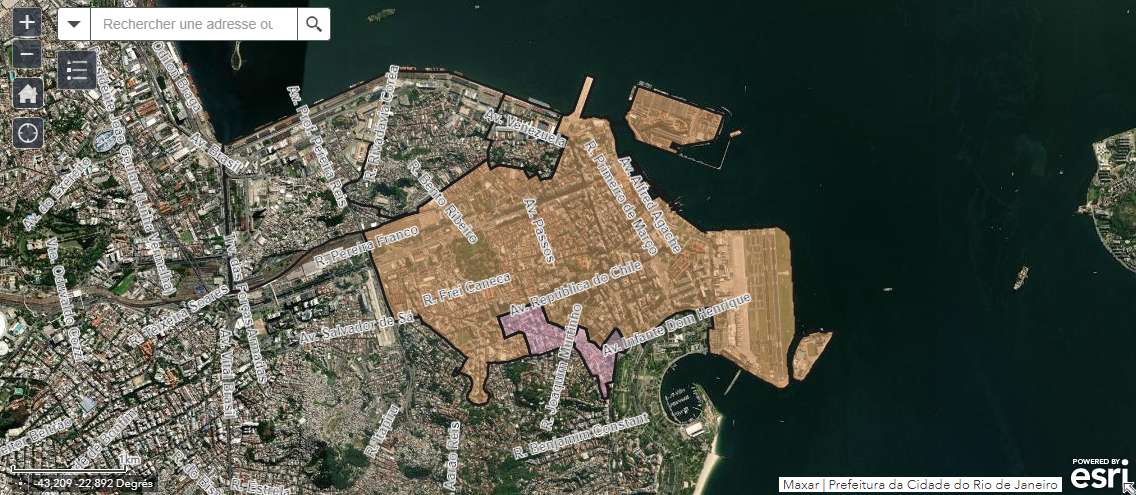
Figure 1: Neighborhoods that comprise the Reviver Centro Program.
Source: PCRJ, 2025b
The objectives of Reviver Centro, which go beyond housing and tax matters, were listed in 21 topics in Complementary Law No. 229/2021, among them:
I - take advantage of the urban infrastructure and existing buildings aiming to expand the supply of housing for the population of different income brackets, contributing to the reduction of the housing deficit in the City, promoting the inclusion of the income bracket of zero to three minimum wages;
II - increase the resident population and encourage the mix of uses, in order to make the area multifunctional and contain the emptying process;
[...]
V - reverse the emptying process of commercial buildings, accelerated by the expansion of remote work practices, allowing the reconversion of their units into residential ones;
VIII - establish specific conditions for vacant and underutilized properties, considering the necessary consolidation of occupation in the region and the constitutional principle of the social function of property;
IX - update the legal parking space requirements, given the wide supply of public transportation in the region and the commitment to adopting public policies at the municipal level aiming at the transition of the City's streets to "carbon-free" environments;
[...]
XIII - promote the conservation, requalification, and activation of assets protected by cultural heritage legislation;
XIV - qualify public spaces, through conservation and re-urbanization, focusing on accessibility, "walkability," tree planting and green areas, urban-environmental improvements, and support for residential use;
[...]
XVI - affirm and foster cultural diversity through a program that promotes the critical conservation of monuments, aiming at civic education and the current understanding of historical facts of slavery, eugenics, racism, violence against human rights, and oppression of freedom that affected Black, Indigenous, LGBTQI+ populations, and social minorities; [...]” (PCRJ, 2021d).
Although Complementary Law No. 229/2021 sets out objectives aligned with the social function of property, the mix of uses, and the expansion of housing access (including for the 0-3 minimum wage bracket), the Brazilian experience suggests that programmatic statements do not automatically convert into socioeconomic diversity when the predominant mechanisms are incentives for private production and regulatory facilitation without binding counterpart measures. This occurs because the formal supply of housing and real estate rehabilitation tend to operate under a selective demand logic, producing housing-commodities adjusted to the purchasing power of solvent segments, especially in areas with valorization potential (Rolnik, 2015). In other words, there is a structural asymmetry between redistributive objectives and market-oriented instruments: without devices that directly affect price, allocation, and permanence of residents (for example, quotas/obligations for Social Interest Housing - HIS, public control of the rehabilitated stock, and capture of surplus value), the most likely result is the recomposition of the Center as a frontier for investment and urban consumption, with gains in image and tax collection, but with a low capacity to universalize access to centrality (Rolnik, 2015; Smith, 2005; Zukin, 1995).
As time passed, new decrees and official documents were published to support the urban recovery program, to establish parameters, and to indicate how Reviver Centro will act. Some panels and monthly reports were also created for monitoring the activities linked to the project. This article aims to record the first years of application of the program launched by the Rio de Janeiro city hall, analyze its initial results, and indicate some situations that may occur in the future and that deserve attention from public managers.
2.1 The Reviver timeline
The start of urban recovery activities in the carioca center occurred through the publication of Municipal Decree No. 48.348, on January 1, 2021, which indicated the creation of a Working Group for the Requalification of the Center of Rio de Janeiro, encompassing RA I – Harbor Area and RA II – Centro. The justifications for establishing this group were listed in the introduction of the document, such as the absence of an action plan for the city center, numerous vacant and/or underutilized properties, a reduced supply of residential properties, a decrease in tax collection, among others (PCRJ, 2021a).
On July 14, 2021, just over 7 months after the creation of the Working Group, two laws were published that began the implementation process of the Reviver Centro Program. Complementary Law No. 229 instituted the program and established guidelines for urban and environmental requalification, incentives for the conservation and reconversion of existing buildings, and the production of residential units in RA II, among other provisions (PCRJ, 2021d). Law No. 6.999, more succinct, addressed the granting of tax benefits of exemption or suspension of IPTU, ISS, and ITBI for works and buildings covered by the Reviver Centro Program for the requalification of the city's central region (PCRJ, 2021c).
Three months after the publication of the laws and the start of the program, Municipal Decree No. 49.698 was published, on October 27, 2021, to regulate the right to use the Operação Interligada (OI) and the payment of the counterpart in the Reviver Centro program. This decree was necessary to regulate and control the right to OI, ensure rights to property owners, and institute documents for controlling the building potential and its possibilities of proportionate use in infrastructured areas of the city (PCRJ, 2021b).
Almost a year after the two program laws were sanctioned, the Rio de Janeiro city hall published Municipal Decree No. 51.134, on July 12, 2022, which provides for the regulation of the Programs for the Reduction of the Housing Deficit and Inadequacy and institutes the Reviver Centro Housing Program. After the approval of the first projects in the city center, the city hall noted the need to encourage the creation of housing units with a social character, aimed at families with a gross income of up to 6 minimum wages (PCRJ, 2022).
3 Initial results of Reviver Centro
The monthly reports released by the Gerência de Normas e Informações Urbanísticas, linked to the Secretaria de Planejamento Urbano, show the evolution of the Reviver Centro Program by disclosing issued licenses, licenses under analysis, license description, use and activities, as well as the quantity and characterization of the units created. These data ensure transparency and inform which developments will use the benefits and legal incentives authorized by the city hall.
In this article, information on issued licenses, quantity of units and their uses, and densities (built, population) with their related data were concentrated and summarized. The following tables used the surveys prepared and presented by PCRJ, in the report Qualitative Analysis of Built Densities in Regions of the City of Rio de Janeiro (2015) and in the Monthly Monitoring Report on the Reviver Centro Program, for the month of November/2025 (2025a).
3.1 Licenses issued
Since the beginning of Reviver Centro's validity, in July 2021, the city hall issues monthly reports on administrative activities, such as the issuance of licenses, which fall within the counterpart measures offered by public authorities. Table 1 lists the quantity of licenses issued each year, the total units to be built and their use (residential or non-residential), and the total built area (TBA).
Table 1: Licenses issued, number of units, and total licensed area in RA II, with the benefits of LC 229/21 – 2021[1] to November/2025
Year | Total Licenses | Total Units | Residential Units | Non-Residential Units | TBA (m²) |
2021¹ | 10 | 250 | 248 | 2 | 12.149,54 |
2022 | 11 | 1.595 | 1.548 | 17 | 89.904,99 |
2023 | 15 | 956 | 936 | 20 | 62.379,70 |
2024 | 10 | 1.379 | 1.365 | 7 | 75.777,75 |
2025 | 18 | 1.787 | 1.775 | 19 | 82.630,19 |
Total | 64 | 5.937 | 5.872 | 65 | 322.842,17 |
Source: PCRJ, 2025a
Among the licenses issued, it is important to emphasize that these numbers refer to new constructions (buildings to be built) and buildings with change of use. In the case of buildings with commercial rooms, for example, the area to undergo intervention is accounted for in the TBA column, as the transformation into residential units.
Table 2 presents an overview of the urban revitalization program, through issued licenses, their units, and total intervention area, as well as the same information for processes under analysis. To qualify for Reviver Centro, the building must meet certain criteria that prioritize the residential focus of the program. The buildings can be new or undergo an adaptation process, through retrofit, and their uses can be exclusively residential or mixed (with a minimum of 60% of units destined for residences).
Table 2: Licenses issued and license applications under analysis in RA II, with the benefits of LC 229/21 – 2021[2] to November/2025 a novembro/2025
Type | Total Licenses | Total Units | Residential Units | Non-Residential Units | TBA (m²) |
Licenses issued | 64 | 5.937 | 5.872 | 65 | 322.842,17 |
License applications | 24 | 2.240 | 2.208 | 32 | 139.248,96 |
Total (forecast) | 88 | 8.177 | 8.080 | 97 | 462.091,13 |
Source: PCRJ, 2025a
The license applications are projects under study by the city hall, with a view to the issuance of the construction license. If all applications are approved, there will be an increase of 24 permits, with a total of 8,177 units benefiting from Reviver Centro, and 462,091.13 m² of built area.
3.2 New buildings or new uses
The urban revitalization program of the central area of Rio de Janeiro showed progress in the issuance of licenses for residential units, with almost 92 times more permits than for non-residential units, as indicated in table 3. In 53 months of Reviver Centro's validity, 64 licenses were issued for the construction of buildings (new) or transformation of use (retrofit) that fit into this incentive plan published by the city hall.
Table 3: Licenses issued and license applications under analysis in RA II, with the benefits of LC 229/21 – 2021[3] to November/2025
Year | Total Licenses | Total Units | Residential Units | Non-Residential Units | TBA (m²) |
Building construction | 11 | 2.930 | 2.900 | 30 | 137.573,20 |
Use transformation | 53 | 3.007 | 2.972 | 35 | 185.268,97 |
Total | 64 | 5.937 | 5.872 | 65 | 322.842,17 |
Source: PCRJ, 2025a
When accounting for the built area, a large quantity of buildings that underwent change of use can be noted (185,268.97 m²), out of a total of 322,842.17 m² of area linked to the program. Some buildings, as stated in the monitoring report (PCRJ, 2025a), went from commercial use or transient housing to mixed use, with housing and commercial or service units (mostly on the ground floor of the building).
3.3 Densities in the center of Rio de Janeiro
The report presented by the Rio de Janeiro City Hall (PCRJ, 2015) analyzed the 164 neighborhoods of the capital of Rio de Janeiro state, and gathered quantitative information from records between 2000 and 2015. In table 4, the neighborhoods with the highest built densities in the city were gathered, where Copacabana occupies first place, with almost 36 thousand square meters built per hectare. Next, the two neighborhoods that make up RA II, Lapa and Centro, with 34,407 and 26,342 m²/ha, respectively. These numbers refer to the total built area, regardless of the use of the buildings.
Table 4: Neighborhoods of Rio de Janeiro with the highest built densities
Maximum Built Density (m²/Ha) |
Copacabana | 35.911 |
Lapa | 34.407 |
Centro | 26.342 |
Flamengo | 23.696 |
Catete | 23.014 |
Source: PCRJ, 2015
To arrive at the density of something, it is necessary to have other data collected to support the proportional value. In the built densities of the neighborhoods that make up RA II, indicated in table 5, the built area, in square meters, was divided by the territorial area of the neighborhood, in hectares. It is worth noting that the study did not count areas above the 100-meter contour line, squares, and water bodies, as they present occupation restrictions or cannot be densified, therefore the area of the territories, for calculation purposes, was smaller than the actual area.
Table 5: Areas, population, and densities of RA II - Centro
RA II – Centro | Area (Ha) | Built Area – 2013 (m²) | Resident Population – 2010 | Built Density (m²/Ha) | Population Density (pessoas/Ha) |
Centro | 489 | 12.872.936 | 25.508 | 26.342 | 52 |
Lapa | 46 | 1.576.789 | 15.634 | 34.407 | 341 |
Total | 535 | 14.449.724 | 41.142 | 27.034 | 77 |
Source: PCRJ, 2015
Even with a territorial area 10 times larger and 8 times more built area than Lapa, Centro presents one of the lowest population densities in Rio de Janeiro, with 52 people/ha. Its contiguous neighborhood, Lapa, presents the value of 341 people/ha, which leads it to occupy one of the top positions in the ranking of the most populous neighborhoods of the capital, behind Alto da Boa Vista (2,100 people/ha), Rocinha (1,493 people/ha), Catete (457 people/ha), Copacabana (442 people/ha) and Jacarezinho (399 people/ha) (PCRJ, 2015).
4 Discussion
The central region of Rio de Janeiro is known for its history, presence of businesses, supply of services, and also for the low supply of housing units. This fact brings insecurity to the region during non-commercial hours, from 6/7 pm until 8 am the next day, and on weekends, as the pedestrian flow, which ensures movement on the streets, ends with the closing of businesses. In this context, the Reviver Centro program seeks to take advantage of the installed infrastructure and the consolidated condition of RA II to repopulate the centrality, increasing the time of permanence and the vitality of public spaces. However, this objective demands more than political will and action by the real estate sector: it requires mediation, control, and monitoring, especially because the increase in residents tends to reconfigure patterns of service use and put pressure on mobility, since the area functions as a structuring hub of transport connections and may require new planning if stations and lines also come to operate as daily origins and destinations.
In creating the Reviver Centro project, it was necessary for public authorities to build a legal framework to provide a foundation for the changes expected in the central region. Laws and decrees were the result of studies and surveys carried out by the city hall, and also presented requirements to be met and the tax benefits for constructions that fall within the program. As Reviver Centro is under constant monitoring, new legal provisions were created over time to, mainly, regulate omitted points or supplement publications with more details and categories.
The carioca city hall issues monthly reports on the progress of Reviver Centro, however it does not present information on sale and rental values, for example, of properties in RA II. This monitoring shows the application of the benefits provided by public authorities to bring housing to the center, but at the same time it is incomplete. In surveys carried out by Secovi (Sindicato da Habitação e Condomínios) between 2010 and 2021 in Centro and Lapa, the price evolutions of the square meter for rent and sale were recorded, in years prior to Reviver Centro. Figure 2 presents the values per m² for rental of residential and commercial properties, where a history of valorization can be noted.
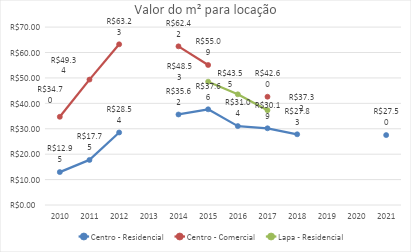
Figure 2: Graph of the value per m² for rent in RA II, between 2010 and 2021[4]
Source: Secovi, 2022 apud PCRJ, 2025c
While rental prices peaked between 2012 and 2015, the values per m² for sale showed growth from 2010 to 2016, with some stability in recent years, as indicated in figure 3. The central region of Rio de Janeiro experienced the effects of large urban projects, mega-events that took place in the city in 2014 and 2016, as well as the Porto Maravilha urban operation. The installation of the VLT (Light Rail Vehicle) also contributed to the valorization of residential properties in RA II, with the connection between the Rio de Janeiro Bus Station and Santos Dumont Airport, Praça XV (ferry station), and the commercial and historic center of the city. Urban revitalization brought countless benefits to residents, merchants, passersby, and public transportation, allowing integration among buses, ferries, metro, VLT, train, and the possibility of cycling routes.
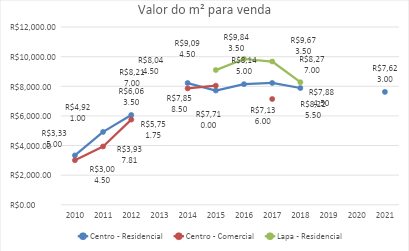
Figure 3: Graph of the value per m² for sale in RA II, between 2010 and 2021[5]
Source: Secovi, 2022 apud PCRJ, 2025c
In the case of a 50 m² apartment in Centro, for example, the rental cost, according to the Secovi survey in 2021, would be close to R$ 1,375.00, equivalent to 1 minimum wage. With the creation of new housing units by the Reviver Centro program, two possible trends emerge: on one hand, the expansion of supply may pressure prices downward; on the other hand, in light of the history of urban revitalization projects in the city, it is likely that the initiative will increase demand for housing in Centro and Lapa, boost the valorization of the area, and, consequently, make properties more expensive.
The risk of gentrification in Centro should not be treated only as a possible side effect, but as a structural tendency when urban rehabilitation takes place in a context of differential land rents and the recomposition of the territory as an investment frontier. The rent gap approach emphasizes that degraded central areas can become highly attractive when the difference between the current capitalized rent and the potential rent after reinvestment is large, stimulating cycles of requalification accompanied by social substitution (Smith, 2005). In contemporary terms, financialization amplifies this mechanism by converting properties and locations into assets, subordinating residential use and daily permanence to profitability strategies, which tends to pressure rents, reduce access, and favor higher-income profiles, especially when there are no public control instruments over allocation and prices (Rolnik, 2015; Zukin, 1995).
The production of housing units in the central region of Rio de Janeiro may bring benefits, but if there is no control by the city hall to prioritize properties for the low-income population, a gentrification process may occur. In Brazil, interference by public authorities in limiting the profit of private entities to serve the public interest, such as increasing the supply of social housing, is uncommon. This limitation, even if temporary, would guarantee a diversity of social classes and access to services in Centro, Lapa, and nearby neighborhoods for people who would not be able to live in the neighborhoods of RA II without government assistance. The public authorities, in this case the Rio de Janeiro City Hall, did not impose any control over the value of properties. In Vienna, for example, the profit of private entities is limited by the government for social housing, as they must provide a minimum standard quality in the developments, built with loans of public funds at low interest rates (Sette, 2023).
If the central urban problem is to transform rehabilitation into socially broad access, the City Statute offers a set of instruments with the potential to shift urban policy from the terrain of incentives to the terrain of redistributive regulation and the induction of socially just use of urban land. Among the mechanisms most directly associated with tackling vacant and underutilized properties and producing well-located housing are: Compulsory Subdivision, Building, and Utilization (PEUC), progressive IPTU over time, and expropriation with payment in public debt bonds, which apply to idleness and allow public authorities to reorient the destination of the urban stock; in addition to the right of pre-emption and value capture instruments (such as the onerous grant), which can finance housing and urban policies in central areas (Fernandes, 2007; Saule Junior; Uzzo, 2010). From the perspective of the right to the city, such instruments are relevant because they recognize property as a social relation conditioned by public purposes, and not as an absolute prerogative: centrality, in this framework, is a disputed urban good whose appropriation must be mediated by criteria of spatial justice (Fernandes, 2007; Lefebvre, 2001; Harvey, 2008).
The recurring distance between the legal statement (social function) and effective practice (low use of coercive instruments on idleness and speculation) can be interpreted as an effect of an urban political economy in which municipal governance is pressured by pro-growth coalitions and by the centrality of real estate capital in the fiscal and political dynamics of cities. In this scenario, revitalization policies often operate as urban entrepreneurial strategies: they prioritize investment attraction and land valorization, while provisions that relativize property rights and impose costs on speculative retention encounter material and symbolic resistance (Harvey, 1982; Vainer, 2000). In Brazil, such resistance is expressed both in the capture of planning by sectoral interests and in institutional fragility to sustain long-term distributive conflicts, which contributes to urban rehabilitation programs inducing the market more than reorganizing rights and access (Fernandes, 2007; Maricato, 2011).
4.1 Short-term rental and floating population
The increase in the supply of housing units in the central region of Rio de Janeiro, a consolidated city with internationally known tourist attractions, brings a phenomenon still under study: short-term rental. Small apartments or studios, with a structure similar to a hotel room, are the option chosen by many travelers and workers who need to spend a period in the city but seek alternatives to conventional renting.
The occurrence of these properties without fixed inhabitants registers a fluctuation in the number of residents in the central carioca region, and they also present different needs from those who live in RA II. The transport network can assist the floating population in moving around Rio de Janeiro, however health and education services, for example, may continue to have idle capacity, as they will not be used by short-term renters.
The solution adopted by other cities in the world was the regulation of properties intended for short-term rental on platforms such as Airbnb. In cities such as Kyoto and Tokyo, in Japan, there is a limit of 180 nights per year for rental, as well as guest identification and prohibition of rental at certain times of the year and days of the week. The limit of days available for rental drops to 90 days in Paris and London, and 60 nights per year in Amsterdam, which also requires that the owner reside in the property for at least 6 months per year. In New York, it is not possible to rent a property for a period longer than 30 days (Souza; Leonelli, 2021).
Increasing the supply of properties in the central region of Rio de Janeiro, with a view to population increase for infrastructure and service optimization, is more complex than laws, decrees, surveys, and studies can indicate and foresee. The city presents constant transformations, which public authorities often cannot keep pace with at the same speed. Regulation is necessary to avoid excesses and to achieve the objectives of the collectivity.
5 Conclusion
The Reviver Centro program was an initiative of the Rio de Janeiro City Hall, following the perception of the decay of the central region (Centro and Lapa), with the closure of businesses and services, as well as the departure of residents from RA II. The urban revitalization project aims to optimize the resources and infrastructure available in the already consolidated carioca center, focusing on the idle capacity of services and the attraction of residents.
Four and a half years after the enactment of the law that instituted the program, the results are still modest. Although 64 licenses for new constructions or retrofit were issued, not all works have been completed; therefore, the 5,872 new residential units have not yet been fully made available for occupation, and this population increase has not been noticed in the region. The expectation is that new licenses will continue to be approved, along the lines of Reviver Centro, to meet the demand of the real estate market. The effects of the program should only become more visible when developments of different standards, as well as different profiles of residents, are enjoying tax exemptions or discounts, and the structure offered by the central region.
Increasing the population of Centro and Lapa means bringing vitality to a consolidated area with a large supply of jobs and services. In the carioca case, the occupation of Centro, above all, was overwhelmingly commercial, with the construction of large buildings in different periods of history. With the distancing of housing, those who work in this region live in other neighborhoods and depend on public transportation or private cars to get to work. The possibility of living close to work reduces neighborhood traffic and favors quality of life, as well as ensuring a balance between residential and commercial uses, with pedestrian flows at different times of the day, for example.
Some points still require attention from public authorities in the coming years: gentrification and short-term rental. The increase in rental values may occur due to the ‘ease,’ sold by the real estate market, of living in the central region and having everything one needs close to home. The status can be created by private entities, as well as the need to live and invest in properties in the carioca centrality. Since many residential units will have small dimensions in the Reviver Centro project, it is expected that these properties will be made available on digital platforms such as Airbnb for short-term rental. If the city hall does not intervene in this type of use, RA II may experience a frequent population variation, with fluctuation in the number of inhabitants. What aimed to bring vitality to Centro and Lapa may disguise the effectiveness of the municipal program.
Planning must seek to minimize future problems, among them, the traffic congestion already present on several roads in the area under study, for example. The city hall allows the retrofit of buildings for mixed or residential uses that do not have parking; however, it is necessary to encourage new means of transportation. Not requiring the construction of garages is not synonymous with residents not having their own vehicles and not needing spaces in private parking lots in the neighborhood.
This article records the progress of Reviver Centro, offering a critical reading and the construction of possible scenarios for the transformation of urban space based on past experiences in Brazil and abroad. Given the lag between licensing, execution, and effective occupation, systematic monitoring of the reports produced by the city hall is recommended, and above all, the verification of the program's effectiveness beyond its formal results. This monitoring must involve all participating entities, from planning to implementation, but without altering the normative axis that guides urban policy: the centrality of the social function of property and the right to the city. Ultimately, the evaluation of Reviver Centro must answer whether the ongoing rehabilitation will produce a polyfunctional and socially diverse centrality or whether, on the contrary, it will reinforce selective valorization and the private capture of urban benefits.
References
BRENNER, Neil; THEODORE, Nik. Spaces of Neoliberalism: Urban Restructuring in North America and Western Europe. Blackwell Publishers, 2002.
FERNANDES, Edesio. Constructing the ‘Right to the City’ in Brazil. Social & Legal Studies, v. 16, 2007. Available at: https://journals.sagepub.com/doi/10.1177/0964663907076529. Accessed on: 07 jul. 2025.
HARVEY, David. Cidades rebeldes: do direito à cidade à revolução urbana. São Paulo: Martins Fontes – selo Martins, 2014.
HARVEY, David. Condição pós-moderna: uma pesquisa sobre as origens da mudança cultural. 17ª edição. São Paulo: Edições Loyola, 2008.
HARVEY, David. O trabalho, o capital e o conflito de classes em torno do ambiente construído nas sociedades capitalistas avançadas. In: Espaço & Debates. São Paulo, n° 6, jun/set, 1982.
JACOBS, Jane. Morte e vida de grandes cidades. Tradução: Carlos S. Mendes Rosa. 3ª ed. São Paulo: Editora WMF Martins Fontes, 2011.
LEFEBVRE, Henri. A produção do espaço. Tradução: Doralice Barros Pereira e Sérgio Martins. 4ª ed. Paris: Editora Anthropos, 2000.
LEFEBVRE, Henri. O direito à cidade. São Paulo: Centauro, 2001.
MARICATO, Ermínia. O impasse da política urbana no Brasil. Petrópolis: Vozes, 2011.
MASSEY, Doreen B. Pelo espaço: uma nova política da espacialidade. Rio de Janeiro: Bertrand Brasil, 2008.
MONTEIRO, João Carlos Carvalhaes; GARCIA, Marcos de Lázaro d’Ávila. O programa Reviver Centro: refuncionalização e novas dinâmicas imobiliárias na área central da cidade do Rio de Janeiro. In: ENCONTRO NACIONAL DA ASSOCIAÇÃO NACIONAL DE PÓS-GRADUAÇÃO E PESQUISA EM PLANEJAMENTO URBANO E REGIONAL (ENANPUR), 2023, Belém. Anais. Belém: ANPUR, 2023. 23 p. Available at: https://anpur.org.br/wp-content/uploads/2023/05/st11-40.pdf. Accessed on: 02 feb. 2026.
ONU-Habitat. Urban regeneration as a tool for inclusive and sustainable recovery. Bilbao, 2021. Available at: https://unhabitat.org/sites/default/files/2022/05/report_egm_urban_regeneration.pdf. Accessed on: 02 feb. 2026.
PESAVENTO, Sandra Jatahy. Com os olhos do passado: a cidade como palimpsesto. Revista Esboços, n. 11, UFSC, 2004.
PREFEITURA DA CIDADE DO RIO DE JANEIRO – PCRJ. Análise Qualitativa das Densidades Construídas em Regiões da Cidade Do Rio De Janeiro. Coordenadoria Geral de Planejamento Urbano – CGPU, Gerência de Informações Urbanísticas – GIU. 2015. Available at: http://www.rio.rj.gov.br/dlstatic/10112/7720635/4211818/3.1.pdf. Accessed on: 15 aug. 2023.
PREFEITURA DA CIDADE DO RIO DE JANEIRO – PCRJ. Decreto n. 48.348, de 1º de janeiro de 2021. Diário Oficial do Município do Rio de Janeiro, Poder Executivo, Rio de Janeiro, RJ, 01 jan. 2021a.
PREFEITURA DA CIDADE DO RIO DE JANEIRO – PCRJ. Decreto n. 49.698, de 27 de outubro de 2021. Diário Oficial do Município do Rio de Janeiro, Poder Executivo, Rio de Janeiro, RJ, 27 out. 2021b.
PREFEITURA DA CIDADE DO RIO DE JANEIRO – PCRJ. Decreto n. 51.134, de 12 de julho de 2022. Diário Oficial do Município do Rio de Janeiro, Poder Executivo, Rio de Janeiro, RJ, 12 jul. 2022.
PREFEITURA DA CIDADE DO RIO DE JANEIRO – PCRJ. Lei n. 6.999, de 14 de julho de 2021. Diário Oficial do Município do Rio de Janeiro, Poder Executivo, Rio de Janeiro, RJ, 14 jul. 2021c.
PREFEITURA DA CIDADE DO RIO DE JANEIRO – PCRJ. Lei Complementar n. 229, de 14 de julho de 2021. Diário Oficial do Município do Rio de Janeiro, Poder Executivo, Rio de Janeiro, RJ, 14 jul. 2021d.
PREFEITURA DA CIDADE DO RIO DE JANEIRO – PCRJ. Relatório Mensal de Acompanhamento sobre o Programa Reviver Centro: novembro/2025. Secretaria de Planejamento Urbano, Coordenadoria Geral de Planejamento e Projetos, Gerência de Normas e Informações Urbanísticas, 2025a. Available at: https://planejamentourbano.prefeitura.rio/informacoes-urbanisticas/relatorios-mensais-de-acompanhamento-reviver-centro/. Accessed on: 29 dec. 2025.
PREFEITURA DA CIDADE DO RIO DE JANEIRO – PCRJ. Reviver Centro. Instituto Pereira Passos, 2025b. Available at: https://reviver-centro-pcrj.hub.arcgis.com/. Accessed in: 29 dec. 2025.
PREFEITURA DA CIDADE DO RIO DE JANEIRO – PCRJ. Reviver Centro: estudos e dados. Instituto Pereira Passos, 2025c. Available at: https://reviver-centro-pcrj.hub.arcgis.com/pages/documentos. Accessed on: 29 dec. 2025.
ROLNIK, Raquel. Guerra dos lugares: a colonização da terra e da moradia na era das finanças. São Paulo: Boitempo, 2015.
SANTOS, Carlos Nelson F. dos. A cidade como um jogo de cartas. Niterói: Universidade Federal Fluminense: EDUFF; São Paulo: Projeto Editores, 1988.
SAULE JUNIOR, Nelson; UZZO, Karina. A trajetória da reforma urbana no Brasil. In.: SUGRANYES, Ana; MATHIVET, Charlotte (Ed.). Cidades para todos: propostas e experiências pelo direito à cidade. Santiago, Chile: Habitat International Coalition (HIC), 2010.
SETTE, André. Viena: uma política de habitação social fora do comum. Caos Planejado, 28 ago. 2023. Available at: https://caosplanejado.com/viena-uma-politica-de-habitacao-social-fora-do-comum/. Accessed on: 31 ago. 2023.
SMITH, Neil. The new urban frontier: gentrification and the revanchist city. Londres: Taylor & Francis, 2005.
TEIXEIRA, Suelem Demuner. As reformas urbanas do Rio de Janeiro no início do século XX (1903-1906) e sua repercussão no território nacional. 27 jul. 2021. Available at: http://querepublicaeessa.an.gov.br/temas/323-reformas-urbanas-do-rio-de-janeiro-no-inicio-do-seculo-xx.html. Accessed on: 31 aug. 2023.
TOLEDO, Mariana Peixoto de. Participação de instituições locais em projetos de revitalização urbana: o caso do Projeto Porto Maravilha na cidade do Rio de Janeiro. 2012. 114 f. Dissertação (Mestrado) – Escola Brasileira de Administração Pública e de Empresas (EBAPE), Fundação Getúlio Vargas, Rio de Janeiro, 2012.
VAINER, Carlos. Pátria, empresa e mercadoria: notas sobre a estratégia discursiva do planejamento estratégico urbano. In: ARANTES, Otília; VAINER, Carlos; MARICATO, Ermínia. A cidade do pensamento único: desmanchando consensos. Petrópolis: Vozes, 2000. p. 75–104.
VILLAÇA, Flávio. Espaço intra-urbano no Brasil. São Paulo: Studio Nobel: FAPESP: Lincoln Institute, 2001.
ZUKIN, Sharon. The cultures of cities. Blackwell Publishers, 1995.
About the Authors
Edson Maia Villela Filho is an architect and urban planner from the Pontifícia Universidade Católica do Paraná (PUCPR), holds a master's degree in Urban Management from PUCPR, and is a doctoral candidate in Architecture and Urbanism at the Universidade Federal Fluminense (UFF). He works with research in the areas of architecture and urbanism, urban and regional planning, sustainability, social housing, and the production of urban space. He has academic production related to urban policies, city planning, and contemporary socio-spatial transformations. He is currently developing doctoral research on the disputes in the construction of urban space, analyzing the tensions between the City Statute and neoliberal urbanism.
Author Contributions
Conceptualization [E.M.V.F.], methodology [E.M.V.F.], software [E.M.V.F.], validation [E.M.V.F.], formal analysis [E.M.V.F.], investigation [E.M.V.F.], resources [E.M.V.F.], data curation [E.M.V.F.], writing—original draft preparation [E.M.V.F.], writing—review and editing [E.M.V.F.], visualization [E.M.V.F.], supervision [E.M.V.F.], project administration [E.M.V.F.], funding acquisition [E.M.V.F.].
Acknowledgments
The author acknowledges the contributions of Professor Marilena Gomes Ribeiro (in memoriam) for the legacy of her Varig memorabilia collection, which sparked and initiated studies on the cultural landscape of Rio de Janeiro through tourism promotion posters.
Funding
This research was funded by the Fundação de Amparo à Pesquisa do Estado do Rio de Janeiro (FAPERJ).
About Coleção Estudos Cariocas
Coleção Estudos Cariocas (ISSN 1984-7203) is a publication dedicated to studies and research on the Municipality of Rio de Janeiro, affiliated with the Pereira Passos Institute (IPP) of the Rio de Janeiro City Hall.
Its objective is to disseminate technical and scientific production on topics related to the city of Rio de Janeiro, as well as its metropolitan connections and its role in regional, national, and international contexts. The collection is open to all researchers (whether municipal employees or not) and covers a wide range of fields — provided they partially or fully address the spatial scope of the city of Rio de Janeiro.
Articles must also align with the Institute’s objectives, which are:
- to promote and coordinate public intervention in the city’s urban space;
- to provide and integrate the activities of the city’s geographic, cartographic, monographic, and statistical information systems;
- to support the establishment of basic guidelines for the city’s socioeconomic development.
Special emphasis will be given to the articulation of the articles with the city's economic development proposal. Thus, it is expected that the multidisciplinary articles submitted to the journal will address the urban development needs of Rio de Janeiro.
[1] Approval of LC 229/21 of 14/07/2021 – Reviver Centro Program
[2] Approval of LC 229/21 of 14/07/2021 – Reviver Centro Program
[3] Approval of LC 229/21 of 14/07/2021 – Reviver Centro Program
[4] In the missing years in the graph, Secovi did not conduct surveys.
[5] In the missing years in the graph, Secovi did not conduct surveys.