
Volume 14 Issue 3 *Corresponding author ritagoncalo@ufrj.com Submitted 26 Jan 2026 Accepted 07 Jun 2026 Published 07 Aug 2026 Citation ALVES, R. C. G.; MOREIRA, J. P. N. Religious urbanity applied to urban management. Coleção Estudos Cariocas, v. 14, n. 1, 2026.
DOI: 10.71256/19847203.14.3.211.2026 The article was originally submitted in PORTUGUESE. Translations into other languages were reviewed and validated by the authors and the editorial team. Nevertheless, for the most accurate representation of the subject matter, readers are encouraged to consult the article in its original language.

| Religious urbanity applied to urban management Urbanidade religiosa aplicada à gestão urbana Urbanidad religiosa aplicada a la gestión urbana Rita de Cássia Gonçalo Alves¹ e João Paulo Noronha Moreira² 1 Universidade Federal do Rio de Janeiro. Av. Pedro Calmon 550 - Ed. Jorge Machado Moreira, 5º andar - Cidade Universitária, Rio de Janeiro, CEP 21941-901. ORCID 0000-0003-4063-6380. ritagoncalo@ufrj.com 2 Universidade Federal do Rio de Janeiro. Av. Pedro Calmon 550 - Ed. Jorge Machado Moreira, 5º andar - Cidade Universitária, Rio de Janeiro, CEP: 21941-901. ORCID 0009-0007-8420-9563. joao.moreira@fau.ufrj.br
AbstractThis text discusses the participation of religious institutions in addressing the public problems of Brazilian cities, legacies of coloniality throughout the urbanization process. The research procedures employed include a bibliographic review of epistemologies of urban planning and anthropology, as well as field ethnographies that considered religious traditions active primarily, though not exclusively, in the city of Rio de Janeiro. Finally, we point to possible alternatives and strategies for integrating religious urbanity into territorial agendas aimed at participation and action-research processes, in order to strengthen civic commitments, conviviality, and urban management. Keywords: faith-based organizations, urbanity, public problems, development, urban management
ResumoO texto discute a participação das instituições religiosas no enfrentamento aos problemas públicos das cidades brasileiras, heranças da colonialidade durante o processo de urbanização. Os procedimentos de pesquisa utilizados são a revisão bibliográfica em epistemologias do planejamento urbano e antropologia e as etnografias de campo que consideraram matrizes religiosas com atuação na cidade do Rio de Janeiro principalmente, mas não exclusivamente. Ao final apontamos as possíveis alternativas e estratégias de integração da urbanidade religiosa às agendas territoriais com fins a processos de participação e pesquisa-ação, de modo a acentuar compromissos cívicos, fortalecer a convivialidade e a gestão urbana. Palavras-chave: organizações de fé, urbanidade, problemas públicos, desenvolvimento, gestão urbana
ResumenEl texto analiza la participación de las instituciones religiosas en el enfrentamiento de los problemas públicos de las ciudades brasileñas, herencias de la colonialidad durante el proceso de urbanización. Los procedimientos de investigación utilizados incluyen la revisión bibliográfica de epistemologías de la planificación urbana y la antropología, así como etnografías de campo que consideraron matrices religiosas con actuación principalmente en la ciudad de Río de Janeiro. Finalmente, señalamos posibles alternativas y estrategias para integrar la urbanidad religiosa en las agendas territoriales orientadas a procesos de participación e investigación-acción, para fortalecer los compromisos cívicos, la convivialidad y la gestión urbana. Palabras clave: organizaciones de fe, urbanidad, problemas públicos, desarrollo, gestión urbana |
1 Introduction
Living in a city is an ambivalent experience. The city dweller's situation becomes more complex because it is precisely the dynamic aspects of city life – such as the economy, transportation flow, climate and environment, and the network of relationships – that simultaneously attract or, alternately, repel. The modern State must confront the task of managing human suffering, in order to reweave the safety net that modern revolution has destroyed, and repair it repeatedly, with new threads and other arrangements, as modernization deforms and wears down urban experience. Yet we know that at the heart of the Brazilian social state there is less collective protection against human misfortunes, nor any redistribution of wealth.
In this conjuncture, religious agents emerge as a central and expanded presence in working-class neighborhoods and peripheral belts, where a huge number of dispossessed populations gather. The integration of those deprived of economic, cultural, or social resources becomes a very difficult process, increasingly arduous; the erosion and dissolution of community ties, as well as oppressive and persistent circumstances, make it difficult for us to attain the implicit status of actual individuals, with all the dignities inherent to the human person, such as housing, water, food, schooling, knowledge, and affection. This capacity to modify the course of events through new investments in relationships and bonds, understood as essential elements in the construction of new social capital, according to a continuous and serious reflection on the conditions of action itself (Bauman, 2009), reinforces the assumption that attention must be paid to religious urbanity – a way of responding to uncertainties and nullifying difficulties, rationing in socioeconomic systems that create blockages and shortages.
For the formation of an agenda of priorities in the formulation of public policies in Brazil, it is therefore fundamental that policy managers articulate with different actors from organized civil society in order to democratize the translation of knowledge about public problems that arise from multiple social symptoms. Among the actors capable of operationalizing problem-situations are religious leaders and faith-based organizations, which currently organize themselves in collective actions and mobilize different repertoires with the public authorities regarding the legitimacy of their diagnoses and interventions, in order to bring public problems pertaining to Brazilian religious matrices to the center of the debate on the public policy agenda.
In order to describe the approximations between religious praxis and the urban environment, we will discuss the role of religious actors in community participation and urban management, and the manner in which Brazilian faith organizations scale their efforts to make good urbanity and the right to the city possible for everyone. Management here is interpreted as the articulation of resources – human, technical, legislative, among others – for the governance of the city through participation or the search for solutions (Herzer, 1994). The object of this articulation is religious urbanity: logics and practices of producing social cohesion that favor the sustainability of life, the feeling of security, belonging, identity, and the possibilities of individual and collective expression alongside – or in the absence of – urban infrastructure.
Initially, we delimit the theoretical-conceptual framework of the change in scope and legal personality of religious institutions on the Brazilian urban agenda. Next, in order to trace the intersectional approaches between religious urbanity and urban management, I describe some civic and legislative opportunities that present themselves to faith organizations to build a new management agenda in which religions participate in this debate, dialoguing about the conditions that materialize the transformation of territories in which patterns of public service provision and the pluralism of bodies and civil experiences prevail.
The methodological procedures used to describe this dimension are ethnographies and surveys of theoretical references in our research[1][2] developed in the urban planning and urbanism programs (IPPUR and PROURB – UFRJ), respectively, between the years 2021 and 2026, whose common research problem we sought to answer was: what new arrangements has religious urbanity configured to weave urban trust today? The research was carried out in the cities of Rio de Janeiro-RJ and Curitiba-PR, and for the purposes of this shared reflection we consider the city of Rio de Janeiro as the geographic cut, citing some examples of the multiple sacred elements that make up our religious diversity. In this text we also add as theoretical references the public policy guidelines organized by the Brazilian Ministry of Human Rights and Citizenship - MDHC, as well as the proposals of international documents such as the Durban Declaration and the Coalition for the Earth, with the protagonism of faith-based organizations, both within the scope of the United Nations, which organize foundational guidelines for governments and public managers to observe that the faith-environment binomial matters.
In this sense, it is understood that the creation of policies to strengthen interreligious dialogue for the purposes of urban management and resilience can: i) Problematize and publicize public problems that go beyond the group of people involved, assuming the character of a political process (Cefai, 2017, p. 190); ii) Make organizations symbolic devices that institutionalize public problems, mobilizing resources for the formation of a public agenda; and iii) Establish an accessible support system between governments and CSOs (civil society organizations) based on knowledge from faith organizations and evidence.
2 Structural and conjunctural factors of Brazilian urbanity: theoretical elements
Brazilian urbanization was based on a historical process constituted by a colonial matrix of power that centralized the creation of cities based on the notions of racial hierarchization; forgetting of the ancestral past; scarcity and disenchantment. (Simas and Rufino, 2018). In practical terms, these are the remnants of the European civilizing project in Brazil, materialized in the spoliation of nature, the subalternization of bodies, and the multiple forms of violence against the most vulnerable, women, and children.
Brazil, which did not experience the urban transition with mass production associated with the organization of labor and wage regimes, nor a centralizing role of the national State in both economic planning and social coverage, was further aggravated by its economic growth being highly concentrated and with a dynamic disconnected from social development (Mello; Mello, 2015), consolidating an extremely unequal society.
The effectiveness of this urbanization model – especially between the period of Juscelino Kubitscheck's reforms up to the military governments – was founded, above all, on the maintenance of a political regime strongly characterized by authoritarian governments and oligarchic interests, which allowed a partial incorporation of the urban masses into the political and social system, controlling their benefits and the alleged accelerated economic growth, in addition to privileging some segments of society to the detriment of the masses as a whole, insofar as it excluded the pattern of social protection for urban workers and legitimized a social order that was at the same time competitive and estate-based.
The decades from 1950 to 1970 represent the temporal milestone for understanding what the specificities of the peripheral character of the Brazilian urban economy, its infrastructure, and the paradoxes involved in its modernization process consist of. The paths taken by Brazil toward growth inevitably had to confront the problems of social arrangements, the peculiar conjunctures of the reproduction of the labor force and housing conditions, reflected in a context of precariousness and underdevelopment that generated improvised urbanization from the second half of the 1950s onward, with a strong concentration of economic, social, political, and cultural power among the classes possessing income and wealth (Fridman, 2013).
Such a phenomenon implied the creation of a dynamic of social organization of the territory based on the logic of the creation, destruction, and recreation of successive internal frontiers for the reproduction of social inequality, which would serve as an instrument for managing social conflict in Brazilian peripheral industrial capitalism. This process, up until the 1970s, was characterized by the intensity and speed of labor force mobilization through the migration of rural masses, generating early metropolization (especially in the country's two largest cities, São Paulo and Rio de Janeiro), constituting Brazilian urbanization with colonial traits, that is, with an urban fabric precarious in infrastructure and regional integration, and a State weakened in the regulation of public affairs.
Thus, the insufficiency of development models anchored in economic growth gave rise, after the 1988 redemocratization, to new actions, services, and priorities, and raised the discussion on development (Lago, 2007) – a term that presupposes the strengthening of the protagonism of local actors; the deconstruction of vertical ties and the increase of the territory's social capital. In this way, development represents a continuous search for the improvement of endogenous processes in which social actors are present, beyond their mobilization in the territory. This ensures that development is not the product of the search for equilibria of macroeconomic statistical aggregates, but rather the conjunction of different efforts and commitments of social actors in their concrete territories and environment.
We explore Denise Ferreira da Silva's (2024) argument to reinforce that development from the exclusive perspective of economic models reveals the effects of colonialism in our days, an enterprise of permanent death that reaches predominantly Black and poor populations, and which, being updatable, requires procedures of enchantment to be dispatched, that is, it requires epistemic ebós, in an amalgam with the concept brilliantly developed by Brazilian thinker and educator Luiz Rufino to establish "communications, exchanges, and inventions of possibilities" (Rufino, 2019, p. 7). We wish to dwell on this episteme to explain the panorama in which faith-based institutions turn their attention to public affairs in the course of Brazilian urban planning.
Ebó is a practice belonging to the faith traditions of African matrix in which plants or food items are used to gift beings understood as sacred in rites of devotion; in the same way, the set of foods and plants can be used to ward off negative forces that bring instability to the exercise of life. In this sense, ebó means the crossing of forces through which energy is distributed. Rufino borrows the word and creates the concept of epistemic ebó to recognize all expanded forms of knowledge and spheres of experience, including here formerly marginalized knowledges – such as Afro-diasporic ones, those of religious groups, peripheral communities, the elderly and ancestors, women, children – seeking the radical transformation of knowledge-power relations. Recognizing, legitimizing, and applying the technologies of the margins, previously belittled by academic tradition, to act in mitigating the world's inequalities is to practice epistemic ebó; in our case, crossing the classical traditions of planning and public management with the ways of knowing-how of those who make up the social, and thus formulating instruments and methodologies for inclusive policies, incorporating differentiated variables for the conciliation of ideas in Global South contexts as a racial and geopolitical experience of inequality, translating the methods for rebalancing aspects of daily life that cross the knowledge of faith collectives and social technologies, establishing exchanges and inventions of possibilities against the grain of coloniality. In this work we use the term Global South to refer to more than a cartographic position located below the countries considered "developed". There is a spatialized organization of racial relations – as a regulating principle of economic, social, and territorial relations, where race becomes the key to establishing or not classificatory acts. In this sense, even in First World countries it is possible to contemplate Global South spatialities. Therefore, racial classification and the spatialization of its interaction, defining experiences where "invisible borders" appear, feelings of belonging (or estrangement, repulsion), spaces for the valorization of Blackness, policies of equality or their absence, are what characterize the Global South, having the operation of the racial criterion as an organizer of relations (Massey, 2008; Emerson dos Santos, 2023).
Once the formation of republican powers is recognized, the formation of the Brazilian State is based on a long experimental process at the cost of varying and successive degrees of trial-and-error procedures regarding what is sought. In the redemocratization of the 1980s, we have the germinal milestone of the existence of the Public as a "shared interest and its capacity to expand beyond those engaged in producing them" (Dewey, 2025, p. 50). The new Federal Constitution emerges, reaching a degree of organization of institutions, as well as the adequacy of authorities to the exercise of their functions concerning the care of public interests. It is in this interval that religious institutions are perceived as indispensable entities in Brazilian popular experience, helping communities to prosper in the face of urban challenges. Religious institutions cease to be merely referents of faith and become part of a universe of civil society organizations - CSOs.
2.1 Faith-based civil society organizations
Civil society organizations are constituted by initiatives with different organizational apparatuses, which through their action give rise to, recognize, or disseminate certain social and environmental struggles, causes, rights, values, and forms of social life and cultural belonging. Most of the time, their ideology, values, and action agenda seek to preserve and expand access to certain rights, goods, and services that deepen democracy, justice, equity, and sustainability, among other causes related to universal rights or those of specific groups.
The following are considered civil society organizations: social movements, popular collectives, forums and networks of movements, community and grassroots organizations, and faith organizations. Non-governmental, third sector, philanthropic, non-profit organizations, and a range of other definitions employed to designate various organizational formats present in civil society are also considered similar. It is worth noting that the expression organized civil society also appears often when one wishes to highlight that certain groupings of civil society differ from others due to greater structuring and formalization (Teodosio, 2014).
One of the most relevant understandings of the social space in which CSOs operate considers them as actors of the public sphere. They would be responsible for expanding this sphere, assumed as a political space of collective articulation on democratic bases in the struggle for different causes, and preserving its rationality vis-à-vis the other spheres and rationalities of contemporary social life, namely, the spheres of the State, public life, and private life. This current interpretation of the role of CSOs and, nevertheless, of faith organizations, marks an attempt to incorporate the political dimension of these actors into the field of social management.
Religious organizations and their CSOs must not obstruct the scope of state secularism. Secularism, which acquires distinct contours in different nations, must be characterized as the environment in which social and political institutions gain independence from any confession, operating based on universal and impersonal values (Santana, 2023). Secularism concerns the State's impartiality with respect to religions, which results in the need to treat beliefs equally. It is in the preamble of democratic participation of institutions regardless of their confession in a republican context, between the late 1980s and 2000, in Brazil, that the possibility of public interest cooperation between the State and CSOs emerges, prescribed in item I of art. 19 of the Federal Constitution, allowing religious institutions and the State to be partners in social works. The eventual partnership to serve the public interest does not annul secularism, nor does it translate into interference of one institution over the other. This permission for partnership "reinforces the idea that religious institutions can act in public life, offering cooperation of an educational, assistential nature, among other collaborations, without compromising state secularism" (Ganem, 2008, p. 5).
Another document that clarifies these premises is the Durban Declaration (UNFPA Brazil, 2001), an international program of action for the fight against racism, discrimination, xenophobia, and related intolerance, which recognizes that [...] "religion, spirituality, and beliefs play a central role in the lives of millions of women and men, and in the way they live and treat other people," and that such dimensions "must contribute to the promotion of dignity and values inherent to the human person and to the eradication of racism, racial discrimination, xenophobia, and related intolerance" (Durban Declaration, UNFPA Brazil, 2001, Article 7). Among the strategies to achieve equity encompassing national and international cooperations and their mechanisms for strengthening mechanisms, the Declaration (Articles 14 and 108) compels States to recognize their problem-situations that violate human dignity in its various expressions, and to adopt measures designed to prevent and eliminate them, organizing democratic forces with institutions including faith denominations.
Further ahead, in 2015, the Sustainable Development Goals in goal 17 – Partnerships and Means of Implementation (United Nations Brazil, 2015), in the topics on addressing systemic issues (items 17.13 to 17.17), reinforce the encouragement of partnerships with organized civil and religious society based on the experience of strategies for mobilizing resources, knowledge, expertise, and technology that can support the achievement of the SDGs, particularly in developing countries, such as Brazil, so that religious communities increasingly work on personal growth, inclusion, and protagonism, being aligned with the world's diversity and civilizational advances.
According to this historical conjuncture and given the peculiarity of Brazilian urbanization, it is important to understand that overcoming urban inequalities and intolerances also includes changing our imaginations about what religion, religious leaders, and faith organizations are – which are not only discourse but also materiality. Mobilizing different repertoires of action, urban studies collaborate to promote the capacity-building of faith communities, encouraging them to become protagonists of development and sustainability in local territories. This is considered a propelling element of urbanity, a word that characterizes the quality of what is urban, corresponding to the "airs of the city." It is translated by adjectives such as conviviality, courtesy, welcome, kindness, citizenship, that which reduces the distance between subjects, and which must be developed both by people and by urban equipment. Furthermore, urbanity has a fundamental value: it must reach everyone, without distinction of any kind. Evoking Urbanity means working diligently to reduce asymmetries.
For urbanity to materialize, actions of integration, vitality, and diversity are necessary to foster conditions for the appropriation of space and generate social cohesion, based on actions that develop in the private and public spheres. In this way, urbanity is also a Political Attitude, behavior towards the urban with performances, manners, modes, and methods that point toward a possible horizon of citizenship and conviviality and toward social practice.
Although it is experienced by humans, the condition of urbanity is extended to the field of socio-technical objects, that is, to the reality constructed from the interactions between human and non-human actors (Latour, 1994). In this line, the city, streets, buildings, and urban services are active participants, or even donors of urbanity. The condition of urbanity is based on establishing possibilities for the formation of welcoming conditions (Hillier, 1983). Thus, speaking of urbanity also means understanding the terms of a social body that welcomes, that allows people to have a feeling of community, belonging, favoring acts of courtesy, welcome, valorization of the human, and social condensation based on material parameters of socio-technical objects and, above all, fostered by political actions, elements that are particularly active in the composition of good urbanity (Pechman, 2002).
When thinking about manifestations for the concreteness of urbanity, we can mention: a safe city, with education, health, housing; a city full of life, with different ways of occupying and appropriating public spaces; the right to diversity and respect for difference; subjects capable of questioning current policies, and of proposing a new political imagination. How can religious expressions in Brazil be activators of urbanity, having their image legitimized positively when religion is often associated with "money-changers," a term that designates individuals who publicly market things of a moral order?
In Brazilian vocabulary, this word is frequently used by citizens who are skeptical of religious practice as something that dignifies human beings. This perception is not entirely unfounded, given that, in Brazil’s urban reality, challenges related to rights violations persist in multiple forms. Although the city is also a setting for economic exchange, cultural production, technological advancement, flows, and mobility, it is above all our ecosystem. It is within the city that the decisive battles for quality of life are fought, and their outcomes have a defining impact on the environment and on social relations. Religion is not detached from this engagement, considering what is most important about the city: its human dimension (Gehl, 2013), the opportunities for encounters that emerge within the spaces where everyday relationships are lived and experienced. The city, as the setting for this convergence, requires both mechanisms and people capable of making such encounters possible.
3 Faith Organizations in the management of public problems
The matrix of Brazilian religious segments, composed largely of Catholics (56.7%), Protestants and Evangelicals (26.9%) and religions of African matrix (2.8%) (IBGE, 2025), has developed over the last 50 years a network of trust and mutual support among its faithful, with help in moments of personal and social vulnerability. In this scenario, religious institutions were and continue to be central in repositioning public problems. It is the current Brazilian civil order that names them as faith or religious organizations and effectively considers their freedom regarding organization, internal structuring, and operation, to better adapt to the reality of each group of people. The Civil Code (Brazil, 2002) also legitimizes both exclusively worship activities and ministerial activities in service and social solidarity. Education, care, basic attention to children, the elderly, and the disabled, combating hunger, and legal and psychosocial assistance are among the most practiced actions by religious entities in the urban environment.
These are basic examples of situations that affect the Brazilian population in their basic rights, perceived here as "public problems," that is: a set of situations or themes that the political community perceives as deserving of public intervention (Dewey, 2025; Cefai, 2017; Secchi; Coelho, 2023). Public problems imply not only objective conditions but also subjective judgments.
Part of the recognition of the relationship of social groups and how they are subject to certain situations is a condition of their intersectionality in the face of the public problem: the way they are crossed by markers of class, gender, race, nationality, environmental factors, religion, disabilities, among others (Collins; Birge, 2021). Considering these markers is substantial for expanding the scope of agents that reach other margins of society.
Some faith organizations have turned to the formation of spaces that function as multi-service urban facilities, such as Evangelical and Catholic megachurches, specifically between 1990 and 2020, reflecting a political option for hegemonic presence in the urban space, to be recognized as support centers for vulnerabilities and providers of various services to users. However, faith being a strong characteristic of many Brazilians, even in a context of social fraying and state absence, other religious communities can gain access to technical knowledge that gives them:
- Expansion of their spectrum of competences for solving practical problems, evidencing results in terms of improvement/innovation within the community context;
- Greater legal stability and the right to effect intersectoral partnerships and participate in public calls, in addition to facilitating access to other sources of funding and, thus, their social and cultural projects grow and are also important structures for promoting urbanity and local development.
In this regard, it is worth mentioning the Regulatory Framework for Civil Society Organizations - Law 13.019/2014 (Brazil, 2014), which deals with partnership instruments between the public administration and CSOs, as well as Federal Decree 8.726/2016 (Brazil, 2016), which regulates the legal procedures for Law 13.019/2014 - MROSC.
The municipal Master Plans establish a protocol of actions for local development. Each Brazilian city with more than 20 thousand inhabitants must have a master plan, as established by the City Statute (Law 10.257/2001) (Brazil, 2001). The master plans constitute public initiatives in strategic development for a period of 10 years, aiming at reducing vulnerability and improving quality of life, privileging activities coordinated with the reality of these territories. It is in this front of opportunities that the participation of religious fronts are essential propositions to strengthen urbanity in urban experience.
Other legal instruments of the Brazilian urban agenda that favor the opportunity for applying activities linked to faith-based organizations are: National Program for Support to Culture (Pronac) - Law 8.313/1991 (Brazil, 1991); Decree 11.453/2023 (Brazil, 2023a), which provides for the fostering mechanisms of the culture financing system that guarantee freedom for artistic, intellectual, cultural, and religious expression, respecting state secularism; National Program for Intangible Heritage (Decree 3.551/2000 (Brazil, 2000), which provides for investment in projects that value habits, customs, festivities, iconography, and oral history of various communities and traditional groups, which Afro-Brazilian and Afro-indigenous religions integrate into this scope); MINC Normative Instruction 8/2016 (Brazil, 2016), which conceives Culture Points as an organic network of cultural creation and management mediated by institutions that promote the sustainability of traditional knowledge.
In line with Dewey's (2025) thought, for whom the formation of States is a continuous experimental process, the following map shows that in cities such as Rio de Janeiro, for example, whose territories have a marked spatial presence of religious communities, the opportunities to develop certain institutional capacities will be useful not only at the local level, in the physical space, but also at the regional level. Figure 1 shows the distribution of the 13,196 religious spaces in the municipality, according to a survey carried out by IBGE in the 2022 Demographic Census. The mapping of their coordinates reveals a greater concentration of religious establishments mainly in the North and West Zones of the city.
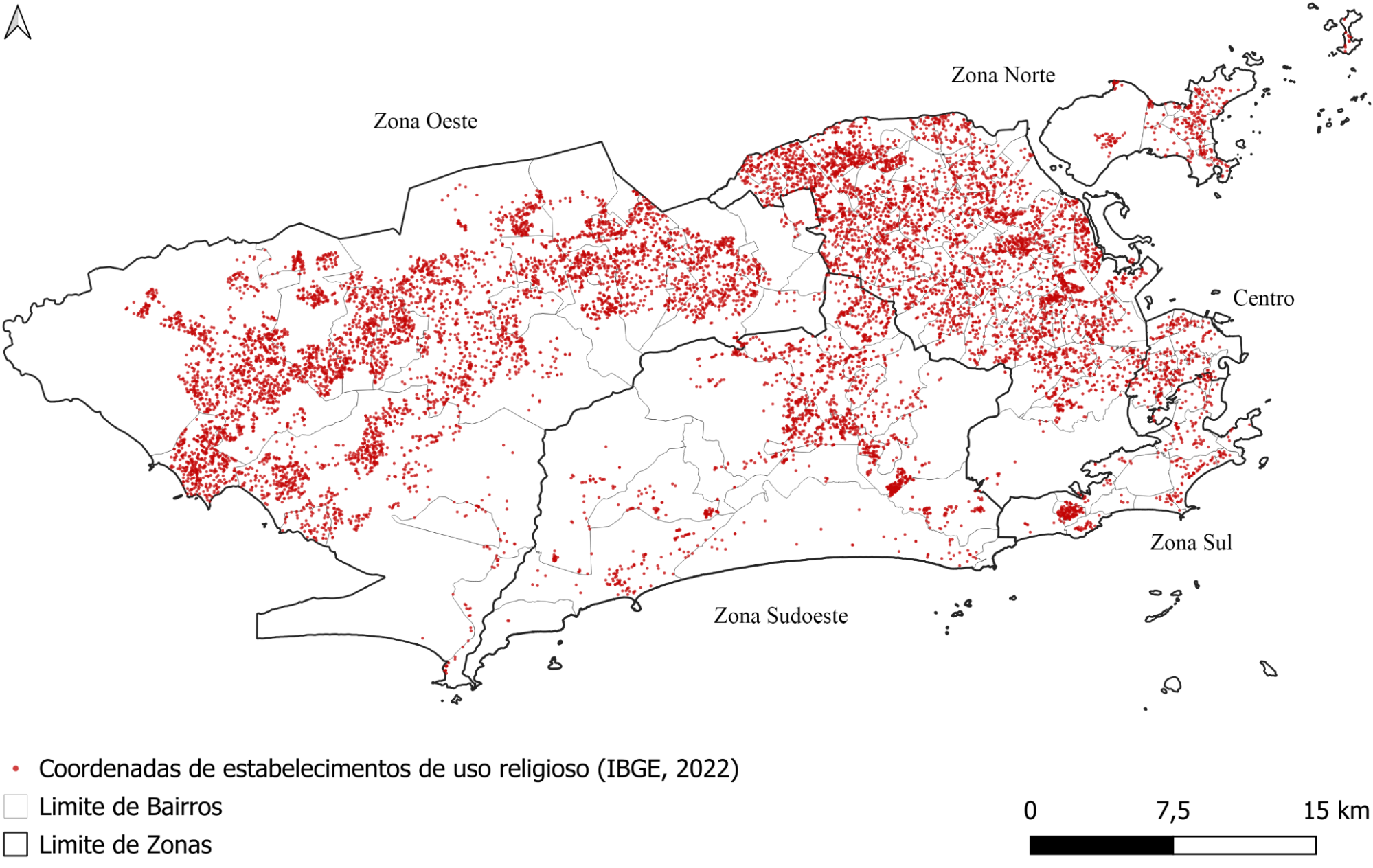
Figure 1: Occupation footprint of religious establishments, based on the 2022 Demographic Census.
Source: Prepared by the authors (2026)
Religious groups have the right to challenge the State regarding collaborative agreements, not to replace the state entity, but to ensure that their organicity and reserve of trust in collective action are duly guaranteed. For this, such groups need to organize themselves institutionally, since any public policy demands cognitive aspects (what is the rationality and ideals involved); rules and normativities (understanding of political grammar); mobilization of different resources; mediation of interests and decision-making. The focus of our discussion is not to systematize all faith-based institutions that already provide services to the public authorities, but rather to highlight and encourage that all religious matrices with a public interest purpose (especially those located in peripheries) can become an institution participating in social management with existence and legal stability guaranteed by law, and once they develop instrumental skills and have easy access to the management and maintenance of projects in government partnerships, without the risk of discontinuity, they will be able to expand the scale of benefits to their territory – as advocated by the Guide for the Foundation and Management of Peripheral CSOs of the federal government (Ministry of Cities, 2025).
In this sense, the transformation matrix of the framework of social and constitutional rights through the formulation of the public policy agenda lies in the correlation of forces (Poulantzas, 2019), and therefore it is essential to subsidize the participatory formation of faith organizations, strengthening their capacities and disposition of intellectual, communicative, and technical capital to invest in strategies for solving public problems, reaching a degree of expanded resonance and reaching a numerous audience.
Table 1: Some models of multi-service projects and multi-site expressiveness carried out by urban religious organizations. Highlight for religious institutions in Rio de Janeiro and mention of two faith-based organizations with national and international reach
Institutions | Description |
Sinagoga Beit Lubavicth (RJ) | Scope of action: Botafogo, Copacabana, Leblon. Services: social assistance for immigrants; basic food baskets; outpatient treatment; social activities, prayer groups, community services in Morro do Borel, Cruzada São Sebastião, and Vidigal. In its social center Lar da Esperança, specializing in elderly care, they offer a communal canteen; community pharmacy; agreements with the Albert Sabin Israeli hospital and specialized centers for hearing aids, cataract surgery, and post-surgical recovery. Official website: www.beitlubavitchrio.org.br |
Froien Farain – Sociedade Beneficente das Damas Israelitas do Rio de Janeiro |
Temporary and recovery residence for elderly people in the postoperative period or who are rehabilitating from clinical illnesses that require intensive special care; Permanent residence for the elderly in the Tijuca neighborhood. 24-hour nursing care, with geriatrician supervision. Physiotherapist, occupational therapist, speech therapist, nutritionist, art therapist services. Integrated with CREB Rio de Janeiro – Center for Rheumatology, Orthopedics and Physiotherapy. Social assistance for people and families in situations of social and economic vulnerability. Official website: www.froeinfarain.org.br |
ARI – Associação Religiosa Israelita |
Dance and theater classes; Cooking workshops; Choral singing course; Vocational and Artistic Workshops (OPA) that prepare neurodivergent young people and adults for the labor market and social integration; Crochet workshops producing scarves, blankets, kits for maternity wards, and other items to warm those who feel cold; Donation of hot meals to homeless people. Self-styled as a Reformist and activist Judaism synagogue, organized into different committees such as Religious Affairs; Social Action; Culture; Education; Interreligious Dialogue; Youth; Mediation and Arbitration in inter and intra-family conflicts. Official website: www.aririo.org.br |
ÚNICA – União Umbandista Luz, Caridade e Amor (RJ) |
Integrative complementary therapies to health - Holistic, Reiki, Shamanic, Massotherapy, Sacred Feminine; Jiu-Jitsu; drum and atabaque classes; English classes; Layette Kit distributed annually to pregnant women in vulnerable situations; legal assistance; dental assistance; basic food baskets. Official Instagram profile: @unicaumbanda |
GEFA – Grupo Espírita São Francisco de Assis |
Scope of action: Ilha do Governador, Nilópolis, Piedade. Distribution of meals and food baskets; Hygiene and health kits; Assistance to pregnant and breastfeeding women; Social assistance to the elderly and their families; Public library. Official website: www.gefailha.com.br |
Primeira Igreja Batista de Curitiba (PR)[3] |
Employment assistance, donation of transportation vouchers and seeking partnerships with companies for the employability of neurodiverse individuals, deaf people, and physically disabled people; hospital support - chaplaincy for multiple medical specialties at Hospital do Rocio; interpreters to accompany deaf people to hospitals; extensive cultural programming for deaf and visually impaired people, such as theater, choreography, and pagode groups; Program to combat domestic violence; Sports inclusion, among others. Creation of Joni's House, dedicated to caring for people with disabilities (Campo Largo-PR). Joni's House is the result of a partnership between Primeira Igreja Batista de Curitiba, Associação Abasc (a CSO belonging to PIB Curitiba) and Hospital do Rocio via SUS (Unified Health System). Since 2013, Pastor Adoniran Melo, from the Ministério Eficiente (for people with special needs), has articulated the institutional ties between the church, government, and executives Steve Bundy, vice-president of the international ministry Joni Friends, and Laura Gardner, president of Joni Friends. The activities developed at Joni's House are attention to physical needs (medicine, physiotherapy, nutrition); psychological needs (psychology and occupational therapies); and training for the labor market. Official website: https://pibcuritiba.org.br |
Igreja Cristã Contemporânea |
Present in the states of RJ, SP, and MG, since 2006 it has been a religious institution and active think tank in the conquest and maintenance of civil rights for the LGBTQIA+ community, especially those linked to civil marriage - such as homoparental adoption (STF/2015), inclusion of a partner as a dependent in the income tax declaration (PGFN/2011), pension rights (Civil Code/2002). Official website: https://igrejacontemporanea.com.br |
Source: Field Surveys (2023-2025). Prepared by the authors (2026).
3.1 Faith organizations and their ambivalences in unequal urban contexts
Faith-based organizations constitute a highly important form of mobilization and empowerment in peripheral communities, including acting as mediators between the State and the population. By dedicating themselves to addressing social needs or defending rights, they expand the activities of their group, collective, or organization and contribute to the transformation of their territories.
On the other hand, we question the virtuousness of the social bonds produced by faith-based organizations, considering that the “common” experience is grounded in the idea that there is a definable public, namely the faithful and the converted. The mediation carried out by faith-based organizations within state bureaucracy does not occur exclusively from the perspective of secularism and universality, in which individuals of any religion would be equally welcomed. Those who effectively belong to the religious community are often granted considerable privilege in the struggle to obtain rights and citizenship (Almeida, 2009).
We have seen that, in Brazilian urbanization, the country's major cities grew as a result of urban development processes linked to industrialization. The more a city concentrated productive activities, the greater the demand for workers became. Consequently, the growing mass of laborers influenced demands for housing, goods and services, as well as the expansion of urban infrastructure. This logic created cities oriented toward the production and circulation of goods, with the concentration of people and their needs emerging as a collateral effect (Maricato, 1996). Simões and Medeiros (2025) remind us that a significant part of Brazilian urban formation bears the mark of the slavery period, given that the social integration of formerly enslaved Black people before and after abolition occurred in a manner that profoundly marginalized these populations. Thus, peripheral territories, generally associated with their “absences,” have been inhabited by Black people, Afro-descendants, and workers since the beginning of their formation. In the authors’ words:
For a long time, the peripheries of large urban centers were considered, whether by the State, political and economic elites, or even by common sense (including among progressive sectors), territories disconnected from the formal city, filled with problems and demands resulting from deficiencies in public policies (Simões and Medeiros, 2025, p. 4).
With regard to religious organizations, especially in peripheral areas, Mafra (2006) explains that, because they possess social prestige, establish effective bonds of mutual aid, and master certain linguistic competencies that foster nuances and degrees of community belonging, such faith-based organizations have contemporarily made significant contributions toward solving problems that governments are unable to confront or address adequately without certain forms of assistance. In this sense, the line of action pursued by faith-based organizations, through their assistance projects, volunteer work, and social investment funds, minimizes the constraining and demobilizing effects produced by the presence of drug trafficking or by multiple forms of state absence within the broader social networks of Brazilian and Rio de Janeiro metropolitan areas (Mafra, 2006, p. 287).
It is noteworthy that faith-based organizations, as the examples in the table demonstrate, act not only from an individual perspective, seeking personal regeneration, but also as a social protection network. They provide support in organizing economic life from practical, moral, and spiritual perspectives. At the same time, there is an ambiguous dimension to the actions of certain faith-based organizations in the Brazilian context. Rather than promoting positive urbanity, they foster the exclusion and sanitization of cultural and/or religious practices in peripheral territories, suppressing Afro-Catholic traditions, reproducing clientelism and other local forms of domination, and reshaping the social context in the name of a supposed “order” linked to organized crime, particularly those adopting a rhetoric of “conquest in the name of God” (Costa, 2024).
Considering the existence of such potentials and limitations of religious organizations in the management of urbanity, one may infer that there is an unequal geographical distribution of production factors and of the scale of religious activities aimed at civic purposes. Solidarity and the construction of spaces of proximity to public demands appear to be linked to religious belonging as a condition for resource sharing, thereby limiting the reach of network effects. While preferences for fellow believers strengthen social bonds, they also render them redundant. In this sense, religious urbanity, although it produces effects of protection and organization, still exhibits exclusivist and conversion-oriented characteristics and, in the contemporary period, possesses limited lateral expansion and reciprocal democratization across broader civil society.
We understand, following Michel Trouillot (2006), that the analytical construction of the State is not restricted solely to the state apparatus. For him, state power, its effects, processes, and practices “are never achieved solely through national institutions or governmental sites” (Trouillot, 2006, p. 126), and other organizations may act in support of the welfare state. Nevertheless, “state effects” as mediators of state bureaucracy must occur from the perspective of secularism, in which everyone is welcomed, grounded in a healthy foundation of universal rights and resistance to clientelism and supposed “loyalties” that weaken governance.
What, then, is the political space that religious representations should occupy within the civic order of a secular state? It is the space in which believers, temple users, and especially workers, women, children, older adults, people with disabilities, and all those who are not religious have their “existence and participation enhanced through democratic solidarity” (Laville, 2023, p. 359). We believe that faith-based organizations can be one of the many spaces through which the right to the city is realized, opening themselves to public regulation rediscovered through education and through the participation of populations in building relations of equality that strengthen the political community.
It is important to revisit the meaning of secularism, whose political principle makes it possible to separate the public (or civic) sphere from the sphere of religion. Through secularism, one also envisions the exercise of individual freedoms, including freedom of thought, conscience, and conviction, as well as the coexistence of differences, whether biological, social, or cultural (Outhwaite and Bottomore, 1996). Secularism derives its legitimacy from the people as a whole, that is, from popular sovereignty, and is therefore impartial regarding religion. Access to fundamental rights must also be considered from the perspective of secularism, even when faith-based organizations or religious spaces promote projects and policies aimed at advancing social justice. As institutions of solidarity and producers of primary bonds that sustain urban life within peripheral contexts, FBOs (faith-based organizations) cannot fail to “offer social protection against the risks of everyday life and recognition of the existence and identity of every human being, valuing them through the gaze of others above all” (Paugam, 2019, p. 211).
This line of thought adds a fundamental element to religious urbanity: concern with finding ways to reconcile differences among those who inhabit the city, in an effort to deconstruct the homogeneity of seeing, feeling, and physically experiencing social spaces. Considering protection and recognition is essential for undertaking transformations in the social bonds of religious urbanity throughout this century. Since religions often appear to recognize differences in a highly controlled manner, the objective would be to give visibility to the multiple identities inscribed in the urban landscape, together with the possibility of transforming their realities.
The challenge facing planners and implementers of urbanity policies within faith-based organizations in managing difference lies in negotiating fears and alterities, mediating memories and hopes, and facilitating change and transformation. In Table 1 itself, we observed that within the multi-site sphere of action of faith-based organizations, for example, there is no mention of integration projects aimed at LGBTQIA+ populations, with the exception of Igreja Contemporânea, which operates nationwide. We cannot think or speak of complementarity in terms of social cohesion when faith-based organizations are nourished by a desire for division, marginalizing other identities and other faiths. Reflecting on projects aimed at reforming social bonds through religious urbanity has been one way of better interpreting social problems and seeking more balanced forms of coexistence with the environment.
Issues such as resource distribution, power relations, and access to information continue to determine which solutions advance and which remain on the margins. Once incorporated into the regulatory framework governing civil society organizations and capable of mobilizing resources to promote social justice, it is imperative that the urbanity policies of faith-based organizations expand connections among territories and civic identities to ensure that these experiences influence public policies. Such processes are fundamental steps toward meaningful progress.
Everything depends on how equality and alterity are understood, and from which perspectives. Equality presupposes recognizing that individuals, as human beings, deserve equally dignified and respectful treatment, particularly regarding access to social and cultural facilities. Specific alterity means recognizing that individuals with particular needs, while equally deserving of dignified and respectful treatment, require differentiated forms of access in comparison with others. For this reason, we uphold the premise of the need for coordinated and simultaneous action on multiple fronts that develop, strengthen, and balance the scalar performance of faith-based organizations across metropolitan areas and peripheral territories.
Many opportunities present themselves, and it is undeniable that religions crystallize the potentialities of positive urbanity, thereby expanding their repertoire of contemporary social participation. The secular state defends the freedom to believe and not to believe, and within it all expressions of faith must have a democratic arena in which to express their beliefs and their projects of inclusion. To practice secularism in the Brazilian context is to recognize that community organizations based on faith act as a driving force among urban and rural peripheral populations and, for this reason, guaranteeing religious freedom and the coexistence of all belief systems is valid, including for the strengthening of citizenship. At the same time, religious expressions in Brazil face contemporary challenges with which they must engage and evolve, such as confronting urban intolerance and promoting respect for diversity.
4 The Role of Religious Leaders: How to Articulate Methodologies of Popular Participation in Urban Management
The 1988 Federal Constitution and the City Statute provide fundamental elements to reverse the historical process of unequal development, and one of these is popular participation in city planning and management. Making these elements viable and effective is the great challenge to overcome, since it presupposes:
- a renewed and generous vision on the part of public authorities to share power with different social segments;
- the establishment of consultative and deliberative forums, with permanent and temporary communication channels;
- the production of information about the urban reality in accessible and transparent language;
- the formation of coordinating groups to ensure that everyone has the right to a voice, as a condition of credibility to advance the urban management process. Only in this way do divergent interests emerge, conflicts are made explicit, and, based on them, a pact is built.
More than that, the process of popular participation in the Brazilian context demands a cultural change. To build the real possibility of participation by those historically excluded from decision-making processes, structured social mobilization action is necessary. It is necessary to change the tools of dialogue and work with other languages – such as art, music, religion, the body, lived stories –, as well as to renew the characters who have led this process. In this sense, I want to highlight the role of religious leadership in urban management.
Chapter IV of the City Statute deals exclusively with the Democratic Management of Cities and lists representative associations of the various segments of the community, in order to guarantee the full exercise of citizenship. To guide the implementation of participatory instruments, it is essential to establish varied forms of participation, and for this, city governments need to induce the process with collectives. And to consider faith-based organizations within this set.
The religious leader engaged with his or her community helps to express the diversity of the social sectors active in the neighborhood and municipal spheres; visualizes the “city we have” based on issues present at the community scale; observes that the construction of a less conflictive and exclusionary, more harmonious and just city depends on his or her participation. It is understood that in the process of struggle and achievements of improved living conditions, broad democratic and collective participation is associated. Therefore, religious leaders and people of faith have a special and direct responsibility in promoting well-being and play a positive role in this relationship, promoting mediation and educational literacy that are part of building urbanity. It is through their action that their faith community can recognize its potentialities and capacities, with the aim of emancipating citizens through mutual, socially and territorially referenced dialogue.
What are the conflicts of interest that we identify in reading the city and what paths should be followed to transform it?
The main indicators of intolerance in Brazil include a significant growth in religious intolerance based on racism and racial discrimination, as well as homophobia, as predominant factors of human rights violations (Santos; Dias; Costa Santos, 2023). Two very practical elements can be mentioned for a holistic response to the polarization, divisions and intolerances that dampen urban coexistence. The first concerns the establishment of legal and moral limits to freedom of expression (MDHC, 2025).
Although there has been progress on this issue in the Brazilian legal framework – such as Laws 9,459/1997 (Brazil, 1997) and 14,532/2023 (Brazil, 2023b), which define the sanctions resulting from prejudices of color or race that include religious intersections –, Brazil still lacks specific improvement in legislation that describes the scope of possibilities of discriminatory practices, classifying the sanctions and making them non-bailable. This is a fundamental tool to protect people from violence and harassment based on their faith. In addition to punishing and deterring such acts, effective legislation allows people of all faiths to participate more in cultural, religious, social, and economic life, legitimizing their relevance and promoting understanding.
Therefore, it is important that religious leaders affiliate themselves with human rights groups and faith-based organizations that actively work to strengthen religious communities, confront religious intolerance and promote diversity and equity with a focus on political articulations and actions to promote public policies. In Brazil, we have as a central example of this protagonism the CEAP - Center for the Articulation of Marginalized Populations, which since 1989 has urged political authorities and institutions to work together for comprehensive anti-discrimination laws and to use them where they exist. Among the multisectoral partnership activities of great repercussion, with CEAP's protagonism, we cite the inauguration of the Memorial of Black Hands (2024) at the Rio de Janeiro Botanical Garden Institute - JBRJ, an initiative of the government agenda on gender, race, diversity and inclusion in joint articulation of the Ministry of the Environment and Climate Change, black religious leaders, university researchers and JBRJ staff. The episode surely informs that religious leaders with influence and large networks can familiarize their communities with the law – and with ways to invoke its protection.
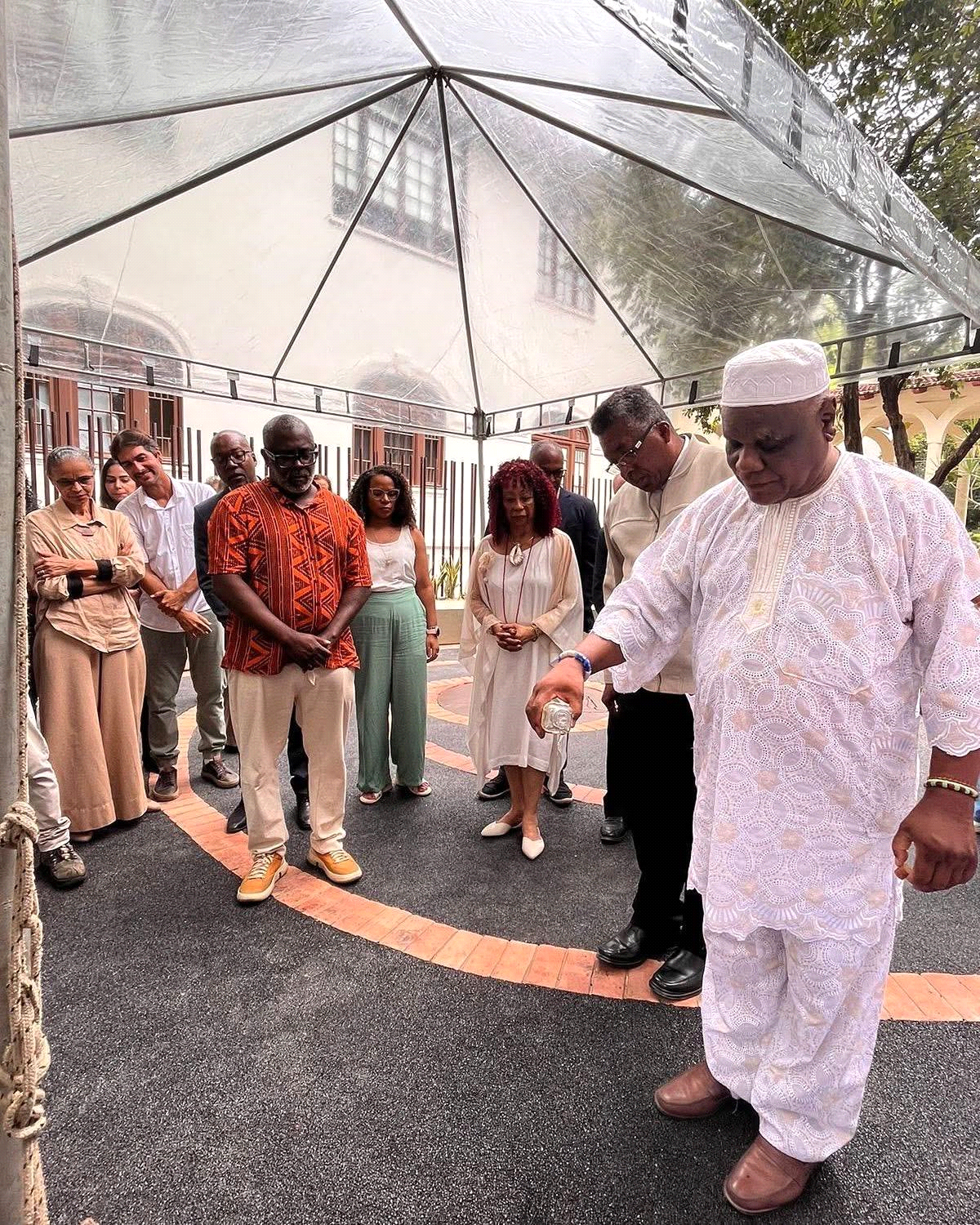
Figure 2: Inauguration of the Memorial of Black Hands JBRJ (2024) for the recognition of the histories and memories of enslaved people who built the Botanical Garden of Rio de Janeiro.
Source: Babalaô Ivanir dos Santos (2024)
Secondly, society needs more initiatives that promote a culture of peace based on human rights, such as, for example, education and digital literacy centers. They may also have a gender element, since expressions of religious hatred often disproportionately target women and girls. Terreiros, churches, synagogues, mosques, and other religious temples, as well as universities, activists, philanthropists, trade unions and even cultural sector entrepreneurs, for example, can form a diverse think tank of mediators and translators of a public reason (Cefai, 2017, p. 208), creating a constellation of experiences that intersect and interpenetrate for the purpose of responding to public problems.
This is because in Brazil, as religious self-declaration expands, the reflexes of an extremist thought that incites violent discursive acts and even property damage against other religions grow, with Afro-Brazilian traditions as the main victims of this scenario. The Ministry of Human Rights and Citizenship, in the document Evidence Notebooks (2025), recorded that, in 2024, 1,906 cases of human rights violations of a religious nature were registered, and of these, 60% occurred in the Southeast region (São Paulo and Rio de Janeiro), considered the most “developed” region of the Brazilian territory. A large part of these violations occurs in the internet environment, such as blogs, forums and social media. Therefore, it is necessary to mobilize religious leaders from all segments in initiatives that “confront manipulation, ideological propaganda and disinformation that result in a chain of violence and coordinated attacks” (MDHC, 2025, p. 167).
These are ways to address the root causes of intolerance and partial religious freedom as public problems in order to build communities in which expressions of hate are socially unacceptable. Urbanity has as its central value reaching all people; thus, our cities cannot live under the aegis of a “filtered” urbanity. Federal, state and municipal administrations that are deeply committed to working to combat intolerance, discrimination and violence against people based on religion or belief will certainly be on a promising path to develop and apply the premises of good urbanity allied with the ethical foundations of religions in urban management, considering that they have an essential role in addressing the polarization and conflicts that disfigure our world and in contributing to reconciliation.
5 Implications and Contributions for Society
In order for the participatory dimension to be able to gain scale, encompassing the formative sense that is claimed to be intended, the cooperation and participation of religious movements appear, thus, as an intrinsic condition to local development, especially in the most fragile territories. Given the capillarity of multi-religious language in Brazil (with more than 80% of the population self-declaredly linked to a religious segment) (Sidra IBGE, 2025), it is observed that the urbanity undertaken by urban and rural religious currents advocate a method that can accentuate social commitments, with concrete possibilities of increasing territorial endogenous capacity, through concerted action via partnerships, networks and diverse forms of inter-institutional articulation, giving rise to new forms of management and governance of local development.
It is also necessary to consider the existence of structural factors challenging the mobilization for the development of religious urbanity in the Brazilian context, as they imply overcoming obstacles of a complex and deep-rooted nature, so that progress can be made towards increasing local protagonism, social capital and endogenous capacity. This takes on even greater importance if we consider the reality of metropolises such as Rio de Janeiro where there are, historically, feelings such as fear, distrust, control, criminalization of poverty, militarization of state intervention, besides being considered political fiefdoms receptive to so-called "benefiting" actions, but accumulating chronic deficits of citizenship, opportunities and resources of multiple natures.
We present that the need to strengthen endogenous capacity through religious urbanity associated with urban management is linked to the knowledge of the actions of religious segments and their leaders in the territory and their collective domains. This assertion understands that the notion of religious urbanity is a process, but considers its centrality associated with the component of capacity building and strengthening of grassroots territories. We have seen that it is necessary to invest in public policies that encourage community-religious participation, since without stimulus, development does not happen. In this context, the presence of the State is necessary, but not exclusive. Religions play a significant role in the formation and dynamics of cities, influencing the perception and behavior of citizens. Research on faith-based organizations and urban management reveals that religions are not limited to being merely spiritual practices, but also have an impact on the structuring and organization of urban space.
6 Conclusion
In this text we articulate the ways in which religious urbanity can expand its repertoires of action in the urban sphere to overcome the processes of marginalization that faith communities may face, to the detriment of a hegemonic evangelical Christian apparatus. The objective was to identify changes and opportunities from the innovation of legislation regarding urban management and civil rights, as well as from mechanisms such as programs and policies aimed at civil society organizations, including those linked to religious entities.
It is considered relevant to illuminate the civic dimension of religious institutions and their leaders inserted in an ecosystem of exercise of citizenship, racial literacy, political participation and equity in rights. We understand that this aspect characterizes the new development qualifications that religious entities can elaborate in favor of the emancipation of people, inclusion and community protagonism, mobilizing a vast ecosystem of agents by implementing actions that work towards equal opportunities, especially for minoritized groups such as peripheral populations, women, black men and women, indigenous people, LGBTQIA+.
In the Brazilian context, equipping peoples of terreiro and other faith-based organizations to access public policies is fundamental to empower and combat religious racism, to build alliances and enable them to expand well-being actions. As measures, it is suggested to strengthen the combined uses of religious facilities and existing structures that allow them to expand their capacity to be agents of urban resilience in cities, insofar as their institutional arrangements are recognized by the local population. And in this sense, whenever it is possible to expand the institutionalization of faith-based organizations' projects and the transversality of their related policies, an aggregating tool will be glimpsed in the fight against intolerance and religious racism, contributing to the public resonance and salience of social policies that emerge from Afro-religious collectives and other inclusive faith communities.
The art of living peacefully with differences and extracting benefits from this variety of stimuli and opportunities is becoming the most important of the skills that a city dweller needs to learn and exercise. Therefore, it is essential that religious traditions have the possibility of creating institutional forces to leverage their competencies and creativity, in order to use their influence and social technologies of existence and resistance to create better health, education, better pedagogical mechanisms, better conviviality and well-being, for faith institutions are, undoubtedly, agents of local trust, on which the community relies.
References
ALMEIDA, Ronaldo. Pluralismo religioso e espaço metropolitano. In: ALMEIDA, Ronaldo; MAFRA, Clara. Religiões e cidades: Rio de Janeiro e São Paulo. São Paulo: Terceiro Nome, 2009. p. 29-50.
ASSOCIAÇÃO RELIGIOSA ISRAELITA. Home. Available at: https://aririo.org.br/. Accessed in: 04 apr. 2026.
BAUMAN, Zygmunt. Confiança e medo na cidade. Rio de Janeiro: Zahar, 2009.
BEIT LUBAVITCH RIO. Home. Available at: https://www.beitlubavitchrio.org. Accessed in: 04 apr. 2026.
BRASIL. Constituição da República Federativa do Brasil. Brasília, DF: Senado Federal, 1988.
BRASIL. Decreto 3.551, de 4 de agosto de 2000. Registro de bens culturais de natureza imaterial do patrimônio cultural brasileiro. Available at: https://www.planalto.gov.br/ccivil_03/decreto/d3551.htm. Accessed in: 21 may 2026.
BRASIL. Decreto 11.453, de 23 de março de 2023a. Mecanismos de fomento do sistema de financiamento à cultura. Available at: https://www.planalto.gov.br/ccivil_03/_ato2023-2026/2023/decreto/d11453.htm. Accessed in: 21 may 2026.
BRASIL. Instrução Normativa MINC número 8, de 11 de maio de 2026. Política Nacional de Cultura Viva - PNCV. Available at: https://www.gov.br/turismo/pt-br/centrais-de-conteudo-/publicacoes/atos-normativos-secult/2016/instrucao-normativa-minc-no-8-de-11-de-maio-de-2016. Accessed in: 21 may 2026.
BRASIL. Lei 8.313, de 23 de dezembro de 1991. Programa Nacional de Apoio à Cultura: Lei Rouanet. Available at: https://www.planalto.gov.br/ccivil_03/leis/l8313cons.htm. Accessed in: 21 may 2026.
BRASIL. Lei 8.726, de 27 de abril de 2016. Regime Jurídico das parcerias entre administração pública e OSC. Available at: https://www.planalto.gov.br/ccivil_03/_ato2015-2018/2016/decreto/d8726.htm. Accessed in: 18 may 2026.
BRASIL. Lei 9.459, de 13 de maio de 1997. Delitos resultantes do preconceito de raça ou cor. Available at: https://www.planalto.gov.br/ccivil_03/leis/l9459.htm. Accessed on: 18 may 2026.
BRASIL. Lei 10.257, de 19 de julho de 2001. Estatuto das Cidades. Available at: https://www.planalto.gov.br/ccivil_03/leis/leis_2001/l10257.htm. Accessed in: 18 may 2026.
BRASIL. Lei 10.406, de 10 de janeiro de 2002. Código Civil. Available at: https://www.planalto.gov.br/ccivil_03/leis/2002/l10406compilada.htm. Accessed in: 18 may 2026.
BRASIL. Lei 13.019, de 31 de julho de 2014. Mútua cooperação entre a administração pública e OSC (Marco Regulatório das Organizações da Sociedade Civil). Available at: https://www.planalto.gov.br/ccivil_03/_ato2011-2014/2014/lei/l13019.htm. Accessed in: 18 may 2026.
BRASIL. Lei 14.532, de 11 de janeiro de 2023b. Racismo e injúria racial. Available at: https://www.planalto.gov.br/ccivil_03/_ato2023-2026/2023/lei/l14532.htm. Accessed in: 18 may 2026.
CEFAI, Daniel. Públicos, problemas públicos, arenas públicas… O que nos ensina o pragmatismo (Parte I). Novos Estudos Cebrap, São Paulo, v. 36, n. 1, p. 187-213, 2017.
COLLINS, Patricia Hill; BIRGE, Silma. Interseccionalidade. São Paulo: Boitempo, 2021.
COSTA, Viviane. A cidade santa. In: VENTURA, Elisa; ROSADO NUNES, Isabela; VENTURA, Mauro (Orgs.). Cidade partida, 30 anos depois: reflexões sobre a obra de Zuenir Ventura. Rio de Janeiro: Blooks Projetos/Mina Comunicação e Arte, 2024.
DEWEY, John. O público e seus problemas. Novo Hamburgo, RS: Logos, 2025.
EMERSON DOS SANTOS, Renato. Expressões espaciais das relações raciais: algumas notas. Boletim Campineiro de Geografia, v. 12, n. 1, p. 11-28, 2023. DOI: 10.54446/bcg.v12i1.2840.
FERREIRA DA SILVA, Denise. A dívida impagável. São Paulo: Casa do Povo, 2024.
FRIDMAN, Fania. Cidades do novo mundo: ensaios de urbanização e história. Rio de Janeiro: Garamond, 2013.
FROEIN FARAIN – SOCIEDADE BENEFICENTE DAS DAMAS ISRAELITAS DO RIO DE JANEIRO. Home. Available at: https://froeinfarain.org.br. Accessed in: 04 apr. 2026.
GANEM, Cássia Maria Senna. Estado laico e direitos fundamentais. In: DANTAS, Paulo et al. (Orgs.). Constituição de 1988: o Brasil 20 anos depois: os alicerces da redemocratização. Brasília, DF: Senado Federal, 2008. p. 234-254. Available at: https://www12.senado.leg.br/publicacoes/estudos-legislativos/tipos-de-estudos/outras-publicacoes/volume-i-constituicao-de-1988/principios-e-direitos-fundamentais-estado-laico-e-direitos-fundamentais. Áccessed in: 18 may 2026.
GEFA – GRUPO ESPÍRITA SÃO FRANCISCO DE ASSIS. Home. Available at: https://www.gefailha.com.br/. Accessed in: 04 apr. 2026.
GEHL, Jan. Cidades para pessoas. São Paulo: Perspectiva, 2013.
HERZER, Hilda. Modelo teórico-conceptual para la gestión urbana en ciudades medianas de América Latina. CEPAL, 1994.
HILLIER, Bill. The Social Logic of Space. Cambridge: Cambridge University Press, 1983.
IGREJA CRISTÃ CONTEMPORÂNEA. Home. Available at: https://igrejacontemporanea.com.br. Accessed in: 04 apr. 2026.
LAGO, Luciana Correia do. Trabalho, moradia e (i)mobilidade espacial na metrópole do Rio de Janeiro. Cadernos Metrópole, v. 18, p. 275-293, 2007. Available at: https://revistas.pucsp.br/index.php/metropole/article/view/8738. Accessed in: 18 may 2026.
LAVILLE, Jean-Louis. Uma economia para a sociedade: terceiro setor, economia local, economia solidária. Rio de Janeiro: Ateliê de Humanidades, 2023.
LATOUR, Bruno. Jamais fomos modernos. Rio de Janeiro: Editora 34, 1994.
MAFRA, Clara. Drogas e símbolos: redes de solidariedade em contextos de violência. In: ZALUAR, Alba; ALVITO, Marcos (Orgs.). Um século de favela. 5. ed. Rio de Janeiro: Editora FGV, 2006.
MARICATO, Ermínia. Metrópole na periferia do capitalismo: ilegalidade, desigualdade e violência. São Paulo: Hucitec, 1996.
MASSEY, Doreen. Pelo Espaço: uma nova política da espacialidade. Rio de Janeiro: Bertrand Brasil, 2008.
MELLO, Ricardo Ferreira; MELLO, Ruth Espínola Soriano. Estratégias participativas e a pesquisa-ação para o desenvolvimento local. In: ADDOR, Felipe; HENRIQUES, Flavio Chedid (Orgs.). Tecnologia, participação e território: reflexões a partir da prática extensionista. Rio de Janeiro: Editora UFRJ, 2015. p. 309-330.
MINISTÉRIO DAS CIDADES. Guia para Fundação e Gestão de OSCs Periféricas. Brasília: Ministério das Cidades, 2025.
MINISTÉRIO DOS DIREITOS HUMANOS E CIDADANIA (MDHC). Cadernos de Evidências em Direitos Humanos. Brasília, 2025. Available at: https://bibliotecadigital.mdh.gov.br/jspui/handle/192/14353. Accessed in: 18 may 2026.
NAÇÕES UNIDAS BRASIL. Como as Nações Unidas apoiam os Objetivos de Desenvolvimento Sustentável no Brasil. 2025. Available at: https://brasil.un.org/pt-br/sdgs. Accessed in: 18 may 2026.
NAÇÕES UNIDAS BRASIL. Objetivo de Desenvolvimento Sustentável: 17 Parcerias e meios de implementação. 2025. Disponível em: https://brasil.un.org/pt-br/sdgs/17. Acesso em: 18 mai. 2026.
OUTHWAITE, William; BOTTOMORE, Tom. Dicionário do Pensamento Social do Século XX. Rio de Janeiro: Zahar, 1996.
PAUGAM, Serge. Desigualdades e laços sociais: por uma renovação da teoria do vínculo. Entrevista. Plural: Revista de Ciências Sociais, v. 26, n. 1, p. 208-232, 2019. DOI: 10.7440/res64.2018.03.
PECHMAN, Robert. Cidades estreitamente vigiadas: o detetive e o urbanista. Rio de Janeiro: Casa da Palavra, 2002.
POULANTZAS, Nicos. A unidade do poder e a autonomia relativa do Estado capitalista. In: POULANTZAS, Nicos. Poder político e classes sociais. São Paulo: Unicamp, 2019.
PRIMEIRA IGREJA BATISTA DE CURITIBA. Home. Available at: https://www.pibcuritiba.org.br. Accessed in: 04 apr. 2026.
RUFINO, Luiz. Pedagogia das encruzilhadas. Rio de Janeiro: Mórula, 2019.
SANTANA, Raquel. Laicidade. In: ISER. Dicionário para entender o campo religioso. Rio de Janeiro: ISER, 2023. p. 13-18.
SANTOS, Carlos Alberto Ivanir dos; DIAS, Bruno Bonsanto; COSTA SANTOS, Luan. II Relatório sobre Intolerância Religiosa: Brasil, América Latina e Caribe. Rio de Janeiro: CEAP/DPU, 2023.
SECCHI, Leonardo; COELHO, Fernando. Políticas públicas: conceitos, casos práticos, questões de concurso. São Paulo: Cencage, 2023.
SIDRA IBGE. Censo Demográfico 2022: Características gerais da População e Religião. 2025. Available at: https://censo2022.ibge.gov.br/panorama/. Accessed in: 18 may 2026.
SIDRA IBGE. Censo Demográfico 2022 - Religião - Resultados preliminares da Amostra. 2025. Available at: https://sidra.ibge.gov.br/pesquisa/censo-demografico/demografico-2022/amostra-religioes. Accessed in: 18 may 2026.
SIMAS, Luiz Antonio; RUFINO, Luiz. Fogo no mato: a ciência encantada das macumbas. Rio de Janeiro: Mórula, 2018.
SIMÕES, Guilherme; MEDEIROS, Josué. As periferias urbanas como ambiente fértil para mudanças sociais. Revista Brasileira de Estudos Urbanos e Regionais, v. 27, 2025. DOI: 10.22296/2317-1529.rbeur.202524.
TEODOSIO, Armindo dos Santos de Sousa. Organizações da sociedade civil. In: BOULLOSA, Rosana de Freitas (Org.). Dicionário para a formação em gestão social. Salvador: CIAGS/UFBA, 2014. p. 128-132.
TROUILLOT, Michel-Rolph. The anthropology of the State in the age of globalization. Current Anthropology, v. 42, n. 1, p. 125-138, 2006.
UNFPA BRAZIL. Declaração de Durban (III Conferência Mundial Contra o Racismo, Discriminação Racial, Xenofobia e Intolerâncias Correlatas). 2001. Available at: https://brazil.unfpa.org/sites/default/files/pub-pdf/declaracao_durban.pdf. Accessed in: 18 may 2026.
ÚNICA – UNIÃO UMBANDISTA LUZ, CARIDADE E AMOR. Perfil no Instagram. Available at: https://www.instagram.com/unicaumbanda/. Accessed in: 04 apr. 2026.
UNITED STATES ENVIRONMENT PROGRAMME. Faith for Earth Coalition. 2023. Available at: https://www.unep.org/about-un-environment/faith-earth-initiative. Accessed in: 18 may 2026.
About the Authors
Rita de Cássia Gonçalo Alves is a sociologist with a Ph.D. in Urban and Regional Planning from the Federal University of Rio de Janeiro and a postdoctoral degree from the same institution. She is a professor and arts curator. Her research focuses on Brazilian-model evangelical megachurches, particularly evangelical Christian corporations expressed through architectural components and their combined uses, including social assistance, education, artistic production, and management activities. Her publications in articles and essays over the past decade address critical issues related to neopentecostal corporations, urbanity, convivial urban planning, and public policies. She is the author of the book Gospel Urbanity: Evangelical Megachurches in the Urban Experience (Ateliê de Humanidades Press, 2023).
João Paulo Noronha Moreira is an architect and urban planner graduated from the Federal Rural University of Rio de Janeiro and holds a Master's degree in Urbanism from the Federal University of Rio de Janeiro. His most recent research focuses on investigating the relationship between evangelical spaces and the urban contexts in which they are located, with particular interest in the relationship between the distribution of these religious spaces and that of other urban facilities, especially those related to leisure, culture, and social interaction, as well as their relationship with socioeconomic indicators within the territories of the city of Rio de Janeiro.
Author Contributions
Conceptualization, R.C.G.A.; methodology R.C.G.A.; software, J.P.N.M.; formal analysis, R.C.G.A.; investigation, R.C.G.A.; J.P.N.M.; data curation; , R.C.G.A.; J.P.N.M.; writing—original draft preparation, R.C.G.A.; writing—review and editing J.P.N.M.; visualization, J.P.N.M.; supervision, R.C.G.A. All authors have read and agreed to the published version of the manuscript.
Acknowledgments
The authors acknowledge the contributions of Professor Dr. Robert Moses Pechman (in memoriam), historian of cities, who contributed greatly to the gestation of the notion of urbanity and openness to differences as a transformative experience for urban planning, to whom we dedicate this article.
Conflicts of Interest
The author declares no conflict of interest.
About Coleção Estudos Cariocas
Coleção Estudos Cariocas (ISSN 1984-7203) is a publication dedicated to studies and research on the Municipality of Rio de Janeiro, affiliated with the Pereira Passos Institute (IPP) of the Rio de Janeiro City Hall.
Its objective is to disseminate technical and scientific production on topics related to the city of Rio de Janeiro, as well as its metropolitan connections and its role in regional, national, and international contexts. The collection is open to all researchers (whether municipal employees or not) and covers a wide range of fields — provided they partially or fully address the spatial scope of the city of Rio de Janeiro.
Articles must also align with the Institute’s objectives, which are:
- to promote and coordinate public intervention in the city’s urban space;
- to provide and integrate the activities of the city’s geographic, cartographic, monographic, and statistical information systems;
- to support the establishment of basic guidelines for the city’s socioeconomic development.
Special emphasis will be given to the articulation of the articles with the city's economic development proposal. Thus, it is expected that the multidisciplinary articles submitted to the journal will address the urban development needs of Rio de Janeiro.
[1] Religious Urbanity Policies and Neoliberal Rationality – Postdoctoral Research, IPPUR/CNPq.
[2] The Spread of Evangelical Churches in the Urban Landscape of Rio de Janeiro – Master's Degree, PROURB/FAU/UFRJ.
[3] The PIB Curitiba, of Baptist tradition, is one of the Brazilian organizations that most systematically and accurately structures the institutional spectrum of a faith-based organization focused on public-private partnerships and the promotion of urbanity and conviviality. The data collected on this organization date back to 2017, when we began our investigation into the administrative and political structure of Brazilian-model megachurches within the Graduate Program in Urban and Regional Planning at the Institute of Urban and Regional Planning and Research of UFRJ (IPPUR). For this reason, it has been included in this text.