
Volume 14 Issue 3 *Corresponding author henriquedj@hotmail.com Submitted 02 Sep 2026 Accepted 06 Oct 2026 Published 16 Nov 2026 Citation SANTOS, H. M. Vicente Correia da Silva and the Vila do Vintém: From the Threat of Removal to Expropriation (1948–1955). Coleção Estudos Cariocas, v. 14, n. 3, 2026.
DOI: 10.71256/19847203.14.3.263.2026 The article was originally submitted in PORTUGUESE. Translations into other languages were reviewed and validated by the authors and the editorial team. Nevertheless, for the most accurate representation of the subject matter, readers are encouraged to consult the article in its original language.


| Vicente Correia da Silva and the Vila do Vintém: from the threat of removal to expropriation (1948–1955) Vicente Correia da Silva e a Vila do Vintém: da ameaça de remoção a desapropriação (1948-1955) Vicente Correia da Silva y la Vila do Vintém: de la amenaza de desalojo a la expropiación (1948-1955) Henrique Mendes dos Santos1 1Pontifícia Universidade Católica do Rio de Janeiro, Rua Marquês de São Vicente, 225, Gávea, Rio de Janeiro - RJ, CEP: 22451-900, ORCID 0000-0003-1452-342X, henriquedj@hotmail.com
AbstractDuring the 1940s and 1950s, the favela Vila do Vintém, located in the West Zone of Rio de Janeiro, went through an intense struggle for housing, in which some figures came to play a central role. Among them, Vicente Correia da Silva stands out, a resident of the area and an important political leader. Through a documentary analysis, this article aims to investigate Vicente Correia’s political action in defense of the favela where he lived. It was found that his actions were part of a context which, despite the surveillance of agencies such as the DOPS, placed favela residents as central actors on the political chessboard of the former capital of the Republic. Keywords: informal housing, housing policy, relocation, favelas, Rio de Janeiro
ResumoDurante os anos 1940 e 1950, a favela Vila do Vintém, situada na Zona Oeste do Rio de Janeiro, passou por um intenso processo de luta por moradia no qual alguns personagens conquistaram caráter de centralidade. Dentre eles, destaca-se Vicente Correia da Silva, morador da localidade e importante liderança política. Através de uma análise documental, este artigo tem como objetivo investigar a ação política de Vicente Correia em defesa da favela em que vivia. Verificou-se que suas ações faziam parte de uma conjuntura que, a despeito da vigilância de órgãos como o DOPS, tinha os moradores de favelas como atores centrais no tabuleiro político da antiga capital da República Palavras-chave: habitação popular, política habitacional, remoção, favelas, Rio de Janeiro
ResumenDurante las décadas de 1940 y 1950, la favela Vila do Vintém, situada en la Zona Oeste de Río de Janeiro, atravesó un intenso proceso de lucha por la vivienda en el que algunas figuras adquirieron un papel central. Entre ellas destaca Vicente Correia da Silva, residente de la localidad e importante líder político. Mediante un análisis documental, este artículo tiene como objetivo investigar la acción política de Vicente Correia en defensa de la favela donde vivía. Se constató que sus acciones formaban parte de una coyuntura que, a pesar de la vigilancia de organismos como el DOPS, situaba a los habitantes de las favelas como actores centrales en el tablero político de la antigua capital de la República. Palabras clave: vivienda popular, política habitacional, desalojo, favelas, Rio de Janeiro |
1 Introduction
Located between the neighborhoods of Realengo and Padre Miguel, in the West Zone of Rio de Janeiro, Vila do Vintém is one of the city's most important favelas. The latest census conducted by the IBGE estimates its population at 14,140 inhabitants, making it the second-largest favela in the region. The site of significant cultural events, the area is home to two samba schools: Mocidade Independente de Padre Miguel and Unidos de Padre Miguel. However, another aspect stands out when discussing this territory: the existence of a prolonged struggle for housing and land use that spanned decades.
The 1940s marked Vila do Vintém's entry into the complex political landscape that dominated much of the local and national debate, making the discussion of favelas an unavoidable issue (Gonçalves, 2013). However, it was during the 1950s that a battle over land use and the resulting struggle for housing involved three crucial actors: favela residents, land grabbers, and the State.
Within this context, taking advantage of the period of relative democratic openness that emerged after World War II, residents of different favelas developed significant forms of collective organization. These were expressed through institutions such as Residents' Associations and the União dos Trabalhadores Favelados (Favela Workers' Union), as demonstrated by Lima (1989); Gonçalves (2013); Pestana (2016) and Oliveira (2018). Their strategies included forging alliances with politicians who supported the cause of favela residents, using the judicial system, and turning to the press as a means of amplifying their struggles.
In Vila do Vintém in particular, one individual stands out: Vicente Correia da Silva. A resident of the area, the aviation worker had a long history of political participation involving the favela, spanning the late 1940s and the entire 1950s, and became a prominent figure in organizing the inhabitants of “Vintém”. Thus, examining his struggle for housing provides insight into the political context of the period and the strategies adopted by favela residents to secure their rights.
Accordingly, this article aims to reconstruct the political trajectory of Vicente Correia against the backdrop of the struggle for housing in Vila do Vintém. The period under examination extends from 1948 to 1955, when the community faced a serious threat of eviction. To this end, a documentary analysis[1] was conducted, encompassing DOPS records, proceedings of the Chamber of Deputies of the former Federal District, and periodicals, particularly those associated with the communist press, which reported on events in the area.
This article is particularly concerned with discussing the political activities of a favela resident in connection with the history of the community. While it is necessary to reconstruct the history of a city through major achievements and prominent figures, it is equally important to understand how struggles within and over urban space unfolded through individuals largely unknown to the general public, since documenting their actions can reveal broader conflicts involving class, race, and gender.
This article is divided into four sections: in addition to the introduction and final considerations, the second section addresses Vicente Correia da Silva's participation in the earliest forms of collective organization in Vila do Vintém, which were strongly influenced by communists during the 1940s, a period marked by reports to the press denouncing eviction attempts. The third section seeks to demonstrate how favela residents fought against land grabbers during the 1950s, focusing on the individual examined here. Particular emphasis is placed on the alliances established with organizations such as the União dos Trabalhadores Favelados (UTF).
It should be noted that the artificial intelligence tool Leapspace was used to review the spelling and punctuation of this text.
2 Associationalism and Communism in Vila do Vintém: The Emergence of Vicente Correia da Silva
In the Brazilian context, it is common to associate the activities of an agency such as the DOPS[2] with periods of autocratic rule. Both during the Estado Novo and the civil-military dictatorship, numerous accounts, literary works, and academic studies have portrayed the persecution, torture, and imprisonment of political activists, particularly those associated with the left (Joffily, 2020; Pacheco, 2018; Pedretti, 2022; Ramos, 1987). Nevertheless, it is important to recall that even during democratic periods, such as the period extending from the immediate aftermath of World War II to April 1, 1964, agents associated with the repressive apparatus remained significantly active. The growing tensions between the capitalist and communist blocs reverberated in Brazil, placing members and sympathizers of the PCB[3], the main institutional representative of the left, under constant surveillance, with residents of different favelas also becoming targets of these activities.
This was the case of the central figure of this article: Vicente Correia da Silva. DOPS[4] record no. 43,656 indicates that he was an aviation mechanic employed by Viação Cruzeiro do Sul who, beginning in 1948, frequently visited newspaper offices to discuss issues related to union activities and struggles for housing. The file consulted in the APERJ[5] archives contains records of Correia da Silva selling newspapers associated with the PCB, which resulted in his detention on July 23, 1950, as well as another detention near an airport for distributing subversive material on February 19, 1953. According to the same record, he lived at 167 Belisário de Sousa Street, which remains one of the main thoroughfares of this favela to this day.
But how does the history of this aviation mechanic connect to the struggles for housing in Vila do Vintém? To answer this question, it is necessary to understand the context of the favela's expansion and identify the different actors who directly participated in shaping its history.
On February 4, 1947, the newspaper A Tribuna Popular, affiliated with the PCB, featured the following headline on its fourth page: “A New Favela Emerges in Moça Bonita”. The article described the exponential growth of Vila do Vintém, as well as the structures of the shacks being built there. This report holds historical significance because it represents the favela's first major appearance in the newspapers of the period. This would become a recurring pattern in subsequent decades, when the community, through its struggles, increasingly attracted news coverage.
Vila do Vintém is the newest of Rio de Janeiro's favelas. It is just beginning to emerge. Hundreds upon hundreds of workers have been driven out of the city by the housing crisis. People whose insufficient wages do not even allow them to live in a “cabeça de porco” tenement. On those plots of land, which were initially said to belong to the Municipal Government and are now claimed to be owned by the Widow Pinheiro Machado, the favela is growing astonishingly through the daily labor of its residents. It costs nothing. All one has to do is arrive, erect four bamboo posts, cover them with sheets of zinc, and there it is, a new dwelling has been built. Some have plastered walls, while others withstand the rain, wind, and harsh weather conditions... (NASCE..., 1947, p. 4)
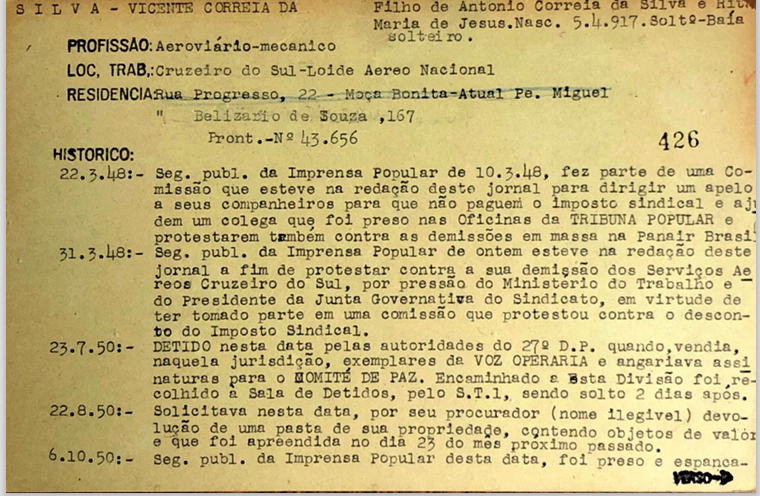
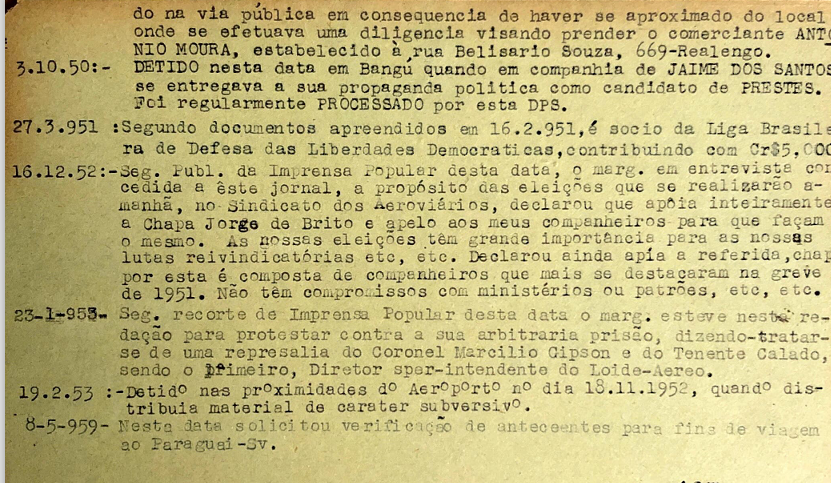
Figure 1 – Vicente Correia da Silva's DOPS Record
Source: PolPol Fonds - APERJ
The historical context must be considered when examining the publication of the Tribuna Popular report. Years earlier, more precisely in 1937, the electrification of the railway line had already shortened the distance between the city center and the suburban neighborhoods. In 1946, the opening of Brasil Avenue[6] would also have an impact on the region. Consequently, these factors contributed to the increasing population density of the former “sertão carioca”[7], Rio de Janeiro's hinterland. In this context, the emergence of favelas in the region also became a recurring phenomenon, with Vila do Vintém as its most prominent example.
Rodrigues (2020) points out that favelas result from broader processes of spatial segregation. Although their emergence is driven by the search for more affordable land, other important factors also shape their existence, such as the development of plans and programs aimed at providing low-income housing. In this regard, it is important to mention the construction of the housing complex of the Instituto de Aposentadoria e Pensões dos Industriários (IAPI) in 1944, in the Realengo neighborhood, adjacent to Vila do Vintém. Its construction brought greater dynamism to the region and even employed residents of Vila do Vintém as part of its workforce, as demonstrated by Gonçalves and Santos (2023).
The year 1948 marked the beginning of a series of episodes characterized by attempts to eliminate the favela. Newspapers reported on the demolition of shacks and, simultaneously, the organization of residents in defense of their homes. Within this context, important figures who would become leaders in Vila do Vintém began to gain prominence, appearing in the pages of Rio de Janeiro's newspapers.
According to material found in the Public Archives of the State of Rio de Janeiro, the communist-oriented newspaper A Folha do Povo[8] published a report in August 1948 describing the hardships faced by residents:
The Favela do Vintém, located in Realengo, is being threatened with demolition by Construtora da Casa Popular and the Municipal Government. In the first days of August alone, 46 shacks were destroyed there, with the notorious favela demolisher Gastão Vinhaes responsible for carrying out this miserable task. With their humble dwellings torn down and their residents left exposed to the elements in the most appalling conditions of abandonment, the threat remained that (within a few days) the remaining shacks would meet the same fate. (ORGANIZA-SE…, 1948, p. 2)
Several aspects deserve attention when examining the attempts to eliminate Vila do Vintém. The first is that the debate surrounding favelas gained prominence in the press and parliament in the immediate post-World War II period. One example was the campaign known as “Battle for Rio”, led by the conservative politician Carlos Lacerda. It consisted of a series of columns published in the newspaper Correio da Manhã, aimed at raising public awareness of the “problem” represented by these areas. Concerned about the spread of communism in these communities, the politician affiliated with the UDN praised the actions of the Church and the solidarity of citizens as means of “humanizing the favelas”. In this context, the then mayor Ângelo Mendes de Morais (1947-1951), taking advantage of the campaign's impact on public opinion, established an eradication plan, promising to eliminate the favelas within a year (Oliveira, 2021; Gonçalves, 2013). Consequently, as Vila do Vintém expanded, it increasingly attracted the attention of the authorities and faced threats of eviction.
Another important element was the dispute over land use in the region where Vila do Vintém is located. By the late 1940s, the situation pointed to a conflict involving land grabbers, farmers, and residents of the first favelas established in the area. This dispute, which was sometimes violent, had repercussions in newspaper coverage and within the state apparatus. In the specific case of the favela where Vicente Correia da Silva lived, the late 1940s also saw the occupation of land by a construction company called Casa Popular LTDA, which began selling a series of plots through newspaper advertisements (Santos, 2025). In short, the growth of Vila do Vintém coincided with the activities of the construction company, indicating a struggle over space.
Faced with these adverse circumstances, the residents of Vila do Vintém needed to adopt defensive strategies. The materials consulted indicate that certain leaders distinguished themselves through their contacts with judicial institutions, political figures, and the press. Among them, one favela resident repeatedly appeared in different newspapers alongside other leaders: Vicente Correia da Silva. It is therefore worth reproducing an excerpt from a report published on page 9 of the Diário de Notícias newspaper on August 10, 1948.
A committee of residents from the Vila do Vintém favela, in Realengo, visited our newsroom, consisting of the following gentlemen: José do Couto Pinto, Vicente Correia da Silva, José Bezerra Neto, José Pereira, Paulino Antônio de Menezes, Antônio Leandro Moreira, Manuel Felicíssimo de Castro, Euclides Macedo da Silva, Cizinio Jaime Ferreira Leite, and Geraldo de Sousa Mota, who came to protest against the manner in which the Municipal Government has been carrying out the demolition of the shacks. Despite a court order protecting their possession of the land, issued in their favor by Judge Augusto Moura of the 5th Civil Court on March 23, which was shown to us, the complainants alleged that on Wednesday, the 4th, two Municipal Police riot squads and several officials, accompanied by representatives of Construtora Fundação da Casa Popular Ltda. and commanded by an engineer and surveillance officer Julio Alcântara, arrived at Vila and proceeded to demolish 46 shacks, whose residents were forced to seek shelter with their neighbors. The aforementioned officials also promised to return the following Monday to complete the demolition of the remaining dwellings at that location, numbering 4,672. (APESAR..., 1948, p. 9)
It is essential to emphasize that, according to authors such as Pestana (2017), territories occupied by favelas were the subject of numerous land disputes. These conflicts originated from the actions of alleged landowners who claimed ownership of the land and filed lawsuits seeking to evict favela residents, forcing them to develop strategies for political action. In this regard, authors such as Oliveira (2018) emphasize that the country's return to democracy led to increased electoral competition and popular participation at the municipal level. Particularly in the former Federal District, the author points out that the reorganization of the City Council and the election of deputies to the Federal Chamber reactivated a series of political practices that had been suppressed during the Estado Novo, creating opportunities for residents of different favelas to engage in political activities, as their votes became contested by different political groups. This context undoubtedly favored the organization of favelas such as Vila do Vintém and the political activities of figures such as Vicente Correia da Silva.
Nevertheless, even under a democratic regime, it is important to emphasize that repressive agencies such as the DOPS continued to operate. Movements organized by favela residents were subjected to particularly intense surveillance, with their leaders becoming targets of persecution by the political police. There was a fear that these areas would become established centers for the dissemination of communist ideas. Indeed, a well-known statement later attributed to sociologist José Arthur Rios declared, “We must climb the hills before the communists come down from them” (SAGMACS, 1960, p. 38).
There was, therefore, a significant paradox: while the relatively greater openness of democratic institutions enabled favela residents to organize, this openness was accompanied by surveillance, particularly when their activities were associated with the communist cause. It is worth recalling that in 1947, the PCB's registration was revoked, forcing its members to operate clandestinely. In this context, Vicente Correia da Silva's political activities were closely monitored by political police agents. His extensive record reveals a history of contributions to the communist cause and the struggle for housing in Vila do Vintém, leading the authorities to regard him as a dangerous individual.
While the 1940s marked the beginning of the struggles in Vila do Vintém, it was during the 1950s that the battle for housing intensified, putting the residents' organization to the test. Against this backdrop, the following section will demonstrate how Vicente Correia da Silva consolidated his position as a community leader, examining the tactics he employed alongside other favela residents, even under conditions of intense surveillance.
3 The 1950s: Alliances with the União dos Trabalhadores Favelados and the Struggle in Vila do Vintém
The 1950s marked a period of profound transformations not only in Brazilian society but also in the former capital of the republic, including its favelas. In Vila do Vintém in particular, the threat of eviction posed by Construtora Casa Popular LTDA, which claimed ownership of the land on which the favela had been established, placed its residents in a difficult situation. A land dispute was unfolding that encompassed not only the favela where Vicente Correia lived but also the entire region that today constitutes Rio de Janeiro's West Zone.
The previous section demonstrated that residents of communities such as Vila do Vintém regarded the press as an important means of asserting their rights. However, land grabbers also adopted a similar strategy, seeking to establish hegemony. To this end, they used their connections within the corporate media to publish reports and articles against favela residents. In short, newspaper offices became battlegrounds in the struggle to win the hearts and minds of Rio de Janeiro's population regarding land use and housing rights. In this context, it is worth reproducing an excerpt published in the newspaper A Noite, in which residents were accused of occupying land belonging to others in Vila do Vintém, under the guidance of the renowned lawyer Heitor da Rocha Faria[9].
The accused devise their plan at the Associação Pró-Melhoramentos da Vila do Vintém, a communist organization, and there, on Lomas Valentinas Street, they erect their humble dwellings on the lawyer's orders, without permits or authorization from the municipal authorities, crowding into them with their families. The shacks are built at night to avoid intervention by the municipal police and are assigned fictitious numbers. (OCUPARAM..., 1953, p. 9)
The struggle for housing and land use also intensified on another battlefield: the judicial system. June 1955 marked the beginning of a difficult period for the favela. According to the newspaper A Imprensa Popular, in an article published on June 22, 1955, the construction company claiming ownership of the land obtained a preliminary court order granting repossession, forcing residents to leave the area within thirty days. Thus, with time running out for Vila do Vintém, strategies would have to be adopted to ensure that its residents could remain in the community.
Collective organization was undoubtedly one of the approaches adopted. The same article in Imprensa Popular highlights Vicente Correia da Silva's leadership in organizing residents against the threat of eviction. A few days after the incident, an assembly was held “with the attendance of many favela residents”, during which a committee was elected to defend the community. The newspaper's reproduction of his remarks demonstrates his importance, making it necessary to quote a brief excerpt.
At last Sunday's assembly, the favela residents, at the proposal of land occupant Vicente Correia da Silva, elected a broad committee tasked with mobilizing the residents of Vila, for, as Mr. Vicente Correia stated in his address, they are advancing into this area today, and if we do not fight, tomorrow they will advance throughout Vila do Vintém. (REAGEM..., 1955, p. 8)
According to Imprensa Popular, this committee included José Paulino dos Santos, Deodata Luzia do Amorim, Adelino Reis, Sebastião Rabelo, and Vicente Correia da Silva, among other residents of Vila do Vintém. However, it was possible to establish that the organization of favela residents would once again extend beyond the boundaries of Vila do Vintém. In this case, the participation of the União dos Trabalhadores Favelados (UTF) is particularly noteworthy, as it was one of the organizations mobilized to provide support in the face of the eviction threat. During the 1950s, newspaper reports frequently mentioned Vicente Correia's leadership alongside figures such as lawyer Antoine Magarinos Torres, the organization's founder.
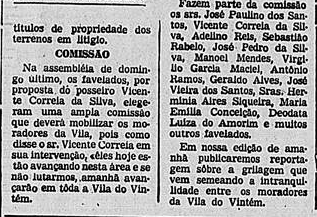
Figure 2: Newspaper Report on an Assembly Led by Vicente Correia da Silva
Source: Imprensa Popular
The UTF's mission was to protect residents of different favelas against eviction, with Magarinos Torres exerting a notable influence on its activities (Amoroso; Gonçalves, 2016; Gonçalves, 2013). The organization emerged from the mobilization of residents against eviction in the Borel favela (Gomes, 1980), but it soon acquired a supra-local character, coordinating the activities of favela residents from different parts of the city (Lima, 1989). Regarding Vila do Vintém's struggle against land grabbers, it is important to emphasize that legal proceedings were conducted with the assistance of this organization, demonstrating its role as an important ally[10].
According to Pestana (2016), the UTF's activities represented a new pattern of resistance by favela workers against the offensive launched by agents of capital. In addition to legal action, large-scale mobilizations also took place within legislative and executive institutions. According to the author, these demonstrations sought to show that the state apparatus could also be influenced by “external” events, thereby counteracting the power of the connections and financial resources available to the alleged landowners. In this context, alongside the pressure exerted on political representatives, the mobilization of Improvement Associations working in coordination with supra-local organizations, which addressed the numerous issues affecting favelas, also became an important strategy, as demonstrated by the case of Vila do Vintém.
On June 26, 1955, another assembly was held at the headquarters of the Associação Pró-Melhoramentos. The meeting revealed the coordination between residents, the UTF, and deputies associated with the cause of favela residents. Once again, it is essential to recognize Vicente Correia da Silva's leadership in directing the proceedings of this well-attended meeting.
We attended the favela residents' assembly the day before yesterday. Nearly 1,000 people gathered along Lomas Valentinas Street, as the association's headquarters was completely full. The attendance register alone recorded almost 200 signatures. A loudspeaker system broadcast the proceedings, which were chaired by Mr. Vicente Correia da Silva, a member of the favela residents' committee. Those present included Mr. José Maria Paula, lawyer for the União dos Trabalhadores Favelados, Mr. Amauri Ribeiro, representative of the MNPT, and city councilor Valdemar Vianna. In their statements, the residents reaffirmed their determination not to leave their shacks. (DEFENDEM..., 1955, p. 8)
Four days later, another report in Imprensa Popular demonstrated that Vicente Correia and the other residents of Vila do Vintém continued to take action. Following the assembly, they coordinated with parliamentarians to examine the case being heard by the 5th Civil Court of the Federal District, seeking to understand the grounds for ordering the residents' eviction and ruling in favor of the land grabbers. Reproducing the report from Imprensa Popular helps clarify the context.
The defense committee, chaired by Vicente Correia da Silva, has already contacted parliamentarians from the Federal and Municipal Chambers. Accompanied by city councilor Geraldo Moreira, the favela residents examined the case files at the 5th Civil Court. The councilor stated that, given the incredibly low price of the land, everything suggests that this is a major fraudulent scheme orchestrated by land grabbers to seize the valuable plots in Vila do Vintém. There are people in the favela who settled there with their families more than twenty years ago and have never known the landowners. They also state that this is not the first time opportunists have appeared there claiming ownership of the land. (PREPARAM-SE ..., 1955, p. 8)
At this point, an additional observation is necessary: during the late 1940s and throughout the 1950s, several bills and official messages addressing the issue of favelas were produced. As a result of this context, a Parliamentary Commission of Inquiry was established in 1955 to investigate land ownership titles in Rio de Janeiro's favelas, becoming an important instrument for discussions concerning evictions and land tenure (Oliveira; Pandolfi, 2019; Oliveira, 2021).
The report in Imprensa Popular describes a meeting between residents of “Vintém” and parliamentarians from the City Council and the Chamber of Deputies, including city councilors Geraldo Moreira and Valdemar Vianna, as well as deputy Eurípedes Cardoso de Menezes, on June 26, 1955. A committee met with the parliamentarians to present their demands, as reported in the article:
Hundreds of families face the prospect of being left without shelter, while the land grabber prepares to advance against the residents of the entire village. At Tiradentes Palace, the committee was received by deputy Eurípedes Cardoso de Menezes, president of the Parliamentary Commission of Inquiry, who agreed with the land occupants on measures to halt the eviction. The meeting with the parliamentarians was a decision made at the favela residents' assembly, held last Sunday at the headquarters of the Associação Pró-Melhoramentos da Vila do Vintém. Another important decision made at the assembly was to send two petitions to the City Council and the mayor, requesting the expropriation of the land. (...) Following the meeting with the president of the Chamber of Deputies, in 1955, the land occupants proceeded to the City Council, where they were received by Geraldo Moreira and Valdemar Vianna. City councilor Geraldo Moreira arranged a meeting with the favela residents for today, at 8 o'clock, at 8 Conceição Street, to subsequently examine the case files at the 5th Civil Court. (DEFENDEM..., 1955, p. 8)
Faced with the threat of a brutal eviction, Vicente Correia da Silva and his neighbors in Vila do Vintém managed, in a remarkably short period, to practically reverse the situation in which they found themselves. This was only possible because relations between the political class and favela residents had undergone substantial changes during the postwar period, with favela residents becoming important political actors whose influence was reflected in elections. Candidates for elected office commonly courted favela residents by promising urban services and using their influence to formulate policies concerning favelas, thereby becoming well-known in these communities. On the other hand, the emergence of several Improvement Associations ultimately gave structure to a highly coordinated movement that was contested by the major political forces of the period, making evictions a significant political liability (Leeds; Leeds, 1978; Brum, 2006).
Following this line of reasoning, Fischer (2023) recalls that there was a particular tension between public and private power in urban areas. Given the context, this could strengthen the position of those who were excluded from the system of political rights. It is worth reproducing the author's reflection:
The tension between public and private spheres was especially pronounced in urban areas. In cities, even people without political rights could have surprisingly broad access to state power. The existence of an expanding public sphere and the bitter rivalry between competing networks created opportunities for popular agency and even citizenship, while broader access to education reduced the exclusionary impact on voting rights. For the masters of the great houses (both literal and figurative), perpetuating patriarchal and patrimonial domination became increasingly difficult with the rapid urbanization that followed the end of the nineteenth century (Fischer, 2023, p. 15).
The growing bargaining power of favela residents had repercussions in Vila do Vintém, resulting in several important victories. As a result of the mobilizations, a 120-day truce was secured, a situation described as follows:
The judge of the 5th Civil Court, at the initiative of the Parliamentary Commission of Inquiry and the União dos Trabalhadores Favelados, ordered a four-month suspension of the eviction threatening the residents of Vila. This victory marks another stage in the struggle that the residents of Vintém have been waging against the land grabber Pires, who claims to own the land between Realengo and Padre Miguel. (VITÓRIA..., 1955, p. 9)
Four months after the announcement of the truce between Vila do Vintém and the alleged landowners, uncertainty remained: would the residents be allowed to stay, or would they be evicted? Then, on October 8, 1955, a speech by Eurípedes Cardoso (PSD)[11] was reproduced in the proceedings of the Chamber of Deputies, in which the final decision was announced:
After exhaustive studies, which could only have been conducted by a Parliamentary Commission of Inquiry, the committee tasked with investigating the legitimacy of the land ownership titles in the favelas of the Federal District concluded that part of the so-called “Vila do Vintém”, in Realengo, where 25,000 favela residents live, had been acquired by a genuine land grabber. However, it will not be possible to prove bad faith on the part of the current owners, who are, moreover, protected by a final and binding ruling of the Federal Supreme Court, the enforcement of which was suspended for 120 days by the judge of the 5th Civil Court, at the request of the Parliamentary Commission of Inquiry. With this period expiring tomorrow, and the unappealable decision having to be respected, despite the unlawful appropriation of those lands having been established, and since the collective eviction of the favela residents cannot be accepted, as they sought shelter there in good faith, driven by necessity, and failed to defend their rights in time due to a lack of education and material resources, the Parliamentary Commission of Inquiry decided, in agreement with the distinguished Attorney General of the Municipal Government, Dr. Filadelfo Azevedo, to request that Mayor Alim Pedro expropriate the area. In this way, the decision of the Federal Supreme Court is respected, while peace of mind is restored to the large population of the Vila do Vintém favela, which we hope will soon be included in the urbanization plan that Archbishop Dom Hélder Câmara has already begun implementing in the Praia do Pinto favela. (Brasil, 1955, p. 7388)
On October 10, 1955, following a meeting between the committee representing the Parliamentary Commission of Inquiry on favelas, led by Eurípedes Cardoso de Menezes, deputy Nita Costa, and adviser Alayde Urich de Almeida, and Mayor Alim Pedro, the decision was made to decree the expropriation of Vila do Vintém. The news, published in the newspapers A Noite and Imprensa Popular, emphasized that the measure would bring an end to the conflicts in the favela, restoring peace of mind to its residents. A few days later, more precisely on October 14, page 18 of the newspaper A Noite reported that a committee of Vila do Vintém residents had visited Guanabara Palace to congratulate Mayor Alim Pedro and thank him for the expropriation of the land.
But what about Vicente Correia da Silva? His last appearance in the newspapers dates to September 3, 1955, when Imprensa Popular reported on page 2 that he was participating as a member of an interparty committee in the former Rural Zone, more precisely in Vila do Vintém, which was being organized to support the presidential candidacies of Juscelino Kubitschek and João Goulart. The central figure of this article served as a representative of the MNPT (Movimento Nacional Popular Trabalhista)[12] on the committee, which also included political parties such as the PTB and PRT. This definitively demonstrates that his political activities were rooted in the community where he lived and its everyday struggles, while also being connected to major national political debates. In 1959, the DOPS recorded a request for a criminal background check related to a trip to Paraguay, constituting his final record with the agency.
Finally, the struggle of Vicente Correia and the residents of Vila do Vintém, which had been ongoing for nearly ten years, reached a positive outcome. With the arrival of the 1960s, new chapters in the history of this favela would be written, new leaders would emerge, and new challenges would arise, including its urbanization and the acquisition of land ownership rights. Nevertheless, the history of Vicente Correia da Silva alongside the residents of Vila do Vintém leaves an important legacy of collective organization and political strategy that deserves due recognition and documentation in the history of Rio de Janeiro's favelas.
4 Conclusion
This article sought to demonstrate the political struggle of Vicente Correia da Silva, a resident of Vila do Vintém, for housing and land use rights. It was found that, despite the persecution he suffered, his leadership was fundamental to securing rights for the residents. The strategies employed involved significant coordination at the supra-local level, positioning Vila do Vintém as one of the city's most important favelas, despite its location far from the central area of the former Federal District.
His connections with organizations such as the PCB and UTF also deserve particular attention, since the legal and political knowledge and experience accumulated by these organizations were used to strengthen the residents' actions, helping them remain in the community.
Finally, it is argued that examining the histories of individuals who played prominent roles in favelas and suburban neighborhoods can contribute to the production of knowledge genuinely committed to reconstructing the history and memory of cities, constituting one of the elements that may help reverse the spatial inequalities that have affected cities such as Rio de Janeiro.
References
AMOROSO, Mauro; GONÇALVES, Rafael, Soares. O advogado e os “trabalhadores favelados”: Antoine Magarinos Torres e a prática política nas favelas cariocas dos anos 1950 e 1960. In: Estudos históricos. Rio de Janeiro: 2016.
APESAR da medida judicial tiveram os seus barracões demolidos. Diário de Notícias, Rio de Janeiro, p. 9, 10 ago. 1948.
BRASIL. Congresso Nacional. Câmara dos Deputados. Anais da Câmara dos Deputados. Distrito Federal: Câmara dos Deputados, 1955. p. 7388.
BRUM, Mario Sérgio. “O povo acredita na gente”: Rupturas e continuidades no movimento comunitário das favelas cariocas nas décadas de 1980 e 1990. 2006. 217f. Dissertação (Mestrado em História) - Programa de Pós-Graduação em História, Instituto de História, Universidade Federal Fluminense, Niterói: 2006.
CELLARD, André. A análise documental. In: POUPART, J. et al. A pesquisa qualitativa: enfoques epistemológicos e metodológicos. Petrópolis, Vozes, 2008.
DEFENDEM os seus barracos os moradores da Vila do Vintém. Imprensa Popular, Rio de Janeiro, p.8, 26 jun. 1955.
DESAPROPRIAÇÃO do morro. A Noite, Rio de Janeiro, p.18, 14 out. 1955.
FISCHER, Brodwyn. Historicizando a governança informal. In: Acervo: Espaços urbanos e metropolização no Brasil. (1940-1970). Rio de Janeiro: 2023.
GOMES, Manoel. As lutas do povo do Borel. Rio de Janeiro: Edições Muro, 1980.
GONÇALVES, Rafael. Favelas do Rio de Janeiro: história e direito. Rio de Janeiro: Palas: EdPUC, 2013.
GONÇALVES, Rafael Soares; SANTOS, Henrique Mendes dos. Favelas e metropolização do Rio de Janeiro: o caso da favela da Vila do Vintém, no bairro de Realengo, no segundo pós-guerra. In: Acervo: Espaços urbanos e metropolização no Brasil. (1940-1970). Rio de Janeiro: 2023.
INSTITUTO BRASILEIRO DE GEOGRAFIA E ESTATÍSTICA (IBGE). Censo Demográfico 2022. Rio de Janeiro: IBGE, 2023. Disponível em: https://www.ibge.gov.br. Acesso em: 1 ago. 2026.
JOFFILY, Mariana. Revolucionários, bandidos e marginais nos cárceres da ditadura civil-militar. Curitiba: Editora Appris, 2020.
LEEDS, Anthony; LEEDS, Elizabeth. A sociologia do Brasil urbano. Rio de Janeiro: Zahar Editores, 1978.
LIMA, Nísia Verônica Trindade O movimento dos favelados do Rio de Janeiro: políticas de Estado e lutas sociais (1954-1973). Rio de Janeiro. 1989. Dissertação. (Mestrado em Ciência Política). IUPERJ, 1989.
MORAES, Pedro Barreto. Avenida Brasil: rodovia metropolitana. Rio de Janeiro: Oficina Raquel, 2023.
NASCE uma nova favela em Moça Bonita. A Tribuna Popular, Rio de Janeiro, p. 4, 4 fev. 1947.
OCUPARAM terrenos alheios. A Noite, Rio de Janeiro, p.9, 10 out, 1953.
OLIVEIRA, Samuel Silva Rodrigues. Associativismos de trabalhadores favelados no Rio de Janeiro e em Belo Horizonte (1954-1964). In: Estudos Históricos. Rio de Janeiro: 2018.
OLIVEIRA, Samuel Silva Rodrigues. Informalidade urbana, classe trabalhadora e raça no Rio de Janeiro: a história dos censos de favelas (1948-1960). In: Revista de História. São Paulo: USP, 2021.
OLIVEIRA, Samuel Silva Rodrigues; PANDOLFI, Dulce Chaves. “Dr. Magarinos Torres Filho”: a formação social das classes médias e a luta das esquerdas no Rio de Janeiro (1940-1950). In: Revista do Arquivo Geral da Cidade do Rio de Janeiro, n. 16, 2019.
ORGANIZA-SE a favela do Vintém contra a ameaça de remoção. A Folha do Povo, Rio de Janeiro, p. 2, ago. 1948.
PACHECO, Thiago da Silva. Inteligência, segurança e polícia política no Estado Novo e na República de 1946. In: História Comparada, Rio de Janeiro, 2018.
PESTANA, Marco Marques. A união dos trabalhadores favelados: a luta contra o controle negociado das favelas cariocas (1954-1964). Rio de Janeiro: EDuff, 2016.
PREPARAM-SE os favelados para resistir ao despejo. Imprensa Popular, Rio de Janeiro, p.8, 30 jun. 1955.
RAMOS, Graciliano. Memórias do cárcere. Rio de Janeiro: Record, v. 2, 1987.
REAGEM os favelados da Vila do Vintém. Imprensa Popular, Rio de Janeiro, p.8, 22 jun. 1955.
RODRIGUES, Rute Imanishi. Entre o estatal e o filantrópico: reconstruindo a história das favelas e parques proletários do Rio de Janeiro. In: Risco: Revista de Pesquisa em Arquitetura e Urbanismo, São Carlos: 2020.
SAGMACS. Aspectos Humanos da Favela Carioca. O Estado de S. Paulo. 13 e 15 de abril de 1960. São Paulo.
SANTOS, Henrique Mendes. “Na defesa do meu barracão vou até o inferno”: organização dos moradores e luta política na Favela Vila do Vintém. In: Questões socioambientais, urbanas e formas de resistência social. GONÇALVES, Rafael Soares; SALVADOR, Andreia Clapp; BASTOS, Valéria Pereira (orgs.). Rio de Janeiro: Letra Capital, 2025.
SANTOS, Leonardo Soares. A experiência da teoria das "teses" na prática da "lavoura": pequenos lavradores, militantes comunistas e luta pela terra no Sertão Carioca (1945-1964). In: Temporalidades, Belo Horizonte: 2019.
VITÓRIA dos favelados da Vila do Vintém. Imprensa Popular, Rio de Janeiro, p. 9, 5 jul, 1955.
About the Author
Henrique Mendes dos Santos is a social worker. He holds a Master's degree and a PhD in Social Work from PUC-Rio, where he is currently undertaking postdoctoral research in Social Work. He is a researcher affiliated with the Urban Studies Laboratory (LEUS) at PUC-Rio. Since his doctoral studies, he has dedicated himself to researching Rio de Janeiro's West Zone. His main research interests include the formation and expansion of favelas in the region and residents' perceptions of this vast urban space.
Author Contributions
Conceptualization; methodology; software; validation; formal analysis; investigation; resources; data curation; writing—original draft preparation; writing—review and editing; visualization; supervision; project administration; funding acquisition [H.M.S.]. The author has read and agreed to the published version of the manuscript.
Funding
This research was funded by the Coordination for the Improvement of Higher Education Personnel, Brazil (CAPES), Finance Code “001”.
Acknowledgments
The author would like to thank those who contributed to the discussions held within LEUS-PUC, the researchers who study urban issues in Rio de Janeiro, CAPES for its support, the staff of the Public Archives of the State of Rio de Janeiro, and all residents of Vila do Vintém and Rio de Janeiro's West Zone in general.
Conflicts of Interest
The author declares no conflict of interest.
About Coleção Estudos Cariocas
Coleção Estudos Cariocas (ISSN 1984-7203) is a publication dedicated to studies and research on the Municipality of Rio de Janeiro, affiliated with the Pereira Passos Institute (IPP) of the Rio de Janeiro City Hall.
Its objective is to disseminate technical and scientific production on topics related to the city of Rio de Janeiro, as well as its metropolitan connections and its role in regional, national, and international contexts. The collection is open to all researchers (whether municipal employees or not) and covers a wide range of fields — provided they partially or fully address the spatial scope of the city of Rio de Janeiro.
Articles must also align with the Institute’s objectives, which are:
- to promote and coordinate public intervention in the city’s urban space;
- to provide and integrate the activities of the city’s geographic, cartographic, monographic, and statistical information systems;
- to support the establishment of basic guidelines for the city’s socioeconomic development.
Special emphasis will be given to the articulation of the articles with the city's economic development proposal. Thus, it is expected that the multidisciplinary articles submitted to the journal will address the urban development needs of Rio de Janeiro.
[1] According to Cellard (2008, p. 297), a document: “Consists of any written text, handwritten or printed, recorded on paper. More precisely, primary or secondary sources that, by definition, are examined, rather than created, within the context of a research procedure.”
[2] Department of Political and Social Order.
[3] Brazilian Communist Party.
[4] Source: APERJ, PolPol Fonds.
[5] Public Archives of the State of Rio de Janeiro.
[6] Initially developed as a 17 km-long north-south corridor, running between the reclaimed shores of Guanabara Bay to the east and the urban fabric of Leopoldina's suburban neighborhoods to the west. In 1961, it was incorporated into the former Bandeiras Avenue, extending across the entire city, from the vicinity of the bay to its opposite boundary in the Santa Cruz neighborhood, in Rio de Janeiro's West Zone. (Moraes, 2023)
[7] The city's former rural area acquired this name from a series of articles written by Magalhães Corrêa for the newspaper Correio da Manhã between 1931 and 1932, in which the naturalist conducted a series of studies on the area.
[8] Source: APERJ. PolPol Fonds.
[9] According to Santos (2019), Rocha Faria's main area of activity was the former sertão carioca, now Rio de Janeiro's West Zone, and the Baixada Fluminense region. He was also the lawyer responsible for filing a petition for a writ of habeas corpus on behalf of Luís Carlos Prestes and other PCB leaders when the party's registration was revoked in 1947.
[10] It is worth noting that the UTF's activities were not universally viewed positively by favela residents. According to Amoroso and Gonçalves (2016), there are accounts of the organization's activities in Morro do Borel, where it established internal regulations governing the favela's functioning. In the Parque União favela, the organization reportedly exercised control over which individuals were allowed to settle there. In short, its activities, in some cases, extended beyond the mere defense of residents' rights.
[11] Social Democratic Party.
[12] An organization established by the PCB, despite the party's clandestine status.