
Volume 14 Issue 3 *Corresponding author nelsondepaula@yahoo.com.br Submitted 11 Sep 2026 Accepted 09 Nov 2026 Published 17 Nov 2026 Citation PEREIRA, Nelson de Paula. Minervino de Oliveira (1891–1977) and the trajectory of a Black working-class man between collective memory and the prosopography of a political generation. Coleção Estudos Cariocas, v. 14, n. 3, 2026.
DOI: 10.71256/19847203.14.3.266.2026 The article was originally submitted in PORTUGUESE. Translations into other languages were reviewed and validated by the authors and the editorial team. Nevertheless, for the most accurate representation of the subject matter, readers are encouraged to consult the article in its original language.


| Minervino de Oliveira (1891–1977) and the trajectory of a Black working-class man between collective memory and the prosopography of a political generation Minervino de Oliveira (1891-1977) e a trajetória de um operário negro entre a memória coletiva e a prosopografia de uma geração política Minervino de Oliveira (1891–1977) y la trayectoria de un obrero negro entre la memoria colectiva y la prosopografía de una generación política Nelson de Paula Pereira1 1Instituto Universitário de Pesquisas do Rio de Janeiro, R. Joana Angélica, 63 - Ipanema, Rio de Janeiro - RJ, 22420-030, ORCID 0009-0002-0514-9333, nelsondepaula@yahoo.com.br
AbstractThis article examines the trajectory of Minervino de Oliveira (1891–1977), a trade unionist and politician from Rio de Janeiro, through the concepts of generation, prosopography, and collective memory, as discussed by Karl Mannheim, Christophe Charle, Pierre Bourdieu, and Michael Pollak. It investigates how his experience as a Black worker and communist activist during Brazil’s First Republic fits within a “generational unit” shaped by the emergence of the Brazilian labour movement. His trajectory, from humble beginnings to his presidential candidacy, highlights the “biographical illusion” and the social and historical constraints shaping his political engagement, emphasizing collective memory’s role in constructing his identity and political legacy. Keywords: Brazil, Minervino de Oliveira, labor movement, generation and memory, prosopography, First Republic, Rio de Janeiro
ResumoEste artigo analisa a trajetória do sindicalista e político carioca Minervino de Oliveira (1891–1977) a partir dos conceitos de geração, prosopografia e memória coletiva, conforme Karl Mannheim, Christophe Charle, Pierre Bourdieu e Michael Pollak. Investiga como sua experiência como operário negro e militante comunista na Primeira República se insere em uma “unidade geracional” marcada pela emergência do movimento operário brasileiro. Sua trajetória, das origens humildes à candidatura presidencial, permite problematizar a “ilusão biográfica” e os condicionamentos sociais e históricos de sua atuação política, destacando o papel da memória coletiva na construção de sua identidade e de seu legado político. Palavras-chave: Brasil, Minervino de Oliveira, movimento operário, geração e memória, prosopografia, Primeira República, Rio de Janeiro
ResumenEste artículo analiza la trayectoria de Minervino de Oliveira (1891–1977), sindicalista y político de Río de Janeiro, a partir de los conceptos de generación, prosopografía y memoria colectiva, según Karl Mannheim, Christophe Charle, Pierre Bourdieu y Michael Pollak. Examina cómo su experiencia como obrero negro y militante comunista durante la Primera República brasileña se inscribe en una «unidad generacional» marcada por el surgimiento del movimiento obrero brasileño. Su trayectoria, desde sus orígenes humildes hasta su candidatura presidencial, permite problematizar la «ilusión biográfica» y los condicionamientos sociales e históricos de su actuación política, destacando el papel de la memoria colectiva en la construcción de su identidad y legado político. Palabras clave: Brasil, Minervino de Oliveira, movimiento obrero, generación y memoria, prosopografía, Primera República, Rio de Janeiro |
1 Introduction
The analysis of individual trajectories within Historical Sociology has become established as an important field of investigation, as it makes it possible to connect the singular experience of a social actor to the broader historical structures and processes that shape their actions. This article adopts this perspective by proposing an analysis of the trajectory of Brazilian trade unionist and politician Minervino de Oliveira (1891–1977), in light of the concepts of generation, prosopography, and collective memory, as discussed by Karl Mannheim, Christophe Charle, Pierre Bourdieu, and Michael Pollak.
The choice of Minervino de Oliveira (Figure 1) as the subject of this study is justified by his unique position in Brazilian political history. Born in Rio de Janeiro in 1891, three years after the abolition of slavery, he came from a humble family and began his working life at the age of ten as a weaver's apprentice. He later became a marble worker and developed a trajectory of political activism that led him to occupy a prominent position in the labor and trade union movements during the First Republic. His experience is particularly significant because it brings together the dimensions of class, race, and political participation in a society deeply marked by the social and racial inequalities of the post-abolition period.
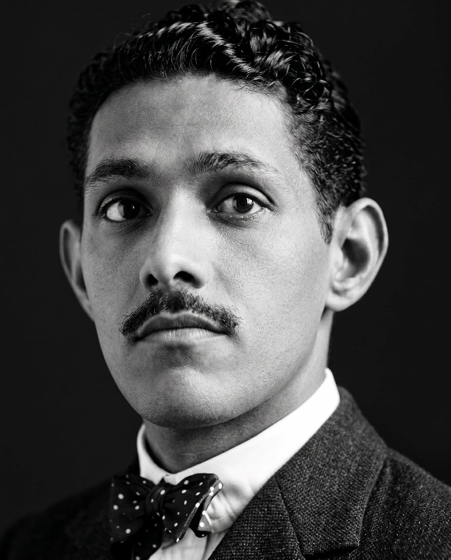
Figure 1: Minervino de Oliveira in the 1910s, at the beginning of his involvement in the trade union movement
Source: family collection
Active in trade union struggles since the 1910s, Minervino developed his political activism in a context of worker organization and the expansion of left-wing movements. His rise to prominence on the national political scene occurred in 1928, when he was elected municipal councilor of the Federal District for the Workers' and Peasants' Bloc (BOC), alongside Octávio Brandão. This election represented an important milestone in the political participation of the popular classes, as it enabled workers' representatives to enter institutional spaces traditionally occupied by elites. Two years later, in 1930, his trajectory reached another historic milestone when he was nominated as a presidential candidate by the Workers' and Peasants' Bloc of Brazil (BOCB), becoming the first working-class, Black, and communist candidate to run for the country's presidency.
However, his political activities were marked by increasing repression of left-wing movements, culminating in his persecution and imprisonment. These events contributed to Minervino's withdrawal from public life and the progressive decline of his visibility in national political memory. In the following decades, his trajectory remained shrouded in relative historiographical silence, often receiving only secondary mention in studies devoted to other activists of the Brazilian left, particularly Octávio Brandão.
Minervino de Oliveira died in 1977, leaving behind a political and social trajectory whose significance still requires further investigation. Among the issues deserving closer examination are his political relationships, the possible continuation of his activism after periods of persecution and imprisonment, and his growing involvement with Kardecist Spiritism in the final stage of his life. In this sense, reconstructing his trajectory means not only recovering the history of a figure who has received little attention in historiography, but also understanding the possibilities and limitations of political participation among Black and impoverished workers in Brazilian society during the first half of the twentieth century. His experience thus allows for a broader understanding of the formation of the Brazilian left, the forms of organization within the labor movement, and the processes through which collective memory is constructed, silenced, and preserved.
2 Objectives of this Study
Despite his historical importance, Minervino de Oliveira remains relatively underexplored in Brazilian historiography and political sociology, particularly from the perspective of the analytical categories proposed here. This article therefore seeks to contribute to filling this gap by offering a sociologically informed interpretation of his trajectory, allowing not only for an understanding of his individual actions but also for an examination of broader historical and social processes.
The hypothesis guiding this investigation is that Minervino de Oliveira's trajectory paradigmatically expresses the tensions and contradictions of the “generational unit” that shaped the Brazilian labor movement during the final years of the First Republic, as well as the social determinants that condition the rise and decline of political actors from subaltern classes. Furthermore, it is argued that the memory of Minervino, frequently evoked by sectors of the Brazilian left, is selectively mobilized to forge political identities in the present, functioning as a “founding myth” of the labor and anti-racist struggles.
The general objective of this article is to analyze Minervino de Oliveira's trajectory in light of the concepts of generation, prosopography, and collective memory, in order to understand how his individual experience fits into a collective history of struggle, repression, and identity formation.
The specific objectives are: 1) to contextualize Minervino de Oliveira's position within his “generational unit,” identifying the historical events that shaped his political formation and that of his contemporaries; 2) to analyze the social, political, and cultural determinants that shaped his trajectory, from his humble origins to his presidential candidacy, without falling into the “biographical illusion” criticized by Bourdieu; and 3) to investigate the political uses of the memory of Minervino de Oliveira, paying attention to the frameworks, silences, and disputes surrounding his figure.
The theoretical framework of this article draws on four fundamental authors. First, Karl Mannheim (1982), whose sociology of knowledge provides the concepts of “generational connection” and “generational unit,” which are essential for understanding the shared experience of the actors who witnessed the emergence of the labor movement in Brazil. For Mannheim, the generational phenomenon is defined not merely by biological contemporaneity, but by exposure to the same significant historical events, which shape a common worldview.
Second, Pierre Bourdieu (2006), whose text The Biographical Illusion warns against the tendency to treat life as a coherent and linear narrative, overlooking the contingencies, ruptures, and social determinants that constitute it. Bourdieu invites us to question the very notion of “trajectory” as a social construction, paying attention to the conditions that make individual action possible.
Third, Christophe Charle (2018), who defines prosopography, or collective biography, as a method that seeks to define a population according to one or more criteria and develop a biographical questionnaire about its members, with the aim of describing their common characteristics. This method makes it possible to situate Minervino not as an isolated hero, but as a typical representative of a specific social group: communist trade union leaders and politicians from working-class backgrounds during the First Republic.
Finally, Michael Pollak (1992), whose analysis of memory as a social and selective construction, intrinsically linked to identity, makes it possible to investigate how the figure of Minervino has been and continues to be evoked, silenced, or contested by different political groups over time.
The four theoretical frameworks complement one another, as they make it possible to analyze Minervino de Oliveira's trajectory by connecting historical context, social constraints, membership in a professional and political group, and the construction of collective memory. Mannheim provides tools for understanding his experience as part of a generational unit marked by the emergence of the labor movement; Bourdieu makes it possible to question the linearity of biographical narratives and highlight the social determinants that shaped his choices and opportunities for action; Charle provides the methodological approach of prosopography, which integrates individual analysis into a collective universe of comparable trajectories; and Pollak contributes to investigating the processes through which his memory and political legacy have been constructed, recognized, and silenced.
Prosopography thus constitutes the integrating axis of the proposed approach, as it makes it possible to situate Minervino in relation to other trade union leaders and communist activists from working-class backgrounds, identifying shared characteristics, differences, and particularities of his trajectory. Even when research focuses on a single individual, the prosopographical perspective guides the reconstruction of his social and political profile through comparative criteria, avoiding biographical isolation and connecting individual experience, collective belonging, and historical processes of memory production. The main criteria addressed in the prosopographical analysis were social and economic origins, the dynamics of recruitment and engagement in political activism, and political trajectories and involvement in trade union organizations.
The methodology adopted is bibliographic and documentary research, using a qualitative approach. Its sources notably include the theoretical texts that constitute the article's corpus and the specialized literature on Minervino de Oliveira and the labor movement during the First Republic. The analysis seeks to interpret his trajectory in light of the concepts employed, while taking into account the broader historical and social context in which it unfolded.
The sources used in this research comprise primary documents and specialized literature obtained through consultation of historical periodicals, archival collections, official records, and academic publications. The newspapers A Classe Operária, A Imprensa, A Manhã, A Razão, O Imparcial, O Paiz and Diário da Noite constitute fundamental newspaper sources for reconstructing Minervino de Oliveira's trade union activities, his involvement in the labor movement, and his political participation, as well as providing information about his social networks and his trajectory prior to communist activism. His dossier from the Political Police Collection of the Public Archives of the State of Rio de Janeiro (APERJ) makes it possible to examine the mechanisms of state surveillance and repression, while the Proceedings of the Municipal Council of the Federal District document his institutional activities. Legislation and memoir accounts complement this documentary collection, while books, scientific articles, undergraduate monographs, and theses provide theoretical, methodological, and historiographical foundations for contextualizing his trajectory.
When critically examined together, these sources make it possible to compare different representations of Minervino, identify convergences and silences, and understand how his individual experience relates to the social and political context of his time, contributing both to prosopographical analysis and to the study of the construction of his memory and political legacy.
The article is structured into three main chapters. The first chapter presents the biography and historical context of the subject. The second analyzes his trajectory in light of Mannheim's and Charle's concepts. The third investigates the construction of Minervino's memory based on Pollak's contributions.
3 Minervino de Oliveira: trajectory of a worker during the First Republic
Life history is one of those common-sense notions that have been smuggled into the scientific universe; initially, without much fanfare, among ethnologists, and then, more recently, with great commotion, among sociologists (Bourdieu, 2006, p. 183).
The trajectory of Minervino de Oliveira (1891-1977) seems to invite a linear narrative of upward mobility and overcoming adversity. However, as Bourdieu (2006) warns, it is necessary to be wary of the “biographical illusion.” What is proposed here, therefore, is not a heroic retelling of a life, but a sociologically informed analysis that questions the social constraints, ruptures, and silences that marked Minervino's existence.
Minervino de Oliveira (1891-1977) was the eldest of five children born to a low-ranking civil servant and a laundress. At the age of 10 (1901), the year his father died of tuberculosis, he began working as a weaver's apprentice at the São João Textile Factory (RJ). He worked in commerce, glass and furniture factories, as a farm laborer and charcoal worker, and, in 1914, as a tram conductor for The Rio de Janeiro Tramway, Light and Power Company (Distrito Federal, 1929, p. 1855).
Although Minervino had only received basic literacy education and did not pursue further formal schooling, Octavio Brandão (1896-1980), Minervino's close companion in political struggles, emphasized that he was an “... intelligent man, of character and courage” (Brandão, 1978, p. 349). He further stated:
The Communist Party is the party of the working class. It is inseparable from the struggle of working-class militants. This is a matter of principle. The Communist Party of Brazil forged an entire generation of working-class fighters, men of strong character. These communist workers were guided by the teachings of the Socialist Revolution of 1917, the Communist International, and the doctrine of Marx, Engels, and Lenin. They fought on the front lines of battle. They endured countless persecutions, unemployment, imprisonment, and beatings. They devoted their efforts to the working class and to the great cause of the national and social liberation of Brazil and Humanity. Here is a group of workers, most of them comrades in struggle, many of whom have since died: Minervino de Oliveira […] (Brandão, 1978, p. 265-266).
Octavio Brandão records and evaluates several fellow activists throughout his account, with Minervino being the first he highlights. Brandão's tribute places Minervino within a tradition of heroic activism, constructing an image of consistency and unwavering dedication to the workers' cause. Bourdieu warns, however, that such narratives, frequently produced by the actors themselves or by their comrades in struggle, tend to construct a “life” as an ordered succession of events converging toward a final purpose:
To speak of a life history is at least to presuppose, and this is no small matter, that life is a story and that [...] a life is inseparably both the set of events of an individual existence conceived as a story and the account of that story (Bourdieu, 2006, p. 183).
This construction of meaning, while legitimizing the activist's trajectory, conceals the hesitations, dilemmas, and social conditions that made his rise possible. Although he had only received basic literacy education, Minervino had access to and studied Marxist works. This was because admission to the Communist Party required a preliminary period of political education before formal membership. Among the requirements, candidates had to demonstrate agreement with the principles of Marxism-Leninism and the strategy of struggle for the dictatorship of the proletariat (Carone, 2025).
At the age of 14 (1905), he learned the marble-working trade. He joined the Marble Workers' Center (COM), founded in 1903, in 1911 and served as its secretary on several occasions. This marked the beginning of his trade union activities within the labor movement.
On December 11, 1911, he married Leontina Ciancio (1894-1969), daughter of the Italian Salvatore Ciancio (1867-1919), owner of a marble workshop, and the Brazilian Florentina Francisca de Faria (1876-1943). Minervino and Leontina had 11 children. From another relationship, he had another daughter named Isabel.
He contributed to the newspapers: Voz do Trabalhador (1908)[1], Spartacus (1919), Voz do Povo (1920), A Nação (1923), and A Classe Operária (1925), of which he was the director. He was also an editor of the newspaper Voz do Marmorista (1903). He was a member of Marmorista Futebol Clube (A Manhã, 1926, p. 7) and the Caixa Beneficente dos Operários Marmoristas e Artes Correlativas (A Manhã, 1927, p. 9). He was also elected Recording Secretary of the Regional Trade Union Federation of Rio de Janeiro (FSRRJ), founded in 1927 (Batalha, 2009a, p. 225). In 1919, he played a significant role in the workers' struggle for the eight-hour workday (Botelho, 2008, p. 94). He served as Third Secretary of Terra Nova Futebol Clube (O Paíz, 1919, no. 12.532, p. 07) and First Secretary of Clube Recreativo Beija Flor, in São Cristóvão (RJ) (O Imparcial, 1913, no. 195, p. 08; A Imprensa, 1914, no. 2.023, p. 04). He was President of the Associação Gráfica (A Razão, 1919, no. 788, p. 3). On December 15, 1919, Francisco de Oliveira (1916-1919), Minervino's son, died at the age of three.
He served as a delegate of the Marble Workers' Center of Rio de Janeiro at the Third Brazilian Workers' Congress, held between April 23 and 30, 1920 (A Classe Operária, 1928, p. 1, 4). The COM was one of the main centers of revolutionary syndicalism until early 1920, when its leaders joined the Communist Party (Batalha, 2009a, p. 208).
He was first arrested on August 21, 1920, as a striker and agitator, and was released the same day. He was arrested again on September 15, 1920, for his activities as an agitator among marble workers, at a time when he held the position of First Secretary of the Marble Workers' Center (APERJ, n.d., Dossier GB 15.652). Minervino came from the trade union movement before joining the communist movement. He was consistently involved in rallies, protests, and strikes, and was frequently arrested for his activism, courage, and bravery (Dulles, 1977, p. 297).
In 1927, Minervino joined the Communist Party of Brazil (PCB) (Diário da Noite, 1935, p. 2). That same year, on February 8, Liberdade de Oliveira (1920-1927), Minervino's daughter, died after being struck by a vehicle.
The modernist painter Di Cavalcanti[2] (1964, p. 37-38) recalled encountering Minervino de Oliveira at a Communist Party cell meeting in 1928, held on General Canabarro Street, in the Maracanã neighborhood of Rio de Janeiro, and recognizing him and his mother from his childhood:
While [Octavio] Brandão was speaking, I fixed my eyes on the figure of Minervino de Oliveira sitting in front of me. I recognized him: he was that boy Minervino, son of Sinhá Inácia, my grandmother Henriqueta's laundress, who had accompanied my older cousins on their aquatic adventures at Ponta do Caju, the place my family had chosen for swimming in the sea. There stood the tall, thin Minervino. I saw him with new eyes, feeling a deep sense of satisfaction (Di Cavalcanti, 1964, p. 37-38).
Sinhá Inácia, to whom Di Cavalcanti refers, was Minervino's mother, Augusta Laura Vianna (1866-1918). She worked as a laundress for Henriqueta Amélia Ramos (1832-1911), the modernist painter's grandmother. Minervino accompanied the artist's older cousins on their aquatic adventures at Ponta do Caju, a port area in the North Zone of Rio de Janeiro, a region chosen by many families for swimming in the sea.
On August 19, 1928, the Workers' and Peasants' Bloc (BOC), an organization affiliated with the Communist Party, held an extraordinary assembly at its headquarters at 40 Republic Square, 1st floor, Centro, Federal District, RJ, and selected Octavio Brandão and Minervino de Oliveira (Figure 2) as candidates for the position of municipal councilors (intendentes) on the Municipal Council of the former Federal District (RJ), in the elections of October 28, 1928 (A Manhã, 1928, p. 5). Minervino ran in the 2nd District, which encompassed the following areas: the parishes of Espírito Santo; Andaraí; Méier; Inhaúma; Jacarepaguá; Campo Grande; and Guaratiba. These areas concentrated working-class residential neighborhoods and expanding industrial districts at the time, where Minervino had extensive connections and considerable prestige among workers.
Octavio Brandão and Minervino de Oliveira were both elected (Rodrigues, 2023). Octavio Brandão ranked 9th, while Minervino initially ranked 13th, but as the vote counting progressed, his position rose to 12th. On December 21, 1928, Minervino was granted voting rights, and the Solemn Inauguration Ceremony took place on December 24, 1928 (Distrito Federal, 1928, p. 298-301). Sessions of the Municipal Council began on June 3, 1929. On that day, Octávio Brandão read the BOC's inaugural manifesto (Distrito Federal, 1929, June/July, p. 384-390).
Minervino's election as a municipal councilor in 1928 seems to mark the peak of a trajectory of political advancement. Bourdieu warns, however, against the danger of naturalizing this interpretation, as though events necessarily unfolded toward a predetermined destiny:
[Common sense] “describes life as a path, a road, a career, with its crossroads [...] or as a progression, a path that we travel and that must be traveled, a route, a race, a cursus, a passage, a journey, a directed course, a linear, unidirectional movement [...] that has a beginning (‘a debut in life’), stages, and an end” (Bourdieu, 2006, p. 183-184).
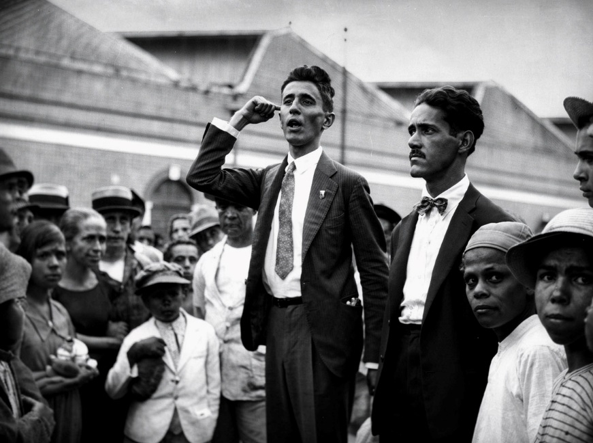
Figure 2: Communist municipal councilors Octavio Brandão and Minervino de Oliveira delivering speeches outside a factory in the Federal District (RJ), in 1927
Source: family collection
Instead, it is necessary to examine the social conditions that made this achievement possible: the expansion of working-class neighborhoods in the 2nd District, Minervino's prestige among workers, the organization of the Workers' and Peasants' Bloc, and the context of political ferment at the time. Viewed from this perspective, his election was not the result of a personal “destiny,” but of a specific historical and social conjuncture that made the emergence of working-class leaders within institutional politics possible.
Minervino and Octávio Brandão's participation and activities in the Municipal Council were not easy. In the words of Octávio Brandão, “... the harsh, difficult, and unequal battle against immense allied forces” (Brandão, 1978, p. 361). The two municipal councilors were frequently persecuted, arrested, or forced into hiding. They enjoyed no immunity, even though the Federal Supreme Court considered municipal councilors of the Federal District equivalent to state legislators and, therefore, not subject to arrest. However, this was not what happened in practice. The Political Police, represented by the 4th Police Precinct, which would later become the Department of Political and Social Order (DOPS), disregarded this principle. Nevertheless, they did not lose heart. They visited factories and workshops in working-class neighborhoods. They assisted trade union movements. They wrote for workers' newspapers, particularly A Classe Operária (Figure 3). They defended strikes. They supported workers' immediate demands. They attended and spoke at rallies. They visited workers' homes. They submitted motions, proposals, and budget amendments in support of workers, peasants, and the popular masses. They also met with civil servants at their workplaces, in schools, railways, hospitals, and private-sector companies.
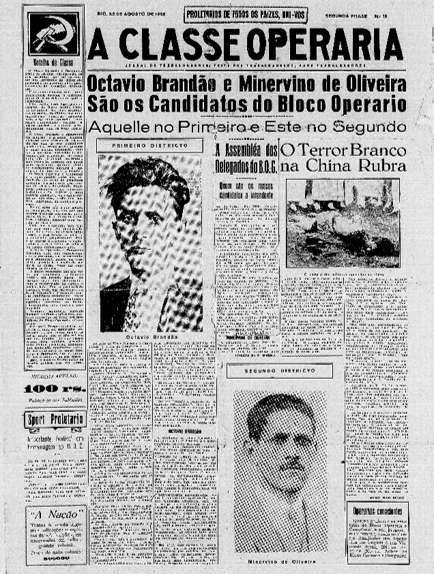
Figure 3: The newspaper A Classe Operária presents the candidates of the Workers' and Peasants' Bloc: Octavio Brandão and Minervino de Oliveira - Second phase, no. 18. RJ, August 25, 1928
Source: National Library collection
Support for the communist municipal councilors within the Municipal Council was virtually nonexistent. During the first months of their terms, one of the few councilors who supported them was Maurício Paiva de Lacerda (1888-1959), due to his break with the Democratic Party and growing alignment with the PCB. However, this support was short-lived. During the presidential succession process, Maurício de Lacerda eventually supported Getúlio Dorneles Vargas (1882-1954).
As the presidential succession approached, the First Congress of the Workers' and Peasants' Bloc was held between November 3 and 5, 1929, in Rio de Janeiro, when the organization's name was also changed to the Workers' and Peasants' Bloc of Brazil (BOCB). At this congress, it was decided to nominate Minervino de Oliveira as a candidate for President of the Republic in the 1930 elections (Figure 4).
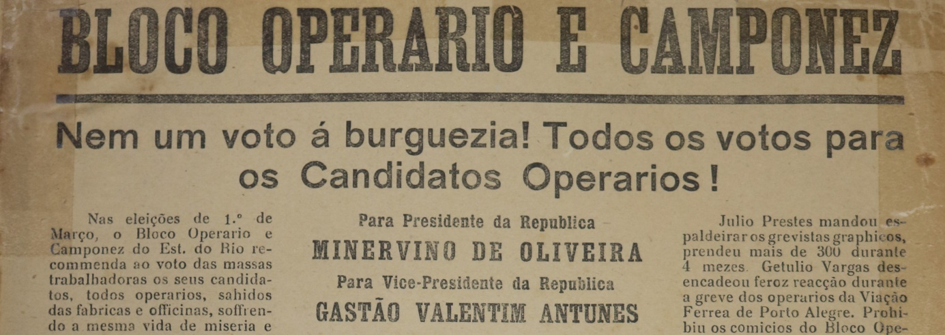
Figure 4: Excerpt from a pamphlet of the Workers' and Peasants' Bloc (BOC) addressing Minervino de Oliveira's candidacy for President of the Republic in 1930
Source: Astrojildo Pereira Archive, CEDEM-UNESP
The President of the Republic, Washington Luís Pereira de Sousa (1869-1957), intensified the persecution of communists and the BOCB. Many candidates were arrested, including Minervino himself, who was detained on January 12, 1930, in Ribeirão Preto, SP, during the Congress of Settlers and Agricultural Workers, held at the headquarters of the General Workers' Union (UGT) (Rosa, 1997, p. 82). He was arrested again in the industrial neighborhood of Bangu, Federal District, RJ. The election took place on Saturday, March 1, 1930. Minervino received just over 720 votes. No BOC candidate was elected. The Revolution of 1930 would break out months later, bringing Getúlio Vargas to power. The Municipal Council was dissolved, and all municipal councilors lost their mandates. In October 1930, however, Minervino and Octavio Brandão were arrested. Minervino was released on February 7, 1931.
If the 1928 election seemed to confirm an upward trajectory, the defeat of 1930 and the political ostracism that followed expose one of the main pitfalls of the “biographical illusion,” the tendency to overlook ruptures. Bourdieu observes that:
The account, whether biographical or autobiographical, such as that of the subject who ‘opens up’ to a researcher, presents events which, although they may not always have unfolded in strict chronological succession [...] tend or seek to organize themselves into ordered sequences according to intelligible relationships. [...] The subject and the object of the biography (the researcher and the person being investigated) have, in a certain sense, the same interest in accepting the postulate that the narrated existence has meaning (and, implicitly, that any existence does) (Bourdieu, 2006, p. 184).
Real life, however, is made up of accidents, deviations, and unforeseen events that do not fit into a coherent narrative. The silence surrounding Minervino's later years, his growing involvement with Spiritism, and his progressive withdrawal from the political scene contrast with the intensity of his activities in the 1910s and 1920s, revealing that his trajectory did not follow a straight line of successful activism, but was marked by discontinuities and adaptations.
Although Minervino never again ran for elected office, whether in the Executive or Legislative branches, at the national, state, or municipal levels, he continued working as a marble worker and remained active in the trade union movement and communist organizations. He became involved with Kardecist Spiritism, contributing articles to Spiritist newspapers and delivering lectures at Spiritist centers.
During the 1940s, Brazil was still under the Estado Novo dictatorship (1937-1945), led by President Getúlio Vargas. In 1945, the Second World War (1939-1945) came to an end. Brazil's participation in the conflict began with Decree No. 10,358 of August 31, 1942 (Brasil, 1942), through which it declared war on the Axis powers and joined the Allies. From 1942 onward, the Estado Novo regime and the figure of Getúlio Vargas began to show signs of weakening, and the dictatorial period appeared to be approaching its end.
In this climate of redemocratization, various movements emerged to advocate for political liberalization. The Communist Party of Brazil (PCB) was one of these groups. The formation of the Progressive Democratic (Popular) Committees, led by the PCB, then began. These committees played a considerably important role in mobilizing and organizing popular sectors during this period, when culture and education became increasingly central concerns of popular movements, as noted by Pinheiro (2005, p. 9).
Minervino de Oliveira was elected First Secretary of the Progressive Democratic Committee of Irajá and the Progressive Democratic Committee of Marble Workers, as well as a member of the Metropolitan Committee of the Communist Party of Brazil. He supported the Marble Workers' Committee in Favor of Yedo Fiúza's (1894-1975) Candidacy in the 1945 presidential elections for the Communist Party of Brazil (PCB) (Tribuna Popular, 1945, no. 39, p. 2; no. 61, p. 5; and no. 86, p. 5). Minervino would remain active in the labor and trade union movements and in communist organizations throughout the 1950s and 1960s.
In the 1970s, at an advanced age, Minervino developed a major neurocognitive disorder. He continued to receive visits from the Political Police until the end of his life. He died on March 2, 1977, in Rio de Janeiro, RJ.
Minervino de Oliveira's trajectory, as outlined here, highlights the tension between lived experience and the narrative constructed around it. Bourdieu teaches us that, when arranging the events of a person's life, the biographer risks producing a coherence that never existed, transforming into “destiny” what was actually the product of contingencies and social constraints. As he himself states:
To attempt to understand a life as a unique and self-sufficient series of successive events, with no connection other than their association with a ‘subject’ whose constancy is certainly nothing more than that of a proper name, is almost as absurd as attempting to explain the logic of a journey on the subway without taking into account the structure of the network. [...] Biographical events are defined as positions and movements within social space, that is, more precisely, within the successive states of the structure of the distribution of the different forms of capital at stake in the field under consideration (Bourdieu, 2006, p. 189-190).
Minervino's life cannot be reduced to the story of a worker who “succeeded” and became a politician; it is also the story of a man who faced imprisonment, lost loved ones (of his 11 children, at least two died in childhood), experienced ostracism, and was forgotten in his later years. Avoiding the “biographical illusion” therefore means recognizing these tensions and contradictions without forging an artificial unity where none existed. A sociological analysis of his trajectory requires considering not only the events of his life but also the structure of the social space in which they unfolded: the labor and trade union movements, the political field of the First Republic, and the trade union and party networks that made both his rise and his decline possible.
4 Generation, Prosopography, and the Construction of a Collective Identity
The trajectory of Minervino de Oliveira, as outlined in the previous chapter, cannot be understood as an isolated achievement resulting from individual will or personal “destiny.” Beyond Bourdieu's critique of the “biographical illusion,” it is necessary to situate Minervino within the broader context of the social and historical forces that shaped his actions and consciousness. It is at this point that the concepts of generation, as formulated by Mannheim (1982), and prosopography, or collective biography, as defined by Charle (2018), provide fundamental analytical tools.
Mannheim helps us understand how the shared experience of significant historical events can create a “common situation” among individuals of the same age group, predisposing them to certain modes of thought and action. Charle, in turn, provides the method of prosopography to describe the “common characteristics of a group of historical actors” (Charle, 2018, p. 127), making it possible to move beyond a merely individual approach to biography. Together, these two theoretical contributions allow us to analyze Minervino not as a solitary hero, but as a typical representative of a political generation that shaped the Brazilian labor movement during the First Republic. For Mannheim, the generational phenomenon cannot be reduced to biological contemporaneity. As he himself states:
The fact that people are born at the same time, or that their youth, adulthood, and old age coincide, does not in itself imply a similarity of situation; what actually creates a common situation is their being in a position to experience the same events and data, etc., and especially the fact that these experiences affect a similarly “stratified” consciousness (Mannheim, 1982, p. 79-80).
Minervino de Oliveira, born in 1891, belonged to a generation that experienced, during its youth, decisive events in the formation of the Brazilian labor movement. He was born shortly after the Abolition of Slavery (1888) and the Proclamation of the Republic (1889), and was able to witness firsthand the impacts of the First World War (1914-1918) and, above all, the major workers' strikes of 1917 and 1919. In light of his trade union and political activities, it can be argued that these events affected him through a “similarly stratified consciousness,” to use Mannheim's expression, forged through the experience of factory work, poverty, and racial discrimination.
Mannheim distinguishes between three levels of analysis: “generational location,” which represents the mere possibility of a common experience; “generation as an actuality,” which emerges when contemporaries actively participate in the same social and intellectual currents; and “generational unit,” referring to groups within the same generation that interpret shared experiences in distinct, sometimes antagonistic ways. As he explains:
Within any generation, there may be several differentiated and antagonistic generational units. Together, they constitute an 'actual' generation precisely because they are oriented toward one another, even if only in the sense of opposing one another (Mannheim, 1982, p. 89).
Applying this distinction to Minervino, we can affirm that he shared a generational location with all young Brazilians born in the late nineteenth century, but his experience was radically different from that of young people from the agrarian elites or the urban middle classes. What transformed this location into a generation as an actuality was his active participation in the labor movement, trade unions, and, subsequently, the Communist Party of Brazil (PCB). He was not merely a spectator of events; he was an actor who helped shape them.
Within this actual generation, Minervino belonged to a specific generational unit: that of communist activists from working-class backgrounds, who interpreted their historical experience through the lens of Marxism-Leninism and class struggle. This generational unit differed from other contemporary units, such as anarchists, who shared the same generational location but advocated different political strategies, or reformist workers, who favored negotiation with the State. Minervino's decision to join the PCB in 1927 was therefore not an individual event, but the expression of a generational unit that, as Mannheim observes:
[...] represents a much more concrete bond than the actual generation as such. It may be said that young people who experience the same concrete historical problems belong to the same actual generation; whereas those groups within the same actual generation that process the material of their common experiences through different specific modes constitute separate generational units (Mannheim, 1982, p. 86-87).
One of Mannheim's most productive concepts for analyzing Minervino's trajectory is that of the “stratification of experience.” The author argues that experiences lived during youth tend to crystallize into a “natural worldview” that guides all subsequent experiences:
Early impressions tend to crystallize into a natural worldview. All subsequent experiences then tend to derive their meaning from this original set, whether they appear as its confirmation and completion or as its negation and antithesis (Mannheim, 1982, p. 80).
In the case of Minervino de Oliveira, his social and political formation can be understood through two complementary dimensions. The first concerns the circumstances of his childhood and youth, marked by poverty, early entry into the workforce, and the death of his father when he was only ten years old. The second relates to his involvement with the labor movement beginning in 1911, at the age of twenty, and his participation in strikes, professional associations, and trade union mobilizations during the 1910s. The available documentation on his trajectory makes it possible to identify the importance of these experiences in shaping his political path, although it does not, in itself, allow for the establishment of a direct and definitive relationship between them and the formation of class consciousness. Nevertheless, they can be interpreted as fundamental elements for understanding his progressive involvement in workers' organizations and his subsequent political activities.
This “primary stratum of experiences” functioned as a filter through which Minervino interpreted his subsequent adherence to communism. In this sense, Marxism-Leninism can be understood as a political and theoretical framework that came to guide his activism, connecting issues already present in his experience of the world of work with the proposals for social transformation advocated by the communist movement. The Russian Revolution of 1917, as Octavio Brandão observes, was a “generational event” that guided the political formation of communist activists. Mannheim captures this dynamic when he states that:
[...] biological factors (such as youth and old age) do not, in themselves, imply any definite practical or intellectual orientation [...] they merely initiate certain formal tendencies, whose objective manifestations will ultimately depend on the prevailing social and intellectual context (Mannheim, 1982, p. 78).
The “modernity” of Minervino's youth, as Mannheim suggests, consisted in being closer to the “current” problems of the labor movement and taking a stand on them:
The “modernity” of youth, therefore, consists in being closer to 'current' problems (as a result of its “potentially original contacts”), and in being dramatically aware of a process of destabilization and taking sides within it (Mannheim, 1982, p. 82).
This “dramatic awareness” of the process of social destabilization is precisely what characterized Minervino's generation: it not only witnessed the emergence of the labor movement but also actively engaged in the struggle for labor rights, the eight-hour workday, and the transformation of the social order.
Mannheim observes that not every generational location produces new collective attitudes and original formative principles. The emergence of a generational unit with its own characteristics is closely linked to the pace of social change:
Not every generational location, nor even every age group, creates new collective impulses and original formative principles of its own, suited to its particular situation. [...] everything indicates that the frequency of such achievements is closely linked to the pace of social change. [...] The faster the pace of social and cultural transformation, the greater the chances that particular groups within a generational location will react to changing conditions by producing their own entelechies(Mannheim, 1982, p. 92-93).
Brazil in the first decades of the twentieth century was experiencing precisely such a period of accelerated social transformation. The abolition of slavery, European immigration, incipient industrialization, urban growth, and the emergence of an industrial proletariat created the conditions for the formation of a new “generational entelechy”: that of organized workers who, for the first time in the country's history, demanded their place in the political arena. Minervino was one of the leading representatives of this entelechy.
Minervino's presidential candidacy in 1930, although it received few votes, was a symbolic milestone in the emergence of this new generation within institutional politics. As Mannheim observes, “generational units” frequently originate in “concrete groups” that develop new conceptions, which subsequently spread to broader circles:
The generational unit as we have described it is not, as such, a concrete group, although it does indeed have as its nucleus a concrete group that developed the most essential new conceptions, which were subsequently further developed by the unit (Mannheim, 1982, p. 90).
In Minervino's case, the concrete group that developed these new conceptions was the Workers' and Peasants' Bloc (BOC), which nominated him as a candidate, and, before it, the Marble Workers' Center and the Communist Party of Brazil (PCB). These organizations constituted the “concrete nuclei” that formulated the unifying attitudes which later spread to a broader “generational unit,” composed of workers, peasants, and intellectuals engaged in the anti-capitalist and anti-racist struggle.
While Mannheim offers the theoretical framework for understanding the generational dimension of Minervino's trajectory, Charle (2018) provides the method for situating him within a broader social group. Prosopography, or collective biography, is defined by Charle as: “the investigation of the common characteristics of a group of historical actors through the collective study of their lives” (Charle, 2018, p. 127, citing Lawrence Stone).
The principle of prosopography is simple:
[...] to define a population based on one or more criteria and establish a biographical questionnaire concerning its members, whose various variables and criteria will serve to describe its social, private or public, cultural, ideological, or political dynamics (Charle, 2018, p. 127).
Applying this method to Minervino, we can construct the profile of a specific social group: communist trade union leaders and politicians from working-class backgrounds during the First Republic. This group shared a series of common characteristics that can be identified through Minervino's biography.
The analysis of the trajectories of the working-class and communist activists considered here points to the recurring presence of modest social origins, although these were not necessarily homogeneous. Many came from families of workers, small-scale artisans, or low-paid employees, including people of African descent, and had limited access to property and formal education. Schooling was often restricted to basic literacy, supplemented in many cases by processes of self-education. Their professional backgrounds encompassed different segments of the urban and industrial working class, such as textile manufacturing, marble working, and public transportation, including both skilled and unskilled workers.
Their involvement with the trade union movement occurred primarily during the first decades of the twentieth century, through participation in trade unions, professional associations, and mutual aid organizations, such as the Marble Workers' Center (COM). For some of these activists, adherence to communism was preceded by experience in revolutionary syndicalism, followed by closer involvement with or membership in the Communist Party of Brazil (PCB), as occurred with Minervino de Oliveira in 1927. In the electoral sphere, communist candidacies also served a function of political propaganda and organization, beyond their immediate prospects of electoral success. Minervino's trajectory presents important particularities in this regard: elected municipal councilor in 1928, he became a candidate for President of the Republic in 1930.
The trajectories of these activists were also affected, to varying degrees and at different moments, by political repression, including police surveillance, persecution, imprisonment, and restrictions on public activities. These experiences, however, were not uniform, varying according to each individual's position, political visibility, and historical circumstances. For some, the 1920s represented a period of greater trade union and political prominence, followed by a loss of institutional influence and difficulties in political activity after the Revolution of 1930 and the termination of the mandates they had secured. This did not necessarily mean the end of their activism, since some of these individuals remained involved, in different ways, in political and trade union organizations during the following decades (Charle, 2018, p. 127–130).
As Charle observes, prosopography makes it possible to “better understand the internal divisions of the various groups studied, their social and generational dynamics, as well as the dominant social networks” (Charle, 2018, p. 137). In the case of the group of communist leaders during the First Republic, prosopography reveals a social dynamic marked by three main characteristics:
- Working-class advancement: the emergence of leaders such as Minervino was made possible by trade union and party organization, which provided opportunities for political education and representation for workers excluded from traditional elites.
- Repression as a unifying factor: the successive arrests and persecutions experienced by Minervino and his comrades created bonds of solidarity and reinforced group identity. Paradoxically, repression functioned as a “crystallizing agent” of the generational unit.
- Ostracism and silence: the political defeat of 1930 and the end of his term as municipal councilor marked the beginning of a decline that contrasted with his previous rise. Prosopography, as Charle observes, must pay attention to “individual trajectories and morphology”: the internal diversity of these cases increases as the target population becomes larger (Charle, 2018, p. 134-135).
Charle warns that prosopography must avoid two pitfalls: the risk of an “indefinite biography of individuals (running the risk of losing the collective dimension)” and, conversely, “the expansion of successive samples to encompass the whole of society (running the risk of reducing the questionnaire to its simplest expression)” (Charle, 2018, p. 130).
In Minervino's case, it is necessary to balance these two tendencies. On the one hand, his trajectory is representative of a broader group: communist working-class leaders during the First Republic. On the other hand, his trajectory presents specificities that prosopography cannot fully capture: his position as a Black worker in a society still marked by structural racism in the post-abolition period gives his trajectory a singular dimension that requires an analysis extending beyond quantitative data.
Charle observes that “the biases of the official sources on which biographies rely provide only a partial view of reality” (Charle, 2018, p. 130). In Minervino's case, much of the information about his life comes from official sources (police dossiers, electoral records, periodicals) that tend to emphasize his political and trade union activities while remaining silent about his private life, motivations, and subjective experiences. Prosopography must therefore be complemented by other approaches, such as oral history, memory analysis, and the critique of the “biographical illusion,” as discussed in the previous chapter.
Thus, analyzing Minervino de Oliveira's trajectory in light of Mannheim's and Charle's concepts makes it possible to move beyond a merely biographical approach and situate him within a broader social and historical context.
From Mannheim, we learn that Minervino was not an isolated hero, but a representative of an actual generation that experienced the emergence of the labor movement in Brazil and of a specific generational unit: that of communist activists from working-class backgrounds. His trajectory expresses the “stratification of experience” that shaped his political consciousness, as well as the “generational entelechy” that produced new forms of action and thought in a context of accelerated social change. From Charle, we learn that Minervino's trajectory can be understood as part of a collective biography of communist trade union leaders and politicians during the First Republic. Prosopography reveals the common characteristics of this group: working-class origins, self-education, trade union participation, adherence to communism, symbolic candidacies, and political repression.
This dual approach, generational and prosopographical, makes it possible to understand Minervino's trajectory not as an individual destiny, but as a social and historical phenomenon. It also lays the groundwork for the next chapter, in which we will analyze the construction of Minervino's memory and its role in shaping the political identity of the Brazilian left.
5 Memory, Silence, and Political Legacy
The trajectory of Minervino de Oliveira, as outlined in the previous chapters, extends beyond his factual biography and his belonging to a generation or social group. There is an equally fundamental dimension: the memory constructed around him and, likewise, the silences surrounding his figure. As Pollak (1992) observes, memory is not simply a recovery of the past, but a social and selective construction intrinsically linked to identity, both individual and collective.
Pollak defines memory as a “constructed phenomenon,” involving a genuine “work of organization” of what is recorded, repressed, excluded, or recalled. This construction takes place at both the individual and collective levels and is closely associated with the “sense of identity,” understood as “the image a person acquires of themselves throughout life, the image they construct and present to others and to themselves” (Pollak, 1992, p. 204).
Applying this perspective to Minervino, we can investigate how his memory has been constructed, evoked, and, at certain moments, silenced by different political groups over time. The question guiding this chapter is: how has the memory of Minervino de Oliveira been framed, contested, and, in certain respects, forgotten, and what does this reveal about the construction of the political identity of the Brazilian left?
Pollak proposes three criteria for analyzing the constitution of memory: events, figures, and places, which may be known “directly or indirectly” (Pollak, 1992, p. 202). Applying these criteria to Minervino, we can identify the elements that constitute his memory: events, figures, and places.
The events that mark Minervino's memory are, above all, those related to his political and trade union activities: his election as municipal councilor in 1928, his presidential candidacy in 1930, his successive arrests, and police repression. These events are frequently evoked in articles and biographies celebrating his trajectory. As Pollak observes, memory is selective: “Memory is selective. Not everything is retained. Not everything is recorded” (Pollak, 1992, p. 204).
In Minervino's case, what remains recorded are the moments of political advancement and resistance, his election as municipal councilor in 1928, his presidential candidacy in 1930, and his successive arrests, while the later stages of his trajectory, although marked by continued activism, are frequently silenced or underestimated. The memory constructed around him privileges the figure of the “heroic activist” of the 1910s and 1920s, at the expense of the equally relevant activities he maintained in subsequent decades. As Domingues (2017, p. 18) observes, the years following Minervino's presidential candidacy were marked by an ostracism that contrasts with the intensity of his earlier activities, even though he remained active in the trade union movement and the Communist Party, as demonstrated by his participation in the Progressive Democratic Committees during the redemocratization of 1945 and his support for Yedo Fiúza's candidacy (Tribuna Popular, 1945). This silence surrounding his later years, therefore, does not reflect an actual withdrawal from politics, but rather a selective construction of memory that privileges moments of greater public visibility over a longer and less spectacular, but no less significant, trajectory.
Pollak observes that memory is also constituted by figures who may have been “actually encountered during one's lifetime” or “known indirectly, through others” (Pollak, 1992, p. 202). In Minervino's case, the figures populating his memory include his fellow activists, especially Octavio Brandão, and his political adversaries, the police officers who persecuted him, and the municipal councilors who opposed him in the Municipal Council (Figure 5).
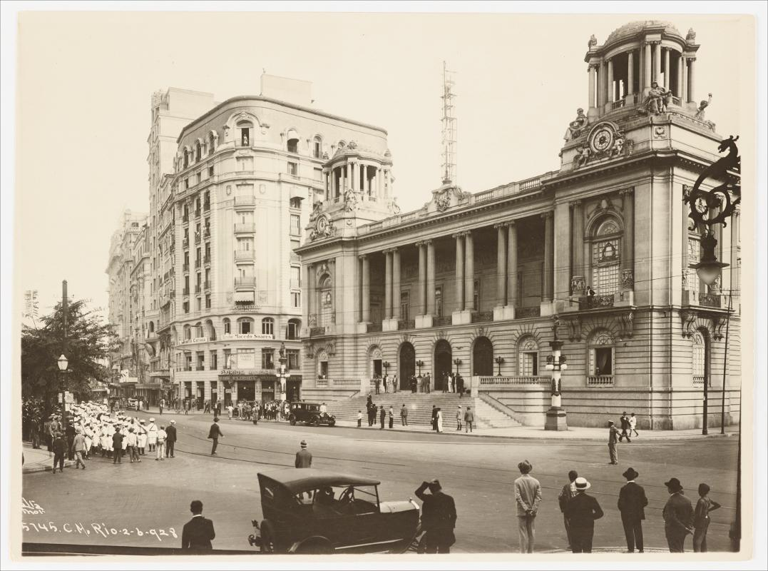
Figure 5: Building of the Municipal Council of the Federal District (RJ), June 2, 1928, during the period of Minervino de Oliveira's political activities
Source: photograph by Augusto Malta (1864-1957), Instituto Moreira Salles Collection
Pollak also emphasizes that “it is not necessary to have lived at the same time” as a figure to perceive them as a contemporary (Pollak, 1992, p. 202). This applies to Minervino because many left-wing activists who never knew him personally evoke him as an emblematic figure, as a “contemporary” of the labor and anti-racist struggles. The figure of “Minervino” thus becomes a symbol that transcends his individual existence.
Places of memory are equally important. Pollak mentions “places particularly associated with a memory, which may be a personal memory, but may also lack a basis in chronological time” (Pollak, 1992, p. 202). For Minervino, the places where he was active, the São João Textile Factory, the Marble Workers' Center, Republic Square, where the BOC headquarters were located, and the working-class neighborhoods of the 2nd District where he campaigned, are places of memory that evoke his trajectory.
Pollak also observes that “very distant places, outside the space and time of a person's life, may constitute important places for the memory of a group” (Pollak, 1992, p. 202). In Minervino's case, his figure is associated with a symbolic geography of the Rio de Janeiro labor movement: Ponta do Caju, where he played as a child; the Bangu neighborhood, where he was arrested; and General Canabarro Street, where Di Cavalcanti encountered him again. These places, even for those who have never known them, become part of the collective memory of the labor struggle.
Pollak distinguishes between events “personally experienced” and those “experienced indirectly,” that is, “events experienced by the group or collectivity to which a person feels they belong” (Pollak, 1992, p. 201). He adds that a “phenomenon of projection or identification with a particular past may occur, so strong that we can speak of an almost inherited memory” (p. 201).
In Minervino's case, his memory is activated not only by those who knew him personally, but also by later generations of left-wing activists who identify with his struggle. Pollak observes that: There may be regional events that were so traumatic, that marked a region or group so profoundly, that their memory can be transmitted over centuries with an extremely high degree of identification (Pollak, 1992, p. 201).
Although Minervino is not a figure from centuries ago, his memory operates in a similar way: it is transmitted as part of an activist heritage, as an example of a “working-class fighter” who should be remembered and celebrated. This inherited memory fulfills an important function: it forges a sense of continuity and belonging between present-day activists and past generations.
Pollak further observes that:
In addition to these various projections, which may occur in relation to events, places, and figures, there is also the question of the dated traces of memory, that is, what remains recorded as the precise date of an event (p. 202-203).
In Minervino's case, the dates that remain recorded are those associated with his public activities: 1928 (election as municipal councilor), 1930 (presidential candidacy and imprisonment), and 1977 (death). Dates from his private life, births, marriages, and the deaths of his children, are less frequently remembered because they do not fit into the political narrative constructed around him. This confirms Pollak's observation that, for “public figures, family life, private life, will almost completely disappear from the account” (Pollak, 1992, p. 203).
Pollak observes that memory involves not only selection, but also repression, exclusion, and silence. In his article Memory, Forgetting, Silence, mentioned in the introduction, he analyzes how certain aspects of the past are systematically silenced because they are painful, shameful, or inconvenient for the group's identity.
As previously discussed, Minervino's trajectory after 1931 was marked by intense political activity that nevertheless remained outside the main electoral arena. Although he never again ran for elected office, Minervino continued to participate in the trade union movement and the Communist Party, actively contributing to the redemocratization process of 1945, when he was elected First Secretary of the Progressive Democratic Committee of Irajá and the Progressive Democratic Committee of Marble Workers, in addition to supporting Yedo Fiúza's presidential candidacy (Tribuna Popular, 1945). Despite this continued activism, the silence surrounding his later years contrasts with the intensity of his activities in the 1920s and the wealth of information available about that period.
Pollak observes that “memory is a phenomenon constructed socially and individually” (Pollak, 1992, p. 204), and that silence can be a form of memory management: “What individual memory records, represses, excludes, and recalls is clearly the result of a genuine work of organization” (Pollak, 1992, p. 204).
Why are Minervino's later years silenced? One plausible hypothesis is that this silencing does not result from an actual withdrawal from activism, but rather from a gap in academic scholarship. The established literature on the labor and trade union movements, the Communist Party in Brazil, and Brazilian history, particularly that produced in the 1960s and 1980s, focused almost exclusively[3] on the moments of greatest visibility in Minervino's trajectory, his election as municipal councilor in 1928, his presidential candidacy in 1930, and the arrests he endured, devoting little or no attention to his activities after 1931. As Domingues (2017, p. 18) observes, the years following Minervino's presidential candidacy were marked by an ostracism that contrasts with the intensity of his earlier activities, even though he remained active in the trade union movement and the Communist Party.
Pollak also draws attention to the fact that memory undergoes fluctuations “depending on the moment in which it is articulated, in which it is expressed” (Pollak, 1992, p. 204). The studies that emerged from the 2000s onward, although they recovered the figure of Minervino, also failed to systematically address his activities between 1931 and 1977, thus reproducing the historiographical silence surrounding the final decades of his life. This documentary gap does not, however, mean that Minervino withdrew from politics; rather, it means that the history of his activism after 1931 remains to be written.
Another notable silence in Minervino's memory concerns his status as a Black worker. Although he is frequently described as “the first Afro-Brazilian, working-class, and communist candidate to run for the nation's highest office” (Domingues, 2017, p. 13), the racial dimension of his trajectory has received less attention than its political dimension. The established literature on the labor movement and the Communist Party, particularly that produced in the 1960s and 1980s, focused primarily on his party and trade union activism, addressing only secondarily his status as a Black man in a post-slavery society. More recent studies, such as that by Passos (2022), seek to fill this gap by situating Minervino within the broader context of “Black resistance against capital,” highlighting his relevance to both the history of the labor movement and the history of Black struggles in Brazil. Pollak observes that “if confrontation between individual memory and the memories of others is possible, this demonstrates that memory and identity are values contested in social and intergroup conflicts” (Pollak, 1992, p. 205).
In Minervino's case, this dispute is expressed through the tensions between different groups that claim his legacy. The labor and trade union movements and the Communist Party, as can be inferred from the work of Octavio Brandão (1978), tend to emphasize his class struggle and party activism, placing him within a lineage of “working-class fighters” who “fought on the front lines of battle.” The Black movement, in turn, as highlighted by Domingues (2017, p. 13) and Buonicore (2010), tends to emphasize his racial identity and the symbolic significance of his presidential candidacy in a post-slavery society. Passos (2022) also contributes to this approach by situating Minervino within the broader context of “Black resistance against capital,” highlighting the dual dimension of his struggle: class and race.
Pollak further observes that “memory, as well as the sense of identity within this inherited continuity, constitutes an important point of contention over family values, a focal point in people's lives” (Pollak, 1992, p. 205). In Minervino's case, the dispute over his memory is a dispute over the political heritage of the Brazilian left. Who are the true heirs to his struggle? Pollak introduces the concept of the “work of framing memory” (Pollak, 1992, p. 206), which is carried out by political organizations, trade unions, churches, and also historians. He observes that:
There is work that is partially carried out by historians. We have organic historians, in a sense borrowed from Gramsci, who are the historians of the Communist Party, the historians of the Gaullist movement, socialist historians, trade unionists, etc., whose task is precisely to frame memory (Pollak, 1992, p. 206).
In Minervino's case, the work of framing memory was carried out mainly by two groups: the Communist Party, which celebrated him as a “working-class fighter,” and, more recently, the Black movement, which celebrates him as a “forgotten Black hero.” Both groups select and organize Minervino's memory according to their own political agendas.
Pollak observes that “Whenever a memory is relatively well established, it performs a work of maintenance, coherence, unity, continuity, and organization” (Pollak, 1992, p. 206). In Minervino's case, the memory constructed by the Communist Party, which places him within a lineage of “working-class fighters,” is relatively stable and coherent. It serves to maintain the party's identity and inspire future generations of activists. Pollak emphasizes that “Investments in the past, so to speak, have yielded interest” (Pollak, 1992, p. 206). Pollak also observes that, during moments of internal reorganization or ideological reorientation, a group's memory may be rewritten:
Whenever an internal reorganization occurs, with each major ideological reorientation, the history of the party and general history are rewritten. Such moments do not occur without reason; they involve extremely costly investments in political terms and in terms of coherence, unity, and therefore the identity of the organization (Pollak, 1992, p. 206).
This is particularly relevant to understanding Minervino's memory within the context of the Communist Party. The figure of Minervino has been celebrated to varying degrees at different moments in the party's history, depending on the prevailing ideological orientations. During periods of greater alignment with the Black movement, for example, his racial identity was emphasized more strongly; during periods when class struggle received greater emphasis, his working-class origins were highlighted.
Pollak observes that memory and identity are values contested in social and intergroup conflicts (Pollak, 1992, p. 205). He illustrates this with the memory of the French Resistance, which was contested between Gaullists and communists over recognition of the “true” legitimacy of having been at the forefront of the Resistance: “The objective was to have each group's interpretation of the past recognized and, consequently, its specific memory” (Pollak, 1992, p. 205).
In Minervino's case, we can identify similar disputes. His memory is contested among different political groups that claim his legacy. The Communist Party, as recorded by Octavio Brandão (1978, p. 265-266), celebrates Minervino as a “working-class fighter” and an “exemplary communist activist,” emphasizing his party affiliation and his struggle for socialist revolution, placing him within a lineage of workers who “fought on the front lines of battle.” The Black movement, in turn, as highlighted by Domingues (2017, p. 13) and Buonicore (2010), celebrates Minervino as a “Black hero,” emphasizing his status as a Black worker in a post-slavery society and the symbolic significance of his presidential candidacy. The trade union movement, as documented by Batalha (2009a, p. 208, 225), celebrates Minervino as a “trade union leader,” emphasizing his activities within the Marble Workers' Center and his struggle for better working conditions.
Pollak observes that “the elaboration of this type of memory involves very demanding work, which takes time and consists of assigning value and establishing hierarchies among dates, figures, and events” (Pollak, 1992, p. 205). Each of these groups undertakes similar work, selecting and prioritizing the aspects of Minervino's trajectory that are most relevant to its own political identity.
The memory of Minervino de Oliveira is not merely a record of the past; it is an active instrument in the construction of the political identity of the Brazilian left. Pollak observes that “Memory is a phenomenon constructed socially and individually, which is closely associated with the sense of identity” (Pollak, 1992, p. 204).
The figure of Minervino serves as an anchor for the political identity of different groups. For the labor movement, he is proof that a worker can achieve political advancement and fight for workers' rights. For the Black movement, he is proof that a Black person can overcome the barriers of racism and occupy positions of power. For the communist movement, he is proof that the party is truly the party of the working class, as Octavio Brandão stated.
Pollak observes that:
When memory and identity are sufficiently constituted, sufficiently established, and sufficiently consolidated, challenges from groups outside the organization do not create a need for rearrangements (Pollak, 1992, p. 207).
The memory of Minervino, as constructed by the PCB, became sufficiently stable to withstand external challenges. It was incorporated into the party's “tradition” and is transmitted to new generations of activists.
However, Pollak warns that during moments of crisis or internal reorganization, memory may be rewritten: “Whenever an internal reorganization occurs, with each major ideological reorientation, the history of the party and general history are rewritten” (Pollak, 1992, p. 206).
This suggests that Minervino's memory may be subject to future reassessments, depending on the political and ideological transformations of the Brazilian left. New aspects of his trajectory, such as his growing involvement with Spiritism, his political ostracism, or his racial identity, may receive greater or lesser emphasis according to the political needs of the present.
The analysis of Minervino de Oliveira's memory in light of Michael Pollak's concepts reveals the complexity and selectivity of the process of memory construction. The figure of Minervino is not simply a “historical fact,” but a social construction that reflects the political and identity disputes of different groups.
Pollak teaches us that memory is selective, fluid, and deeply connected to identity. In Minervino's case, the memory constructed around him privileged moments of political advancement and resistance, silencing the years of ostracism and the more ambiguous dimensions of his trajectory. This silence is not accidental; it is the result of a work of framing carried out by political organizations interested in celebrating certain aspects of his life while forgetting others.
Pollak also teaches us that memory is an object of dispute. The figure of Minervino is contested among different groups seeking to make him a symbol of their own struggles. This dispute reveals Minervino's importance as an anchor for the political identity of the Brazilian left.
Finally, Pollak draws our attention to the relationship between memory and identity. The memory of Minervino is not only about the past; it is about the present and the future. It serves to forge a sense of continuity and belonging between present-day activists and past generations, and to legitimize the political struggles of the present.
6 Final Considerations
The trajectory of Minervino de Oliveira (1891-1977) is exemplary for understanding the tensions between individual experience and broader social and historical processes. Far from being an isolated case or a biographical curiosity, his life encapsulates the contradictions of the Brazilian labor movement, political advancement and repression, class struggle and the racial question, celebrated memory and historiographical silence.
Bourdieu's (2006) critique of the “biographical illusion” proved fundamental in challenging the seemingly natural linear narrative of upward mobility and overcoming adversity that frequently surrounds figures such as Minervino. His election as municipal councilor in 1928 and his presidential candidacy in 1930 were not the result of a personal “destiny,” but of specific social and historical conditions. At the same time, the silence surrounding his later years reveals that his life did not follow a straight path of successful activism, but was marked by discontinuities, adaptations, and ostracism.
Mannheim's (1982) concepts made it possible to situate Minervino within his generational context. Born in 1891, he belonged to a generation that experienced the emergence of the labor movement in Brazil, the strikes of 1917 and 1919, and the founding of the PCB in 1922, and, within that generation, to a specific generational unit, that of communist activists from working-class backgrounds. His trajectory expresses the “stratification of experience” that shaped his political consciousness and the “generational entelechy” that produced new forms of action in a context of accelerated social change.
Prosopography, as defined by Charle (2018), made it possible to interpret Minervino's trajectory as part of a collective biography of communist trade union leaders and politicians during the First Republic. The common characteristics of this group, working-class origins, self-education, trade union participation, adherence to communism, symbolic candidacies, and political repression, reveal the social and generational dynamics that made the emergence of working-class leaders within institutional politics possible.
Finally, Pollak's (1992) concepts of memory and identity help explain the selectivity and contested nature of the representations constructed around Minervino over time. His figure has been framed in different ways by distinct social and political groups: the Communist Party celebrated him as a “working-class fighter” (Brandão, 1978); the Black movement came to highlight him as a “Black hero” and the first Afro-Brazilian candidate for President of the Republic (Domingues, 2017; Buonicore, 2010); and the historiography of the labor movement emphasized his activities as a trade union leader (Batalha, 2009b).
It is important to observe, however, that this emphasis on his racial identity constitutes, above all, a later interpretation of his trajectory. His identification as a Black man is historically relevant, but it is particularly difficult to find explicit references to racial demands or arguments formulated by Minervino himself, either in his speeches or in primary documentation and records contemporary to his activities. This distinction makes it possible to critically examine the processes through which his memory has been reconstructed, in which different groups selected and reinterpreted aspects of his trajectory according to their own identities and political agendas, constituting what Pollak (1992, p. 206) calls the “work of framing memory.”
In the case of Minervino de Oliveira, the dispute surrounding his memory can be understood through the different processes of transmission and framing carried out by political and social groups at different times. His memory is not restricted to those who knew him personally, but is also mobilized by later generations of left-wing activists who recognize in his trajectory a reference point for political struggle.
As Pollak (1992, p. 201) observes, certain events and experiences can be transmitted across generations with a high degree of identification, constituting an inherited memory. In Minervino's case, this transmission can be observed, for example, in the recovery of his trajectory by Octavio Brandão (1978), who presents him as a working-class fighter, and in subsequent initiatives to highlight his participation in the history of Brazilian communism, such as the article by Augusto Buonicore (2010) and the study by Petrônio Domingues (2017). These accounts make it possible to identify different emphases in the construction of his memory: while the communist tradition privileges his status as an activist and representative of the working class, approaches associated with the history of the Black population highlight his trajectory as an expression of Black participation in Brazilian politics.
Comparing these representations reveals that Minervino's memory is not simply preserved, but continuously selected and reinterpreted, contributing to the construction of feelings of belonging and historical continuity among different generations of activists. At the same time, it is important to distinguish retrospective interpretations from evidence produced during his period of political activity, since later framings also reveal the interests and collective identities of the groups that claim his legacy.
This contestation over memory, however, coexists with significant silences. The silence surrounding Minervino's later years does not reflect an actual withdrawal from politics, as demonstrated by his participation in the Progressive Democratic Committees in 1945, but rather a gap in academic scholarship. The established literature has concentrated on the moments of greatest visibility in his trajectory, devoting little attention to his activities after 1931. Another notable silence concerns his status as a Black worker, a dimension that has received less attention than his party activism. Recent studies, such as that by Passos (2022), seek to fill this gap by situating Minervino within the broader context of “Black resistance against capital.”
Minervino de Oliveira was, therefore, an individual who defied the social expectations associated with his origins, a typical representative of his generation and social group, and a symbol in the collective memory of the Brazilian left. His trajectory cannot be reduced to a heroic biography, but expresses broader social and historical processes that deserve continued investigation. Avoiding the “biographical illusion” means recognizing the tensions and contradictions of his life without forging an artificial unity where none existed, and understanding that the sociological analysis of a trajectory requires considering not only the events of a life, but also the structure of the social space in which they unfolded.
It is necessary to acknowledge, however, certain limitations of this research. The analysis relied primarily on existing literature and secondary sources, supplemented by a collection of contemporary press records, institutional documents, and police records. Although these sources make it possible to reconstruct important aspects of his trade union and political activities, it was not possible to conduct a sufficiently comprehensive investigation of primary archival sources, particularly regarding the period after 1931. This gap limits our understanding of his activities, social networks, and political positions in subsequent decades, as well as the processes through which his memory was constructed and preserved.
The history of his activism after 1931 remains, to a large extent, to be written. This is one of the contributions that this article hopes to have encouraged: the need to deepen research into primary sources (many of which are still preserved exclusively in analog form) and, above all, to investigate the still little-known years of Minervino's life, so that his trajectory can be understood in its full historical scope, with its achievements, contradictions, continuities, and silences.
As a theoretical and methodological contribution, the article proposes shifting the analysis from an isolated individual biography toward an understanding of the relationships between trajectory, social belonging, collective experience, and the framing of memory. By bringing historical sociology into dialogue with memory studies, this work offers a methodological approach for investigating working-class and political leaders whose trajectories have been partially forgotten, silenced, or subsequently reinterpreted. It is therefore hoped that this study will not represent an endpoint in the reconstruction of Minervino's trajectory, but rather an incentive for further documentary and historiographical research capable of filling the gaps that still remain.
References
A CLASSE OPERÁRIA. Octavio Brandão e Minervino de Oliveira são os candidatos do Bloco Operário. Segunda fase. Nº 18. Rio de Janeiro, 25 de agosto de 1928.
A IMPRENSA, Outras festas. Clube Carnavalesco Beija-Flor. Ano XI. Nº 2.023. Rio de Janeiro, quarta-feira, 18 de fevereiro de 1914.
A MANHÃ. Caixa Beneficente dos Operários Marmoristas e Artes Correlativas. Ano III. Nº 329. Rio de Janeiro, terça-feira, 18 de setembro de 1927.
A MANHÃ. Foram escolhidos os candidatos do Bloco Operário e Camponês ás eleições de outubro. Ano IV. Nº 830. Rio de Janeiro, domingo, 26 de agosto de 1928.
A MANHÃ. Marmorista F. C. Ano II. Nº 287. Rio de Janeiro, terça-feira, 30 de novembro de 1926.
A RAZÃO. Movimento Operário à Noite. Na Associação Gráfica. Ano IV. Nº 788. Rio de Janeiro, sábado, 08 de fevereiro de 1919.
APERJ. Arquivo Público do Estado do Rio de Janeiro. Fundo Polícias Políticas (POL). Série: Prontuários GB. Caixa nº 1.718. Prontuário nº GB 15.652.
BATALHA, Cláudio H. M. O movimento operário na Primeira República. In: FERREIRA, Jorge; DELGADO, Lucilia de Almeida Neves (orgs.). O Brasil republicano: o tempo do liberalismo excludente. Rio de Janeiro: Civilização Brasileira, 2009a.
BATALHA, Cláudio Henrique de Morais. Dicionário do movimento operário: Rio de Janeiro do século XIX aos anos 1920 militantes e organizações. SP: Editora Fundação Perseu Abramo, 2009b.
BOTELHO, Sheila Regina Oliveira. Octavio Brandão e Minervino de Oliveira: intendentes comunistas eleitos pelo BOC/RJ (1928-1929). 2008. 102f. Monografia de fim de curso (Graduação em História) - Universidade Federal do Rio de Janeiro, RJ, 2008.
BOURDIEU, Pierre. A ilusão biográfica. In: FERREIRA, Marieta de Moraes; AMADO, Janaína; PORTELLI, Alessandro (orgs.). Usos e abusos da História Oral. Rio de Janeiro: FGV Editora, 2006.
BRANDÃO, Octavio. Combates e batalhas. Memória. 1º volume. São Paulo: Editora Alfa-Omega, 1978.
BRASIL. Decreto nº 10.358, de 31 de agosto de 1942. Available at: https://www2.camara.leg.br/legin/fed/decret/1940-1949/decreto-10358-31-agosto-1942-467907-norma-pe.html. Accessed on: 20 Aug. 2025.
BUONICORE, Augusto. Minervino de Oliveira: um operário negro para presidência do Brasil. Geledés - Instituto da Mulher Negra, 30 jul. 2010. Available at: https://www.geledes.org.br/minervino-de-oliveira-um-operario-negro-para-presidencia-do-brasil/. Accessed on: 16 Jul. 2026.
CARONE, Edgard. A Internacional Comunista e as 21 condições. Available at: https://gramsci.org/?page=visualizar&id=109. Accessed on: 08 Jun. 2025.
CHARLE, Christophe. A prosopografia ou biografia coletiva: balanço e perspectivas. In: ______. Homo Historicus: reflexões sobre a história, os historiadores e as ciências sociais. Porto Alegre: Editora da UFRGS; Rio de Janeiro: FGV Editora, 2018.
DI CAVALCANTI. Reminiscências líricas de um perfeito carioca. Rio de Janeiro: Civilização Brasileira, 1964.
DISTRITO FEDERAL. Anais do Conselho Municipal do Distrito Federal (RJ). Novembro/Dezembro de 1928. Rio de Janeiro: Tipografia do Jornal do Commercio, de Rodrigues & C., 1929.
DISTRITO FEDERAL. Anais do Conselho Municipal do Distrito Federal (RJ). Dezembro de 1929. Rio de Janeiro: Tipografia do Jornal do Commercio, de Rodrigues & C., 1930a.
DISTRITO FEDERAL. Anais do Conselho Municipal do Distrito Federal (RJ). Junho/Julho de 1929. Rio de Janeiro: Tipografia do Jornal do Commercio, de Rodrigues & C., 1930b.
DISTRITO FEDERAL. Anais do Conselho Municipal do Distrito Federal (RJ). Dezembro de 1929. Rio de Janeiro: Tipografia do Jornal do Commercio, de Rodrigues & C., 1930c.
DOMINGUES, Petrônio. Minervino de Oliveira: um negro comunista disputa a presidência do Brasil. Lua Nova: Revista de Cultura e Política, São Paulo, n. 101, p. 13-51, 2017. DOI: 10.1590/0102-013051/101.
DULLES, John Watson Foster. Anarquistas e comunistas no Brasil. Rio de Janeiro: Nova Fronteira, 1977.
KULATI, Joseph. Como vivem e como agem os comunistas no Rio de Janeiro. Diário da Noite. Ano VII. Nº 2.245. Rio de Janeiro, 22 de janeiro de 1935.
MANNHEIM, Karl. O problema sociológico das gerações. In: FORACCHI, Marialice M. (org.). Karl Mannheim: Sociologia. São Paulo: Ática, 1982.
O IMPARCIAL, Notas Sociais, Festas. Ano II. Nº 195. Rio de Janeiro, terça-feira, 17 de junho de 1913.
O PAÍZ. Várias Notícias. Ano XXV. Nº 12.532. Rio de Janeiro, sábado, 01 de fevereiro de 1919.
PASSOS, Ana Luiza Almeida. Resistências negras contra o capital: Laudelina de Melo Campos e Minervino de Oliveira. Revista Expedições: Teoria da História e Historiografia, v. 14, 2022. DOI: 10.31668/revista_geth.v14iFluxoCont.12987.
PINHEIRO, Marcos Cesar de Oliveira. Dos Comitês Populares Democráticos (1945-1947) aos Movimentos de Educação e Cultura Popular (1958-1964): uma história comparada. 2005. 265 f. Tese (Doutorado em História Comparada) – Instituto de História, Universidade Federal do Rio de Janeiro, Rio de Janeiro, 2005.
POLLAK, Michael. Memória e identidade social. Estudos Históricos, Rio de Janeiro, v. 5, n. 10, p. 200-212, 1992.
RODRIGUES, Theófilo Machado. 95 anos da eleição dos comunistas Octávio Brandão e Minervino Oliveira no Rio. Fundação Maurício Grabois, 27 out. 2023. Available at: https://grabois.org.br/2023/10/27/95-anos-da-eleicao-dos-comunistas-octavio-brandao-e-minervino-oliveira-no-rio/. Accessed on: 07 Aug. 2025.
ROSA, Lilian Rodrigues de Oliveira. Comunistas em Ribeirão Preto (1922-1947). 1997. 174f. Dissertação para obtenção do título de Mestre (Mestrado em História) - Universidade Estadual Paulista Júlio de Mesquita Filho. Franca, SP, 1997.
About the Author
Nelson de Paula Pereira is a master's student in Political Sociology at the Instituto Universitário de Pesquisas do Rio de Janeiro (IUPERJ). He holds a bachelor's degree and a full teaching qualification in History, a teaching degree in Pedagogy, and a lato sensu postgraduate qualification in Brazilian History. For fourteen years, he served as historian of the Presbyterian Church of Rio de Janeiro, coordinator of the Documentation Center (CENDOC), and director of the Museum of the Presbyterian Church of Rio de Janeiro. He currently teaches History and IB Brazilian Social Studies and serves as historian and curator of the Rio de Janeiro Presbytery's collection. He has experience in the field of History, with an emphasis on the History of Rio de Janeiro and the History of Christianity, as well as museums, documentation centers, and archives.
Author Contributions
Conceptualization; methodology; software; validation; formal analysis; investigation; resources; data curation; writing—original draft preparation; writing—review and editing; visualization; supervision; project administration; funding acquisition [N.P.P.].
Acknowledgments
The author acknowledges the support provided to this research by the office of State Representative Dani Balbi in recovering the memory of Minervino de Oliveira, an important figure in the labor movement and the history of communism in Brazil.
Conflicts of Interest
The author declares no conflict of interest.
About Coleção Estudos Cariocas
Coleção Estudos Cariocas (ISSN 1984-7203) is a publication dedicated to studies and research on the Municipality of Rio de Janeiro, affiliated with the Pereira Passos Institute (IPP) of the Rio de Janeiro City Hall.
Its objective is to disseminate technical and scientific production on topics related to the city of Rio de Janeiro, as well as its metropolitan connections and its role in regional, national, and international contexts. The collection is open to all researchers (whether municipal employees or not) and covers a wide range of fields — provided they partially or fully address the spatial scope of the city of Rio de Janeiro.
Articles must also align with the Institute’s objectives, which are:
- to promote and coordinate public intervention in the city’s urban space;
- to provide and integrate the activities of the city’s geographic, cartographic, monographic, and statistical information systems;
- to support the establishment of basic guidelines for the city’s socioeconomic development.
Special emphasis will be given to the articulation of the articles with the city's economic development proposal. Thus, it is expected that the multidisciplinary articles submitted to the journal will address the urban development needs of Rio de Janeiro.
[1] The dates in parentheses refer to the year in which the periodicals were established.
[2] Emiliano Augusto Cavalcanti de Albuquerque Melo (1897-1976)
[3] As documented by Batalha (2009a), Botelho (2008), Carone (2025), Domingues (2017), Dulles (1977), Rodrigues (2025), and bibliographic searches in databases and indexing services such as Scopus and SciELO. The few references to Minervino de Oliveira's life focus primarily on his activities during the 1920s.